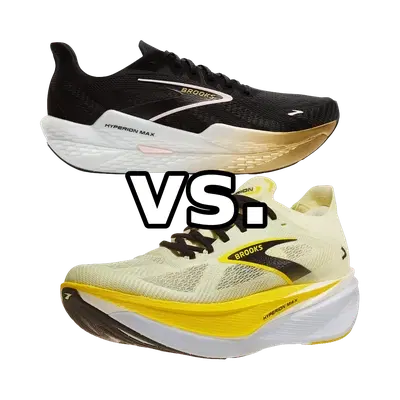
Brooks Hyperion Max 3 vs Mizuno Neo Vista 3:
Which to Choose
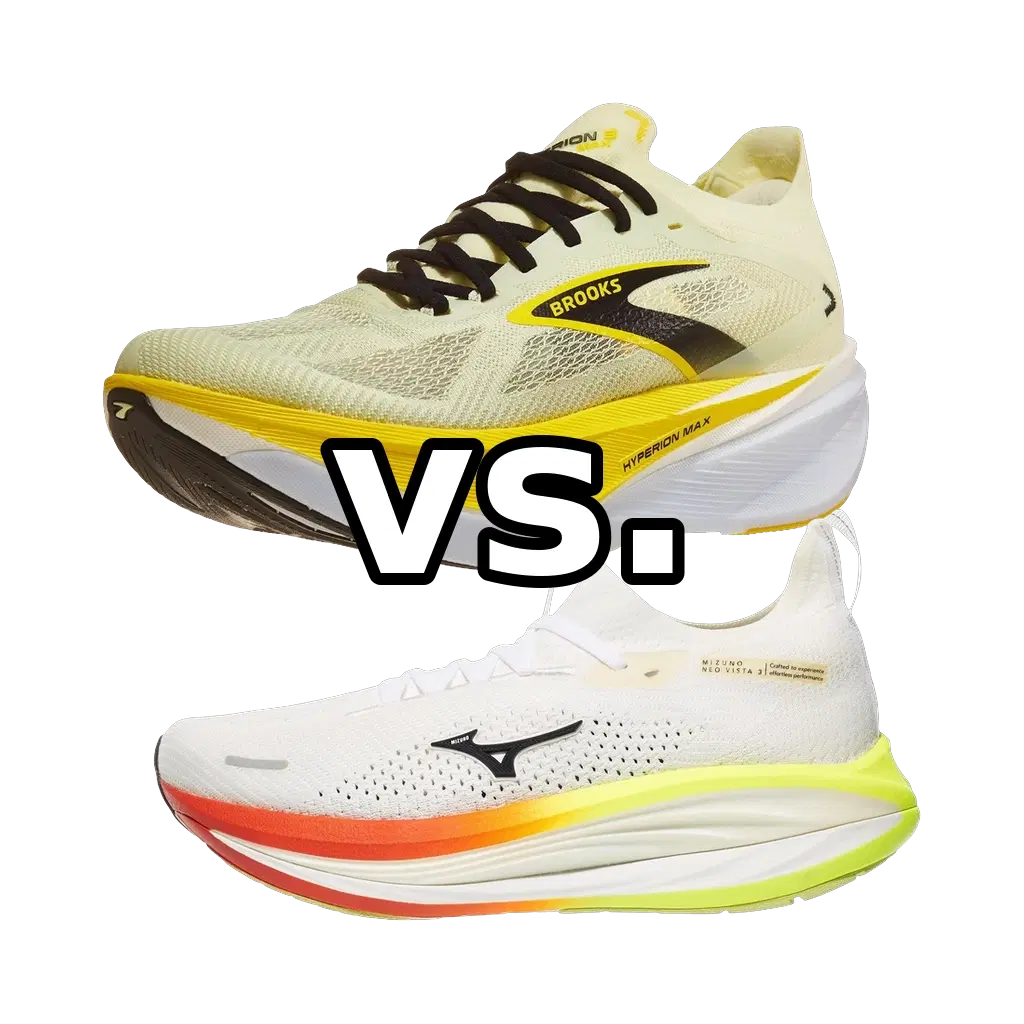
Verdict
It comes down to how fast you actually run in this shoe. If your training regularly includes tempo and uptempo work and you want that race-day snap, the Hyperion Max 3 is the more versatile speed-leaning super trainer. If your weeks are built on easy miles and long runs where cushioning and a planted, protective ride matter most, the Neo Vista 3 is the better fit. Same category, genuinely different missions — pick based on where your paces live, not on which looks more premium.
Pace
5 of 6
Cushioning
6 of 6
Responsiveness
5 of 6
Stability
3 of 6
Drop
11 mm
Support
Neutral
Plate
Composite
Distances
10KHalfMarathon
Pace
3 of 6
Cushioning
6 of 6
Responsiveness
5 of 6
Stability
4 of 6
Drop
9 mm
Support
Stable Neutral
Plate
Composite
Distances
HalfMarathon
At a Glance
Brooks Hyperion Max 3Mizuno Neo Vista 3
Who Should Choose Each Shoe
Choose
Brooks Hyperion Max 3
Choose the Hyperion Max 3 if you're an intermediate-to-experienced neutral runner who wants one shoe to handle tempo sessions, uptempo long runs, and steady mileage while still delivering a race-day feel on training days. Its PEBA-driven pop and forward-tilting rocker reward runners who regularly dip into the 3:45–4:10 min/km range and want a super trainer that can double as a fast-day shoe from the 10K through the marathon. It's the better pick if you value liveliness and turnover over maximum plush protection.
Choose
Mizuno Neo Vista 3
Choose the Neo Vista 3 if you log high weekly mileage and want protection over pop — a plush, planted cushion cruiser for daily easy runs and long-distance building where comfort and leg preservation matter more than speed. Its deep dual-layer Enerzy NXT and broad, stable-neutral base suit neutral runners who spend most of their time at conversational-to-steady paces and whose sweet spot is the marathon-distance long run. It's also the slightly lighter, more grounded-feeling option, making it the safer bet if you don't need a shoe that can genuinely race.
Head-to-Head
Both shoes max out cushioning (6/6) and share high-moderate responsiveness from a flexible composite plate rather than a stiff carbon racer, and their platforms are nearly identical in height — 46mm/35mm on the Brooks versus about 44mm/35mm on the Mizuno, both with a moderate-to-high heel-to-toe slope (a lab-measured 11mm on the Hyperion Max 3, 9mm on the Neo Vista 3). The clearest divide is in the foam and the intent behind it. The Hyperion Max 3 runs a lively 100% PEBA DNA Gold layer over DNA Flash v2 with a RapidRoll rocker, giving a bouncy-but-controlled ride that keeps nudging you forward and feels best pushing toward tempo (roughly 3:45–4:45 min/km); it earns a higher pace rating (5/6) and stretches from the 10K up through the marathon. The Neo Vista 3 pairs dual-layer Enerzy NXT (nitrogen-infused TPU over EVA) with an upcurved Wave Plate for a deep, plush, protective feel that shines at conversational-to-steady efforts (around 5:00–6:00 min/km) and is happiest on easy days and marathon-distance long runs; it's a slower shoe (pace 3/6) that never becomes a true speed tool. Weight runs slightly counter to that framing: the "slower" Neo Vista 3 is actually the lighter of the two at about 266g (men's US9) versus 283g for the Hyperion Max 3, because Brooks spends its grams on a springier PEBA-and-rocker package rather than on protective bulk. Stability is close, with a modest edge to the Mizuno — its broad, planted base and stable-neutral tuning (4/6) feels a touch more settled than the Brooks's tall, wide but purely neutral platform (3/6), though neither offers dedicated pronation posting and both can feel slightly tippy at a crawl.
Similar Comparisons
Mizuno Neo Vista 2 vs Mizuno Neo Vista 3
Brooks Hyperion Max 3 vs Brooks Hyperion Max 4
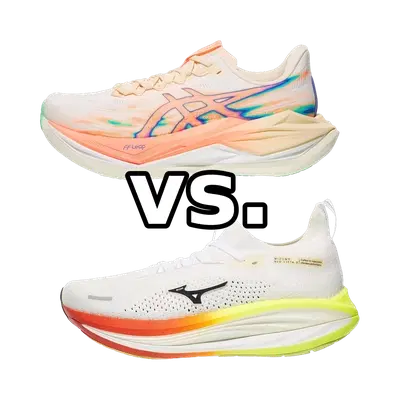
Asics Superblast 3 vs Mizuno Neo Vista 3
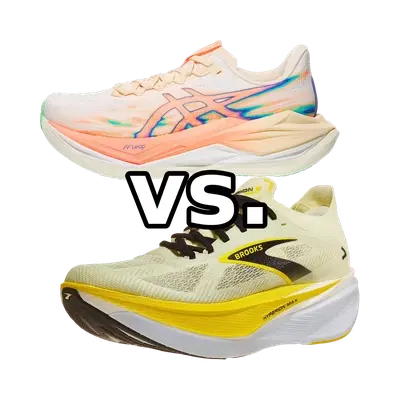
Asics Superblast 3 vs Brooks Hyperion Max 3
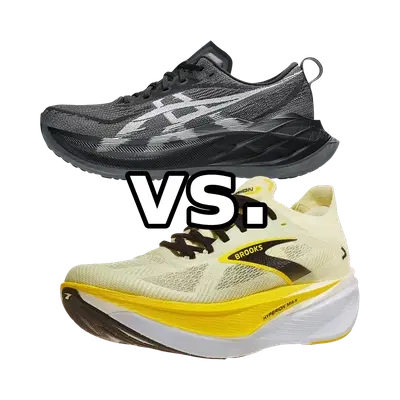
Asics Superblast 2 vs Brooks Hyperion Max 3
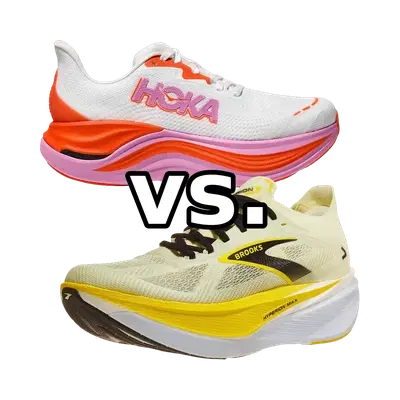
Hoka Skyward X vs Brooks Hyperion Max 3
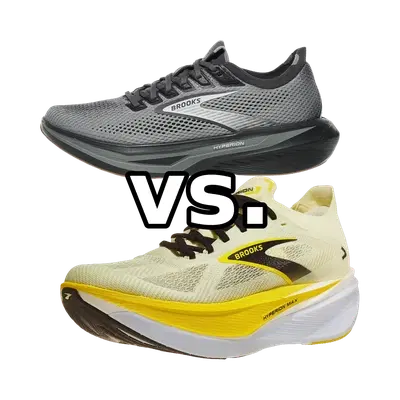
Brooks Hyperion 3 vs Brooks Hyperion Max 3
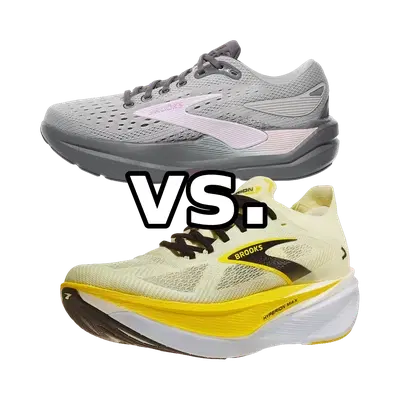
Brooks Ghost Max 3 vs Brooks Hyperion Max 3
© 2026 longrunshoes.ai | All rights reserved.
Use of materials from this site is permitted only with proper attribution and a link to longrunshoes.ai.