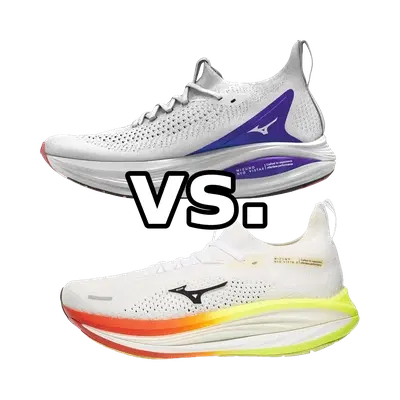
Mizuno Neo Vista 3 vs Mizuno Sky Prime:
Which to Choose
Verdict
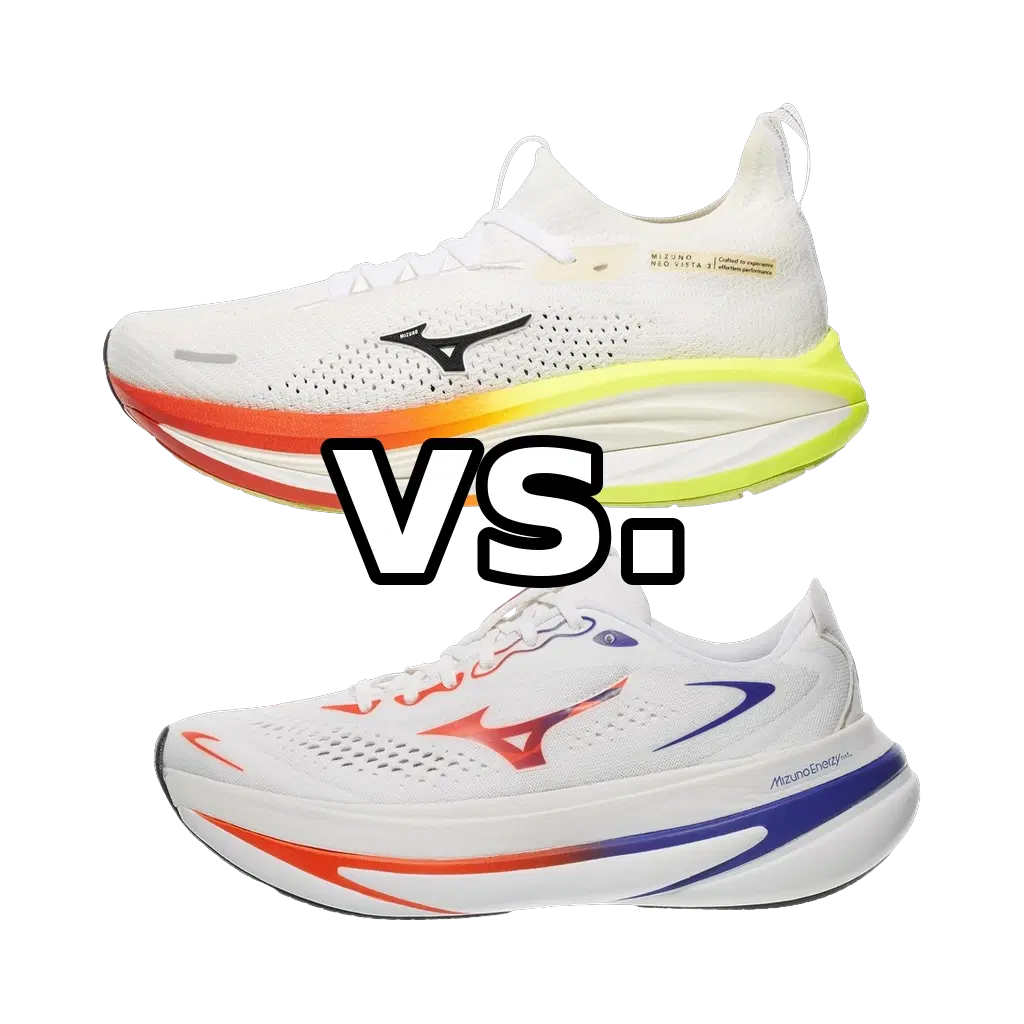
These are close cousins, so the decision is about ride intent, not quality. Go Neo Vista 3 for a lighter, plated, more rollable trainer that handles everything from easy miles to moderate tempo and marathon long runs; go Sky Prime for a taller, softer, plateless cruiser tuned for maximum comfort at relaxed aerobic paces. If you want one shoe that does more and don't need the absolute plushest stack, the Neo Vista 3 is the more flexible buy; if comfort and a planted feel on slow miles matter most, the Sky Prime wins.
Pace
3 of 6
Cushioning
6 of 6
Responsiveness
5 of 6
Stability
4 of 6
Drop
9 mm
Support
Stable Neutral
Plate
Composite
Distances
HalfMarathon
Pace
2 of 6
Cushioning
6 of 6
Responsiveness
5 of 6
Stability
5 of 6
Drop
6 mm
Support
Stable Neutral
Plate
None
Distances
10KHalfMarathon
At a Glance
Mizuno Neo Vista 3Mizuno Sky Prime
Who Should Choose Each Shoe
Choose
Mizuno Neo Vista 3
Choose the Neo Vista 3 if you want one cushioned trainer that can still shift gears — a runner building half and full marathon fitness who logs easy miles but also wants a shoe that comes alive at steady and moderate-tempo efforts. The plate's spring, the lower 44 mm stack, the lighter ~266 g weight, and the higher 9 mm drop make it the more versatile and more energetic of the two, and the better pick if you dislike feeling perched up on a very tall platform.
Choose
Mizuno Sky Prime
Choose the Sky Prime if your priority is pure comfort and protection for aerobic volume — easy days, long steady runs, and recovery jogs where you never intend to push the pace. Its taller 47 mm stack, softer PEBA top layer, and wider, more planted base (stability 5/6) make it the more forgiving mile-eater, especially for heavier runners or anyone who wants maximum underfoot protection and stays mostly in the 5:15–6:45 min/km range; just budget a few runs to break in the tapered toe box.
Head-to-Head
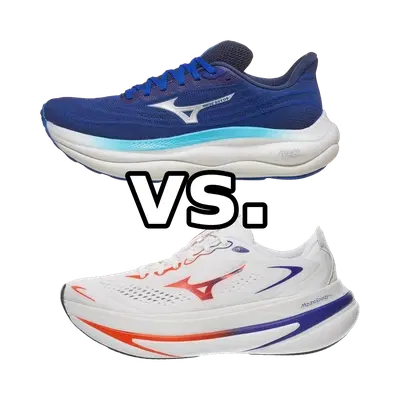
The clearest split is the plate. The Neo Vista 3 runs a 3D-shaped, glass-fiber-reinforced Wave Plate (nylon and fiberglass, not carbon) whose upturned center adds a gentle roll-forward spring; the Sky Prime is deliberately plateless, leaning entirely on foam geometry and its wide base. That difference shows up in the ride: the Neo Vista 3 feels more propulsive and responds better when you lift the effort to a moderate tempo, while the Sky Prime delivers a soft, controlled, cruise-y return that never asks to go fast — its own best effective zone sits around 5:15–5:45 min/km versus the Neo Vista's livelier 4:45–5:00 min/km ceiling. Stack and weight track that same logic. The Sky Prime is the bigger, plusher shoe at 47 mm heel / 41 mm forefoot, with a soft PEBA (Enerzy NXT+) top layer over a firmer EVA base, and it tips the scale at roughly 295 g in a men's US 9. The Neo Vista 3 is lower and leaner at 44 mm heel / 35 mm forefoot and about 266 g — nearly 30 g lighter — using nitrogen-infused Enerzy NXT TPU over EVA. Drop differs too: the Neo Vista 3 sits at a steeper 9 mm, which eases load on the calves and Achilles and encourages a rolling heel-to-toe transition, while the Sky Prime's 6 mm keeps the ride a bit flatter and more natural. Stability is close, with both earning a stable-neutral, no-posting ride on a broad platform, but the Sky Prime's wider, taller base edges ahead (5/6 vs 4/6) and stays notably planted at slow, tired paces where the Neo Vista's tall stack can feel slightly less connected at a shuffle. On fit, the Neo Vista 3's one-piece stretchy knit wraps the foot right out of the box, whereas the Sky Prime's adaptive knit is snug with a tapered toe box that wants some break-in before it settles.
© 2026 longrunshoes.ai | All rights reserved.
Use of materials from this site is permitted only with proper attribution and a link to longrunshoes.ai.