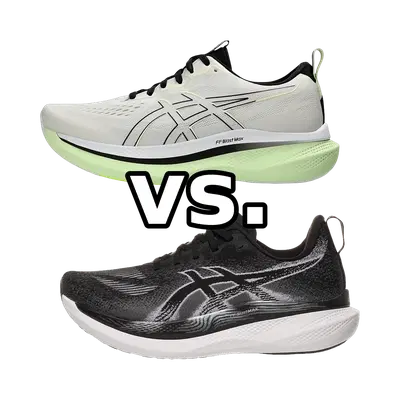
Asics Glideride Max vs Brooks Glycerin Max:
Which to Choose
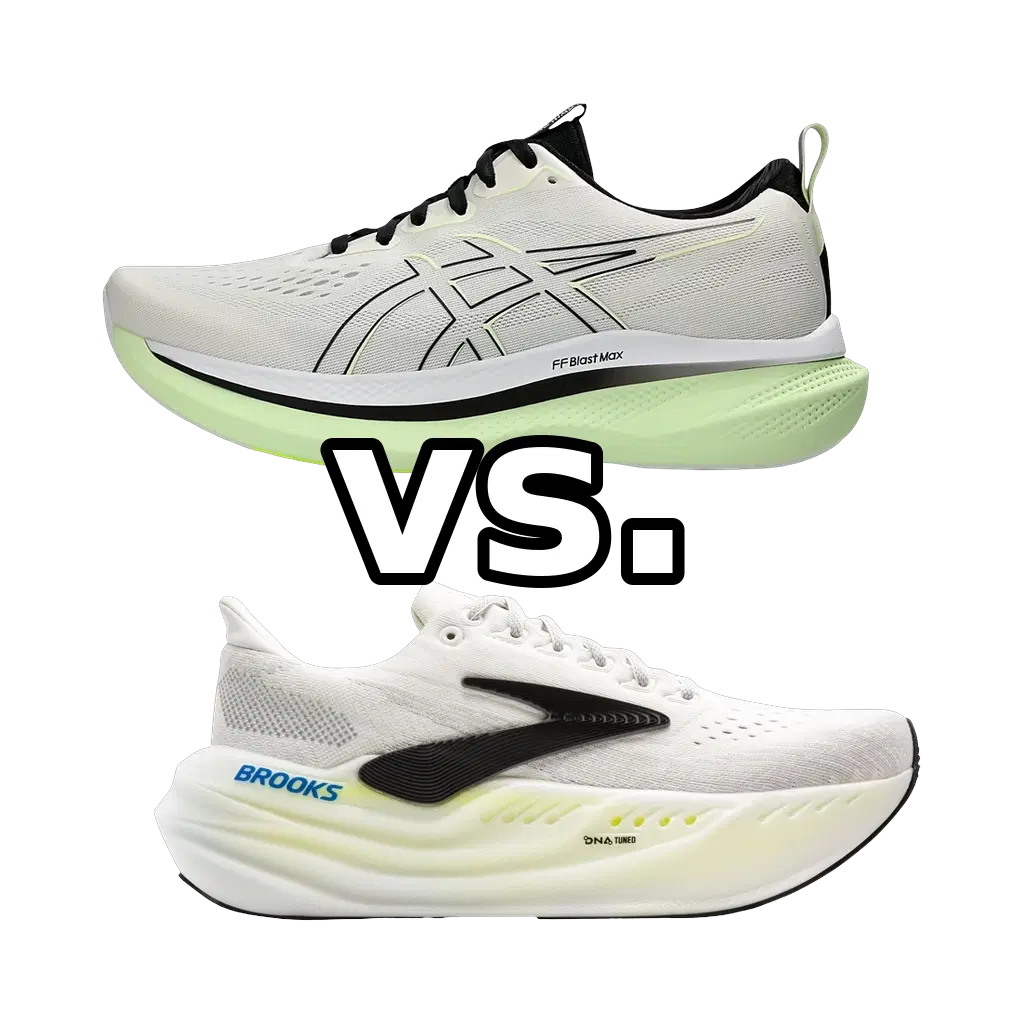
Verdict
These are genuinely close shoes serving the same purpose, so it comes down to feel, not capability. Choose the Glycerin Max if you want the softest, tallest, most protective cushion and don't mind the extra weight; choose the Glideride Max if you'd rather have a slightly lighter, lower trainer with a more aggressive rocker that keeps you rolling forward. Runners who shuffle at easy paces and want pure plush comfort lean Brooks; those who like momentum and a touch more range when the pace picks up lean Asics.
Pace
3 of 6
Cushioning
6 of 6
Responsiveness
4 of 6
Stability
5 of 6
Drop
6 mm
Support
Neutral
Plate
None
Distances
HalfMarathon
Pace
3 of 6
Cushioning
6 of 6
Responsiveness
4 of 6
Stability
5 of 6
Drop
6 mm
Support
Stable Neutral
Plate
None
Distances
HalfMarathon
At a Glance
Asics Glideride MaxBrooks Glycerin Max
Who Should Choose Each Shoe
Choose
Asics Glideride Max
Pick the Glideride Max if you want the slightly lighter, lower-to-the-ground option of the two and like a rocker that does the work of driving you forward. It's the better fit for neutral runners doing base-building and marathon prep who run with a reasonably quick cadence and occasionally want to lift the pace toward 5:00 min/km without the foam turning mushy. Choose it if you value smooth, protective transitions and durability over outright softness.
Choose
Brooks Glycerin Max
Pick the Glycerin Max if maximum plushness and leg protection are your top priorities and you don't mind carrying a bit more shoe to get them. Its taller, softer nitrogen-foam platform is ideal for recovery jogs, long conversational miles, and marathoners who want the most forgiving landing possible — and it's a forgiving, confidence-building ride for beginners building durability. Go with it if you prefer a gentle, pillowy cushion and a smooth, relaxed roll over a more insistent rocker.
Head-to-Head
On paper these shoes are near twins — both share a 6mm drop, maximum cushioning, no plate, a smooth rocker geometry, and the same easy-to-steady sweet spot around 5:30–6:30 min/km. The real separation is in the platform. The Glycerin Max is the taller, heavier shoe: it stacks 47mm at the heel and 41mm at the forefoot and weighs about 309g in a men's 9, versus the Glideride Max's 44mm/38mm stack and roughly 287g. That ~22g and 3mm difference is small in the hand but noticeable over a long run — the Glycerin feels like the more pillowy, ground-muted cruiser, while the Glideride sits a touch lower and lighter. The foams differ in personality too: the Glycerin's DNA Tuned nitrogen-infused midsole gives a slightly softer, gently springier return, whereas the Glideride's FF Blast+ Eco leans toward smooth, protective glide rather than bounce. The rockers also behave differently — Asics' GuideSole is the more aggressive, forward-tipping geometry that actively rolls you through toe-off (and can nudge you toward a slightly quicker cadence at very slow paces), while Brooks' GlideRoll is a smoother, more neutral roll that rewards finding a steady rhythm. Both go vague if you push hard: the Glideride holds its line a touch better up toward 5:00 min/km, while the Glycerin starts losing precision just past 5:15–5:30 min/km.





© 2026 longrunshoes.ai | All rights reserved.
Use of materials from this site is permitted only with proper attribution and a link to longrunshoes.ai.