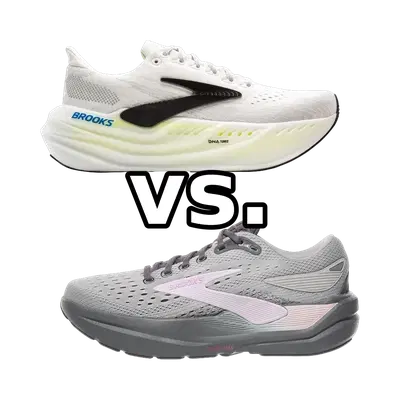
Brooks Glycerin Max vs Saucony Hurricane 25:
Which to Choose
Verdict
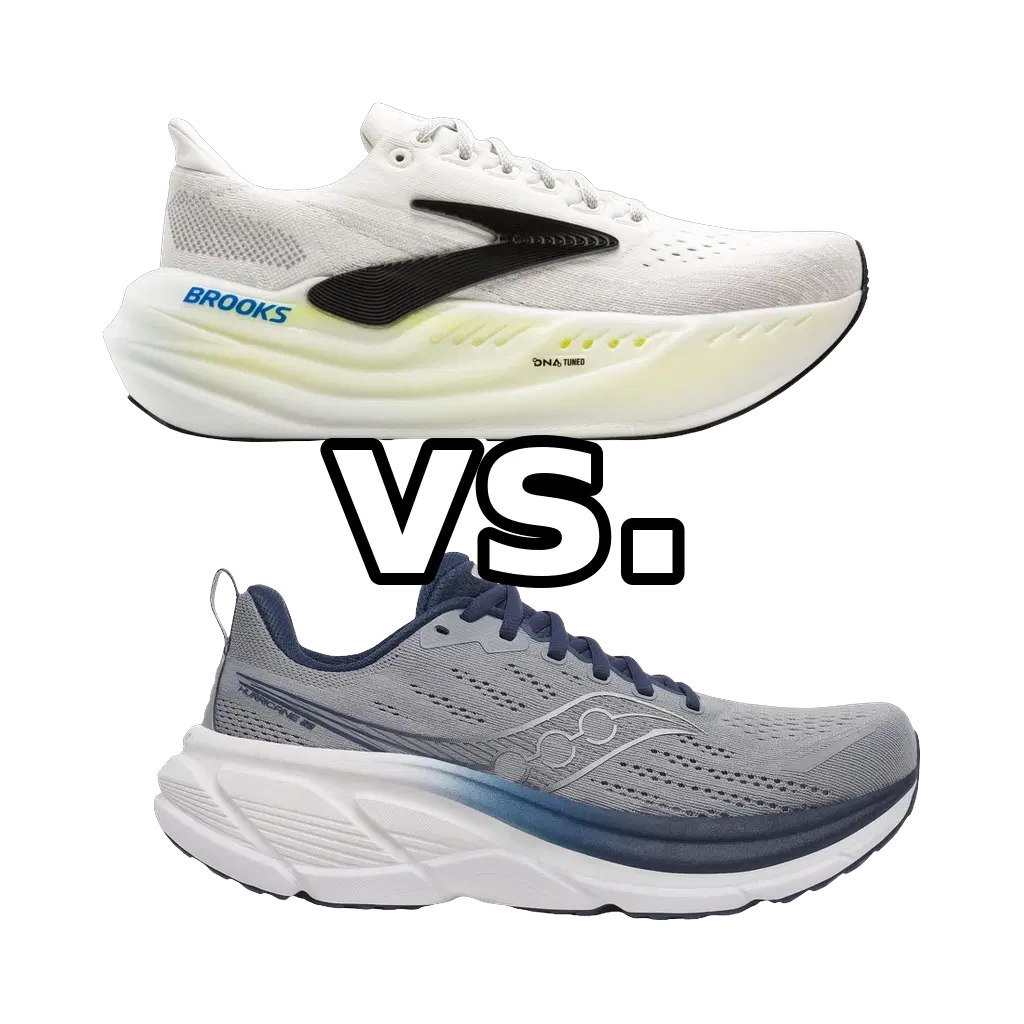
These are close cousins — both are plush, plateless, heavy max-cushion cruisers for easy and long miles, not speed — so the decision comes down to two things. If you need pronation support, take the Hurricane 25; its stability build is the whole point and the Glycerin Max won't replicate it. If your gait is neutral and you want the tallest, softest platform for the longest runs up to the marathon, the Glycerin Max is the more cushioned, longer-legged option. Pick by your feet and your distance, not by which feels softer in the store — because on that count they're nearly a tie.
Pace
3 of 6
Cushioning
6 of 6
Responsiveness
4 of 6
Stability
5 of 6
Drop
6 mm
Support
Stable Neutral
Plate
None
Distances
HalfMarathon
Pace
3 of 6
Cushioning
6 of 6
Responsiveness
4 of 6
Stability
5 of 6
Drop
7 mm
Support
Stability
Plate
None
Distances
10KHalf
At a Glance
Brooks Glycerin MaxSaucony Hurricane 25
Who Should Choose Each Shoe
Choose
Brooks Glycerin Max
Choose the Glycerin Max if you're a neutral runner who wants the maximum amount of cushion Brooks makes and logs your longest miles up to and including the marathon. Its taller 47/41mm platform and GlideRoll rocker make it the better long-run and recovery cruiser for someone who doesn't need pronation correction but wants deep, forgiving protection and a smooth roll-through at easy-to-steady efforts. It's an excellent pick for marathoners building comfort mileage and for beginners who want a soft, durable daily trainer.
Choose
Saucony Hurricane 25
Choose the Hurricane 25 if you're a mild-to-moderate overpronator who wants max cushioning without giving up support — this is the one that actively steadies your stride through its wider dual-density base and CenterPath geometry, correcting gently rather than intrusively. It suits methodical "time on feet" runners piling up high-mileage weeks, and its slightly lower, firmer-based platform feels most at home over 10K to half-marathon distances. If a purely neutral shoe leaves your gait feeling unsupported on tired legs, this is the safer daily choice.
Head-to-Head
Start with what separates them, because it's the deciding factor: the Hurricane 25 is a true stability shoe aimed at mild-to-moderate overpronators, guiding the foot through a wider base and Saucony's CenterPath geometry rather than a medial post. The Glycerin Max is a stable-neutral shoe — its broad platform and GlideRoll rocker steady a tall stack without actively correcting your gait, so it offers reassurance without the built-in guidance an overpronator needs. If you require support, that alone points you to the Hurricane. Underfoot, both use a soft superfoam-over-nothing setup with no plate: the Glycerin Max runs DNA Tuned nitrogen-infused foam, while the Hurricane pairs a soft PEBA-based PWRRUN PB top layer over a firmer PWRRUN base. That dual-density build gives the Hurricane a more planted, controlled feel, whereas the Glycerin Max is pillowier and more uniformly soft. Stack height is the other real gap: the Glycerin Max sits taller at 47mm heel / 41mm forefoot versus the Hurricane's 38mm / 32mm, so the Brooks delivers more sheer cushion and a more pronounced rocker, which is why it stretches comfortably to the full marathon while the Hurricane is happiest at 10K to half distances. Both run a mild drop — 6mm on the Glycerin Max and roughly 6–7mm on the Hurricane — so the geometry underfoot feels similar even though the Brooks is the taller shoe. Weight is a wash in the "heavy" category: the Glycerin Max lands around 300g and the Hurricane around 283–286g in men's US 9, so both are substantial, with the Brooks a touch heavier and considerably taller. Neither is a shoe you buy for speed; the trade-off for all that foam is heft in both cases.
Similar Comparisons
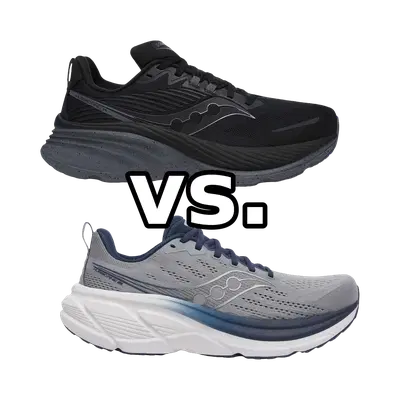
Saucony Hurricane 24 vs Saucony Hurricane 25
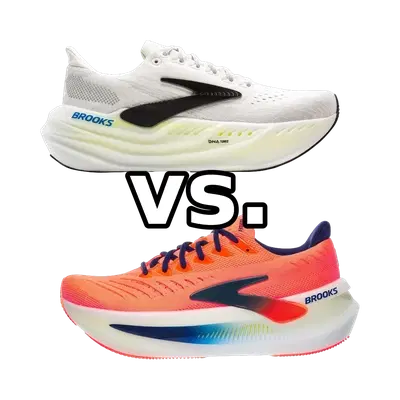
Brooks Glycerin Max vs Brooks Glycerin Max 2
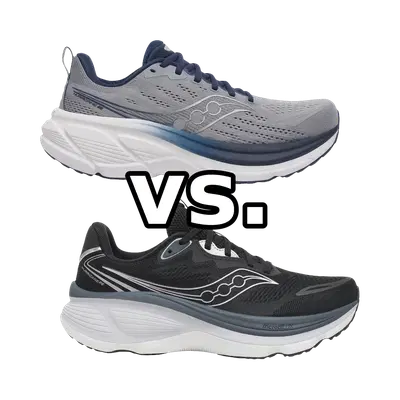
Saucony Hurricane 25 vs Saucony Hurricane 26
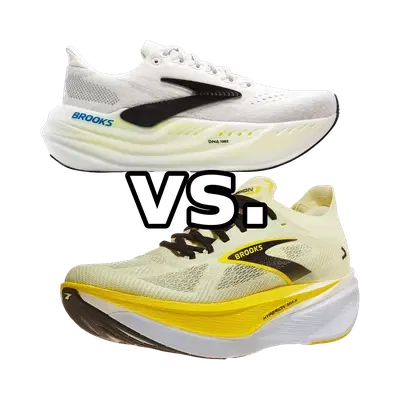
Brooks Glycerin Max vs Brooks Hyperion Max 3
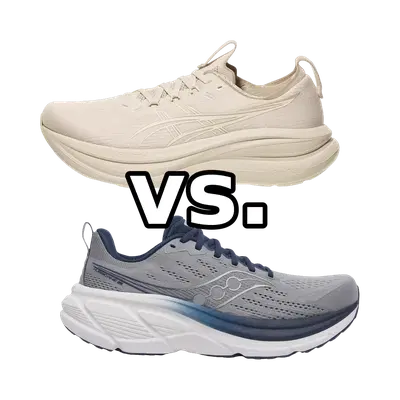
Asics Gel-Nimbus 28 vs Saucony Hurricane 25
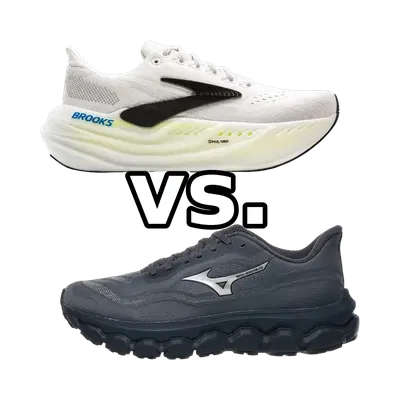
Brooks Glycerin Max vs Mizuno Wave Horizon 9
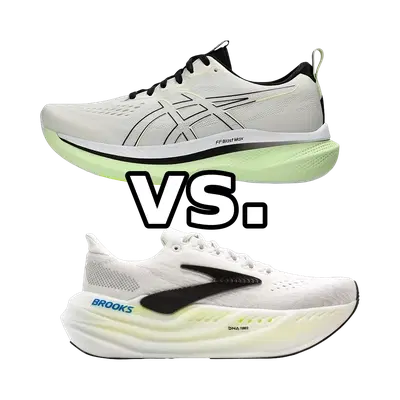
Asics Glideride Max vs Brooks Glycerin Max
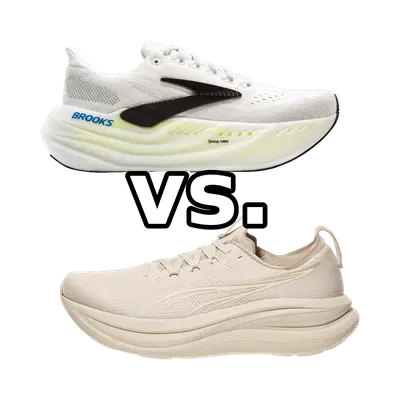
Brooks Glycerin Max vs Asics Gel-Nimbus 28
© 2026 longrunshoes.ai | All rights reserved.
Use of materials from this site is permitted only with proper attribution and a link to longrunshoes.ai.