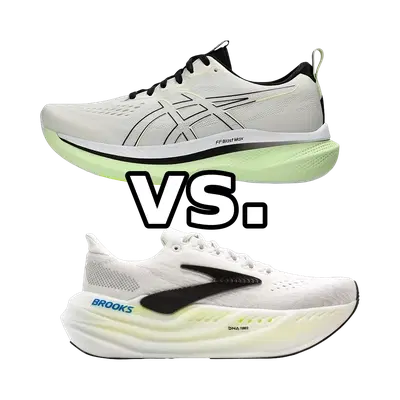
Asics Glideride Max vs Asics Glideride Max 2:
Which to Choose
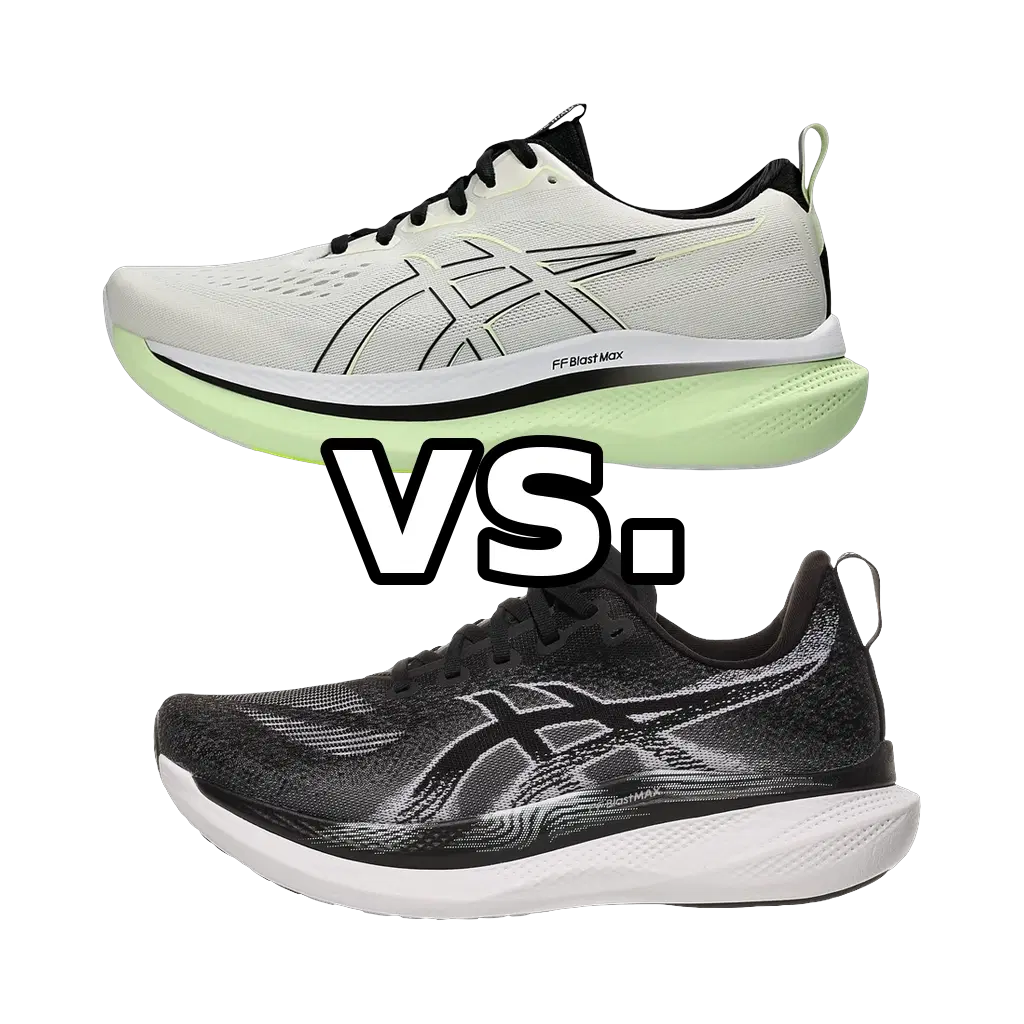
Verdict
For most existing Glideride Max owners, the Max 2 is a worthwhile upgrade: you keep the same maximal cushioning and long-run intent but gain a lighter, more composed, plate-assisted roll. The exceptions are runners who specifically want the softest, most cushiony feel with no plate and a roomier upper — they should stick with the original. In short, it comes down to fit and ride preference: go Max 2 for a lighter, firmer-based, more structured cruise, and stay with the original for maximum plushness and a more forgiving fit.
Pace
3 of 6
Cushioning
6 of 6
Responsiveness
4 of 6
Stability
5 of 6
Drop
6 mm
Support
Neutral
Plate
None
Distances
HalfMarathon
Pace
3 of 6
Cushioning
6 of 6
Responsiveness
4 of 6
Stability
5 of 6
Drop
11 mm
Support
Stable Neutral
Plate
Composite
Distances
HalfMarathon
At a Glance
Asics Glideride MaxAsics Glideride Max 2
Who Should Choose Each Shoe
Choose
Asics Glideride Max
Choose the original Glideride Max if you already love a uniformly deep, plush, forgiving ride and don't want a plate adding stiffness underfoot — this is the softer, more purely cushioned of the two. It's also the better call for runners who prefer a roomier, more accommodating mesh upper and standard length sizing, and for those doing very slow, high-volume base-building where outright softness matters more than a crisp roll.
Choose
Asics Glideride Max 2
Choose the Glideride Max 2 if you found the original a little heavy or a touch too soft and wallowy at the end of long runs — the lighter build, firmer base layer and 3/4 plate give it a more composed, structured, propulsive roll while keeping the same maximal protection. It's the better pick for half and full marathon trainees who want that guided forward momentum on long cruises, provided you're happy with a snugger, performance-oriented fit — try it on and consider going up a half size, since it runs short.
Head-to-Head
Start with what didn't change: both are genuinely maximal shoes with near-identical stack (roughly 44mm heel / 31mm forefoot on the original, 42mm / 31mm on the Max 2), both run a traditional, heel-friendly geometry measuring around 11–13mm of offset underfoot, and both lean on the GuideSole rocker rather than raw rebound to move you along. Cushioning depth, use case (easy miles, long runs, half to full marathon) and effective pace ceiling (around 5:00–5:30 min/km before the rocker feels sluggish) are essentially unchanged. Three things genuinely differ. First, weight: the Max 2 comes in around 264g versus roughly 281g for the original — a real, noticeable trim that makes transitions feel a touch quicker. Second, the midsole: the original uses a single, uniformly deep and soft FF Blast+ Eco foam, while the Max 2 layers a plush FF Blast Max top over a firmer FF Blast Plus base, so it rides soft but more composed and less prone to wallowing at the bottom of the stroke. Third — and biggest for ride feel — the Max 2 adds a 3/4-length hard-pressed EVA (composite) plate the original doesn't have; it doesn't add pop, but it stiffens the platform and sharpens the roll, which is why its responsiveness reads a notch higher. Fit shifts too: the original's roomier engineered mesh gives way to a snugger recycled-polyester woven upper on the Max 2 that fits slightly short.
© 2026 longrunshoes.ai | All rights reserved.
Use of materials from this site is permitted only with proper attribution and a link to longrunshoes.ai.