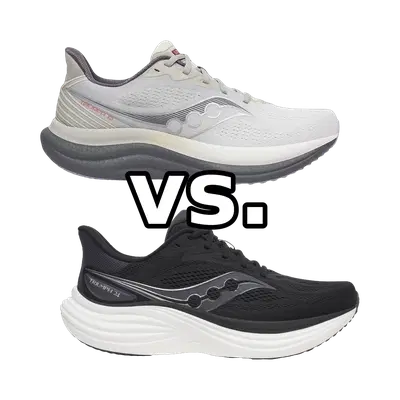
Saucony Triumph 23 vs Saucony Hurricane 25:
Which to Choose
Verdict
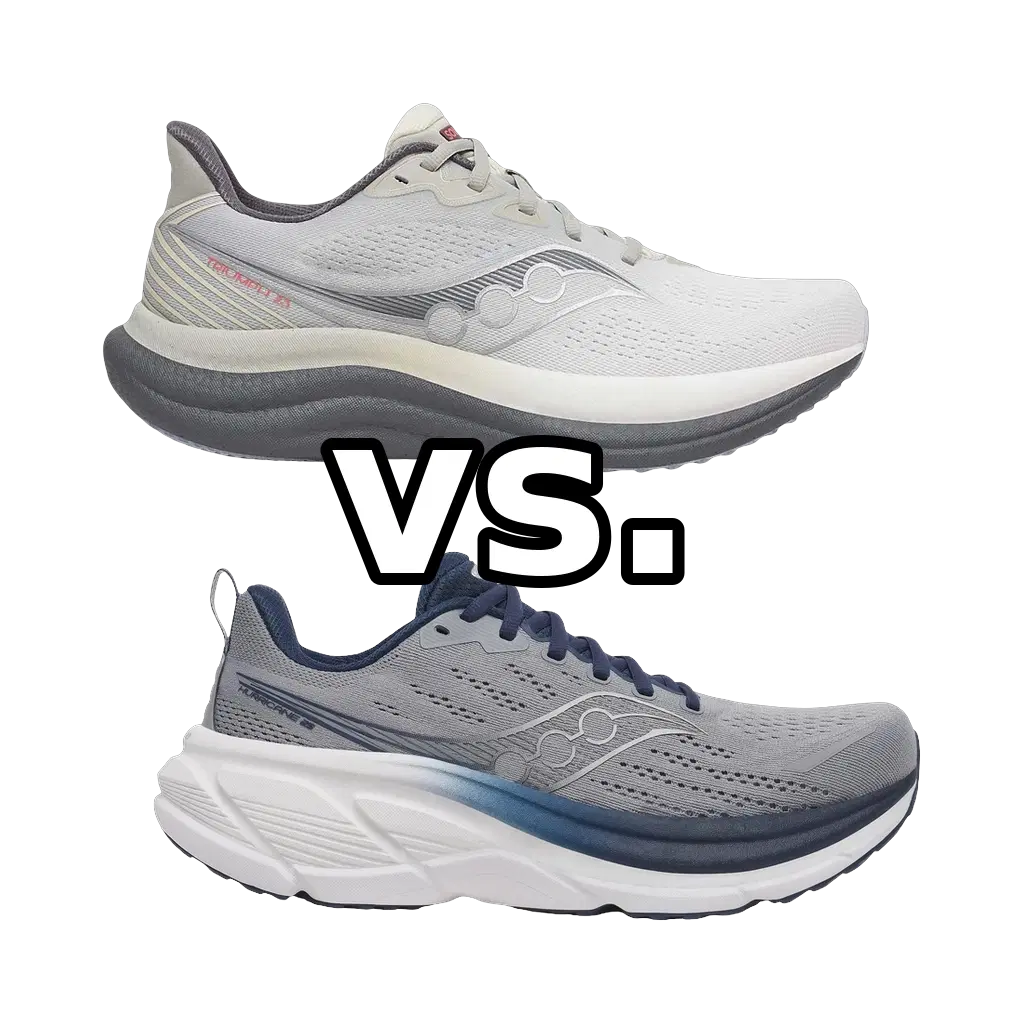
It comes down to support and range, not quality — both are excellent high-mileage cushioned trainers. Go Triumph 23 if you're neutral and want a lighter, livelier shoe that handles everything through the marathon; go Hurricane 25 if you need genuine stability and the most protective, planted ride for easy and recovery miles, and you can live with the extra weight and a shorter distance ceiling.
Pace
3 of 6
Cushioning
5 of 6
Responsiveness
5 of 6
Stability
4 of 6
Drop
10 mm
Support
Neutral
Plate
None
Distances
10KHalfMarathon
Pace
3 of 6
Cushioning
6 of 6
Responsiveness
4 of 6
Stability
5 of 6
Drop
7 mm
Support
Stability
Plate
None
Distances
10KHalf
At a Glance
Saucony Triumph 23Saucony Hurricane 25
Who Should Choose Each Shoe
Choose
Saucony Triumph 23
Choose the Triumph 23 if you're a neutral runner who wants one versatile plush trainer for everything from easy miles to steady long runs and marathon builds. It's the better pick for recreational marathoners and half-marathon builders who value a lighter, livelier ride they can occasionally press to a moderate tempo, and who don't need built-in pronation control. If you want the single cushioned daily that stretches furthest up the distance range, this is it.
Choose
Saucony Hurricane 25
Choose the Hurricane 25 if you're a mild-to-moderate overpronator — or a neutral runner who simply wants maximum protection and a planted, controlled feel on recovery and high-mileage weeks. It rewards methodical "time on feet" running at steady aerobic effort over chasing splits, and its dual-density platform with CenterPath guidance corrects gently without feeling intrusive. Pick it when stability and the softest possible landing matter more than weight or top-end speed.
Head-to-Head
Start with the foam, because it's where they overlap most: both use PWRRUN PB, but they deploy it differently. The Triumph runs a full-length PEBA midsole, so the softness and the gentle toe-off spring come from a single lively layer — it scores 5/6 for responsiveness and genuinely feels livelier than its plushness suggests. The Hurricane layers that same PEBA over a firmer PWRRUN base, which maxes out cushioning (6/6 versus the Triumph's 5/6) but mutes the return to 4/6; it's a planted cruiser rather than a springboard. Geometry splits them further. The Triumph is neutral (stability 4/6) and leans on a wide, sidewalled platform to steady a soft ride, whereas the Hurricane is a true stability shoe (5/6) using CenterPath guidance to correct mild-to-moderate overpronation gently, without a medial post in either case. On the hard numbers, the Triumph is lighter at 272g against the Hurricane's roughly 283g, and it sits lower (37/27mm heel/forefoot) but with a taller 10mm drop, while the Hurricane stacks a touch higher at 38/32mm on a milder 7mm drop. That heavier, higher Hurricane platform is the main trade-off for its stability — you feel the weight when you try to lift the pace, and its effective ceiling sits around 5:15 min/km, slower than the Triumph's ~4:30–5:00 min/km. The two also diverge on range: both handle 10K and the half comfortably, but only the Triumph is built to carry into a full marathon, where the Hurricane's mass starts working against you.
Similar Comparisons
Saucony Hurricane 24 vs Saucony Hurricane 25
Saucony Triumph 23 vs Brooks Glycerin 22
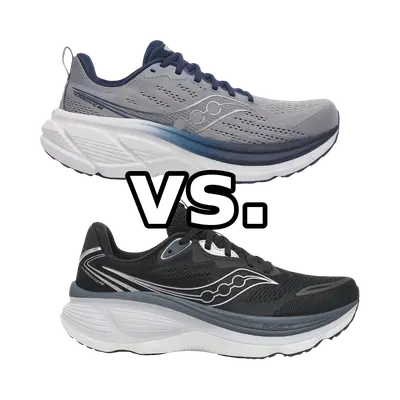
Saucony Hurricane 25 vs Saucony Hurricane 26
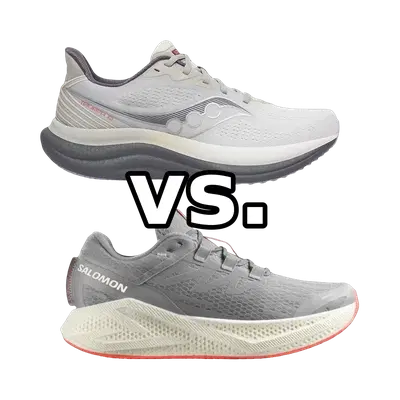
Saucony Triumph 23 vs Salomon Aero Glide 3
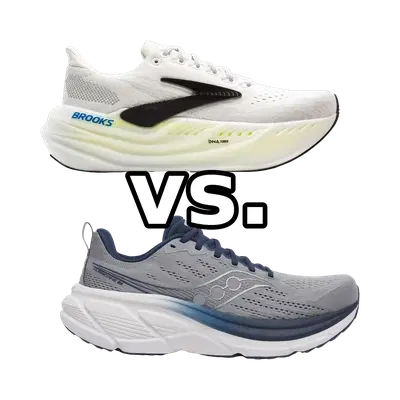
Brooks Glycerin Max vs Saucony Hurricane 25
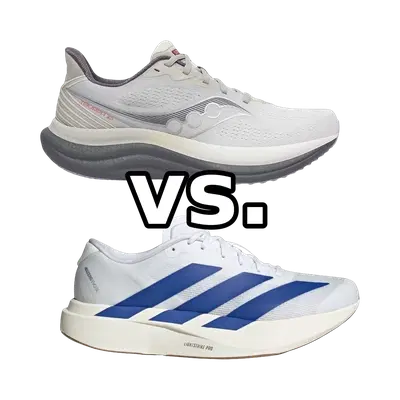
Saucony Triumph 23 vs Adidas Adizero Evo SL
Asics Gel-Nimbus 28 vs Saucony Hurricane 25
Saucony Triumph 23 vs Saucony Ride 19
© 2026 longrunshoes.ai | All rights reserved.
Use of materials from this site is permitted only with proper attribution and a link to longrunshoes.ai.