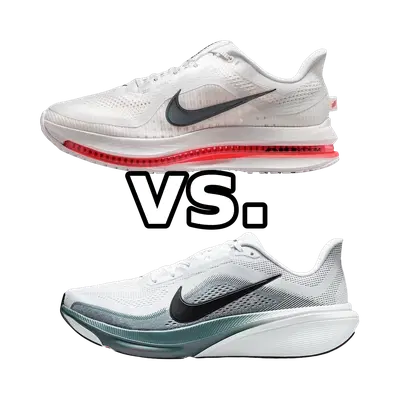
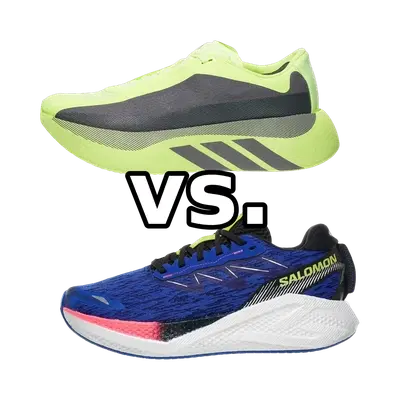
Nike Pegasus Premium vs Salomon Aero Glide 4:
Which to Choose
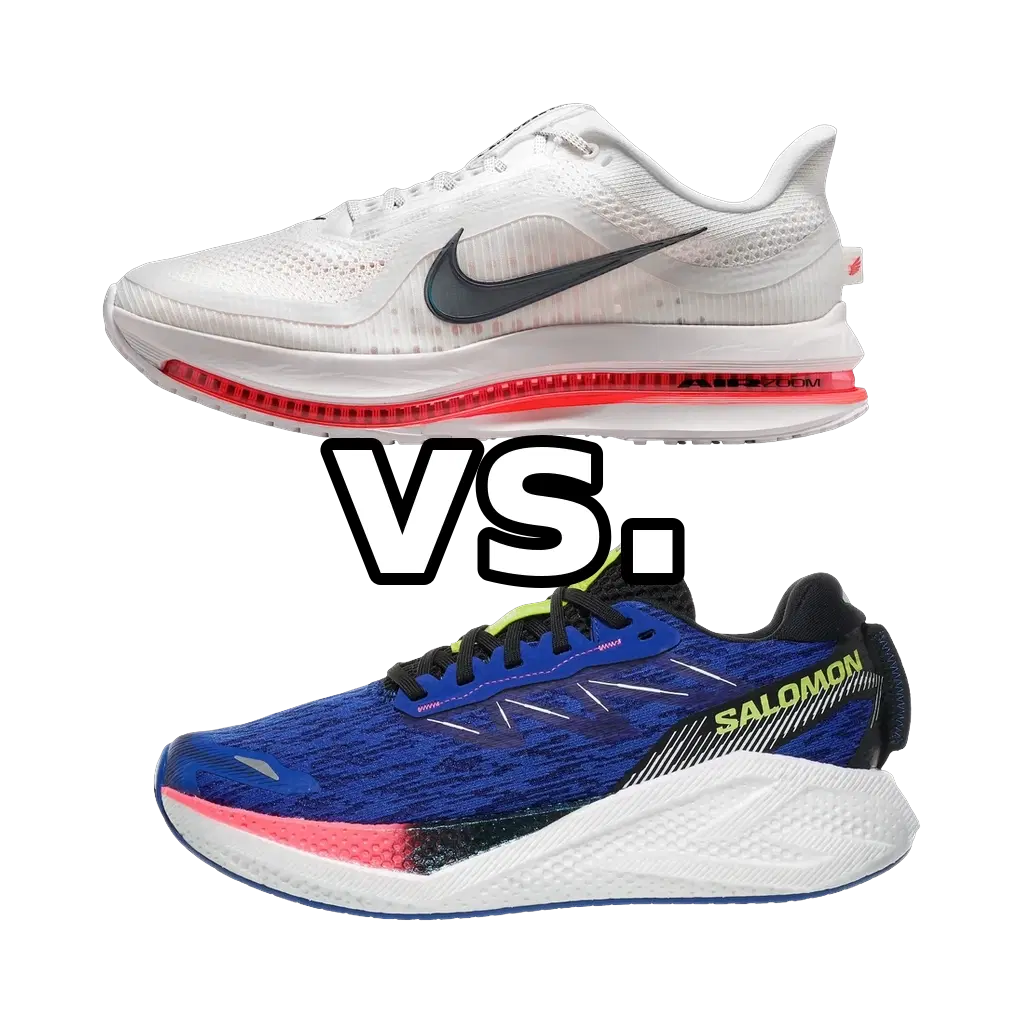
Verdict
These are genuinely close cousins — both are tall, soft, neutral, plateless max-cushion trainers for the same 10K-to-marathon range — so this comes down to intended use and feel rather than any one being "better." Pick the Aero Glide 4 if you want the lighter shoe and your weeks are built around long, steady mileage; pick the Pegasus Premium if you want a slightly more up-tempo, versatile ride with Air Zoom pop and a roomier fit, and don't mind the extra weight. Wide-footed runners should lean toward the Pegasus for its more forgiving upper.
Pace
4 of 6
Cushioning
6 of 6
Responsiveness
5 of 6
Stability
3 of 6
Drop
10 mm
Support
Neutral
Plate
None
Distances
10KHalfMarathon
Pace
4 of 6
Cushioning
6 of 6
Responsiveness
5 of 6
Stability
3 of 6
Drop
11 mm
Support
Neutral
Plate
None
Distances
10KHalfMarathon
At a Glance
Nike Pegasus PremiumSalomon Aero Glide 4
Who Should Choose Each Shoe
Choose
Nike Pegasus Premium
Choose the Pegasus Premium if you want the more versatile of the two — a plush trainer that's happy on easy days but has the up-tempo willingness to double as your half-marathon shoe, with that springy Air Zoom rebound giving a lively kick when you press the pace. It suits neutral runners who don't mind carrying a heavier, taller build in exchange for maximal protection, and who like a shoe that firms into a confident stride once moving. If you have a broader foot, its more conventional mesh fit is also the safer bet.
Choose
Salomon Aero Glide 4
Choose the Aero Glide 4 if your priority is long, comfortable time on feet and a noticeably lighter shoe underfoot — its supercritical foam is at its best on base-building miles and long runs that drift into easy tempo, and at 255g it's the more nimble max-cushion option for logging real weekly volume. It's the pick for neutral runners who value protection and a settled, rhythmic cadence over outright speed. Just size it with your foot width in mind, as both the upper and platform run narrow.
Head-to-Head
Start with the metrics that match, because most of them do: both score 6/6 cushioning, 5/6 responsiveness, 3/6 stability and 4/6 pace, both are neutral with no plate, and both share a near-identical 10mm (Pegasus) versus 11mm (Aero Glide) drop. Both also warn the same way — the tall platform over a fairly narrow base can feel a touch tippy at very slow, plodding paces, then settles and comes alive once you pick up the effort. The differences are in build and ride character. The biggest is weight: the Aero Glide 4 is lab-weighed at 255g (men's US 9), while the Pegasus Premium comes in at 326g (men's US 10) — even accounting for the different reference sizes, the Nike is a substantially heavier, more substantial shoe underfoot. They're both very tall, with the Pegasus fractionally higher at 45mm heel / 35mm forefoot against the Aero Glide's 43mm / 32mm. The ride mechanisms differ too: the Pegasus generates its rebound from a full-length Air Zoom unit that gives a distinct springboard pop as you roll forward, layered under soft ZoomX; the Aero Glide leans on its beaded supercritical foam for a strong, consistent ~72–73% energy return that feels lively rather than dead through toe-off. Their pace personalities separate them further — the Pegasus is tuned a bit quicker, optimal around 4:30–5:15 min/km with a half-marathon sweet spot, while the Aero Glide sits slightly slower and longer at 4:45–5:45 min/km with the long run as its home. One practical fit note: the Aero Glide's engineered mesh upper runs narrow over a narrow platform, so wide-footed runners should size carefully; the Pegasus's engineered mesh is the more forgiving, conventional fit.

© 2026 longrunshoes.ai | All rights reserved.
Use of materials from this site is permitted only with proper attribution and a link to longrunshoes.ai.