
Adidas Hyperboost Edge vs Salomon Aero Glide 4:
Which to Choose
Verdict
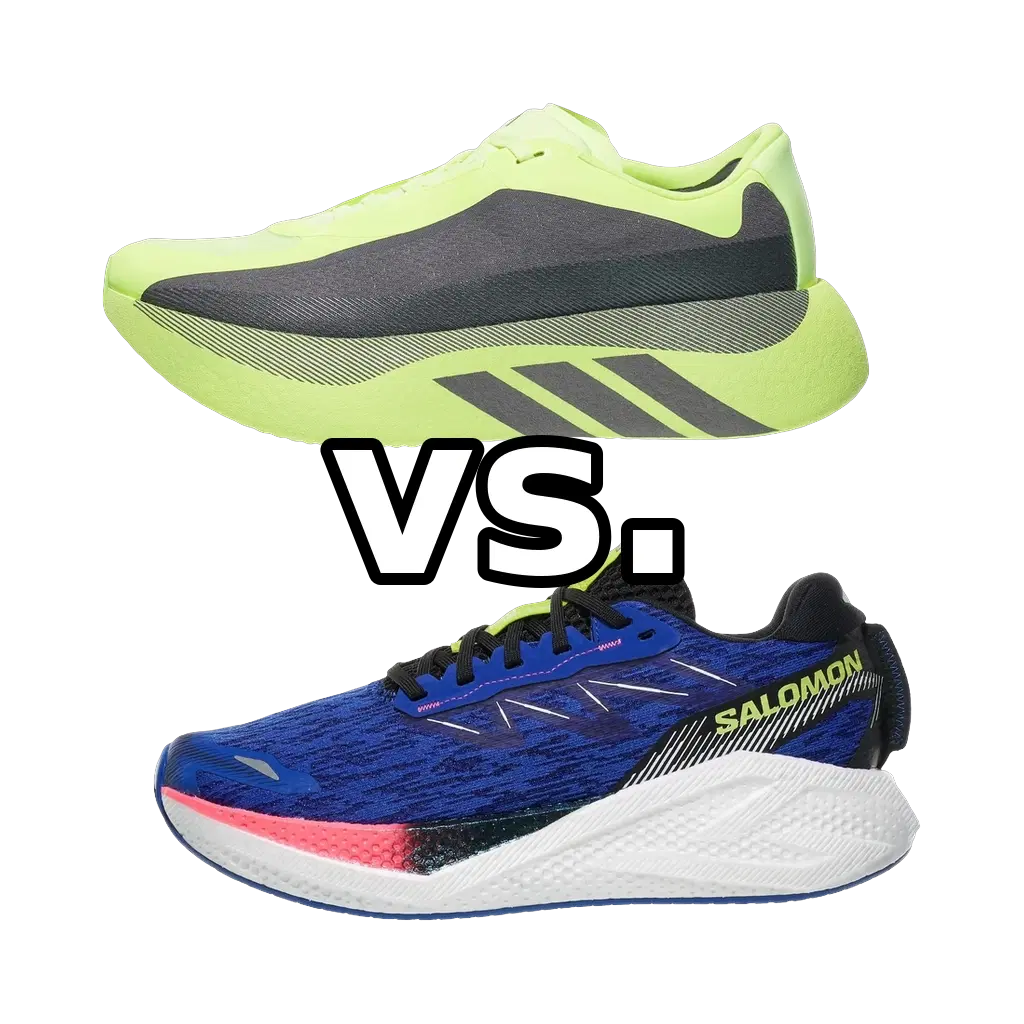
These are two takes on the same idea — a max-cushion, plateless, neutral trainer for 10K to marathon — so it comes down to fit, drop, and pace, not one being better. Go with the Hyperboost Edge for a lower 7 mm drop, more forefoot foam, and a ride that comes alive at tempo and half-marathon efforts; go with the Aero Glide 4 for a higher 11 mm, calf-friendly drop and a plush long-run cruiser, provided its narrow upper suits your foot.
Pace
4 of 6
Cushioning
6 of 6
Responsiveness
5 of 6
Stability
3 of 6
Drop
7 mm
Support
Neutral
Plate
None
Distances
10KHalfMarathon
Pace
4 of 6
Cushioning
6 of 6
Responsiveness
5 of 6
Stability
3 of 6
Drop
11 mm
Support
Neutral
Plate
None
Distances
10KHalfMarathon
At a Glance
Adidas Hyperboost EdgeSalomon Aero Glide 4
Who Should Choose Each Shoe
Choose
Adidas Hyperboost Edge
Pick the Hyperboost Edge if you're a neutral, midfoot- or forefoot-leaning runner who wants a single shoe to handle daily miles, tempo work, and longer races, and who prefers a lower 7 mm drop with plenty of forefoot cushion. It rewards intent — the faster and more deliberately you run in the 4:00–5:00 min/km range, the more coherent and lively the PEBA ride becomes — making it the better fit for anyone whose weeks include real uptempo and half-marathon efforts. The roomier Primeweave upper is also the safer bet if you have a wider foot.
Choose
Salomon Aero Glide 4
Choose the Aero Glide 4 if you log serious weekly mileage and want a plush, protective do-everything trainer weighted toward easy days and long runs rather than speed. The 11 mm drop suits heel strikers and runners who want to spare their calves on time-on-feet efforts, and the supercritical eTPU foam delivers durable, springy protection at steadier 4:45–5:45 min/km paces. Just confirm the narrow engineered mesh works for your foot before committing, since it fits noticeably snugger than the Adidas.
Head-to-Head
Start with the geometry, because that is where these two genuinely diverge. The Hyperboost Edge sits on a 45 mm heel / 38 mm forefoot stack with a 7 mm drop, while the Aero Glide 4 runs a 43 mm heel / 32 mm forefoot stack with a much steeper 11 mm drop. That means the Adidas keeps more foam under the forefoot and a lower, more forward-leaning ramp that suits midfoot landers, whereas the Salomon's taller drop and thinner forefoot ease the calves and reward a heel-friendly stride. Weight is nearly a wash — 247 g for the Edge versus 255 g for the Aero Glide 4 in men's US 9 — so neither will feel meaningfully lighter on the run. The foams differ in kind rather than degree: Adidas uses a PEBA-based Hyperboost Pro superfoam that compresses deeply and springs back with a light, energetic pop, while Salomon's optiFOAM² is a supercritical eTPU delivering a springy, protective toe-off with strong (~72–73%) energy return. Both share the same caveat — a tall stack over a fairly narrow base that can feel slightly tippy at very slow, plodding paces, and both reward you as soon as you settle into a rhythm. The clearest split is intent: the Edge is tuned faster, optimal around 4:15–5:00 min/km with the half marathon as its sweet spot and useful pace down to about 4:00–4:30, while the Aero Glide 4 is happiest cruising at 4:45–5:45 min/km with the long run as its home turf and its ceiling around 4:30–4:45. One more practical note — the Salomon's engineered mesh upper runs narrow, so wide-footed runners need to size carefully, whereas the Adidas Primeweave upper is a more forgiving, breathable knit.

© 2026 longrunshoes.ai | All rights reserved.
Use of materials from this site is permitted only with proper attribution and a link to longrunshoes.ai.