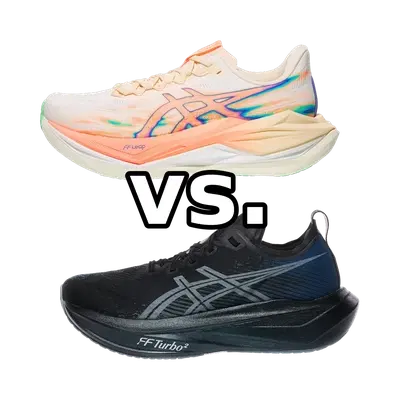
Asics Megablast vs Adidas Hyperboost Edge:
Which to Choose
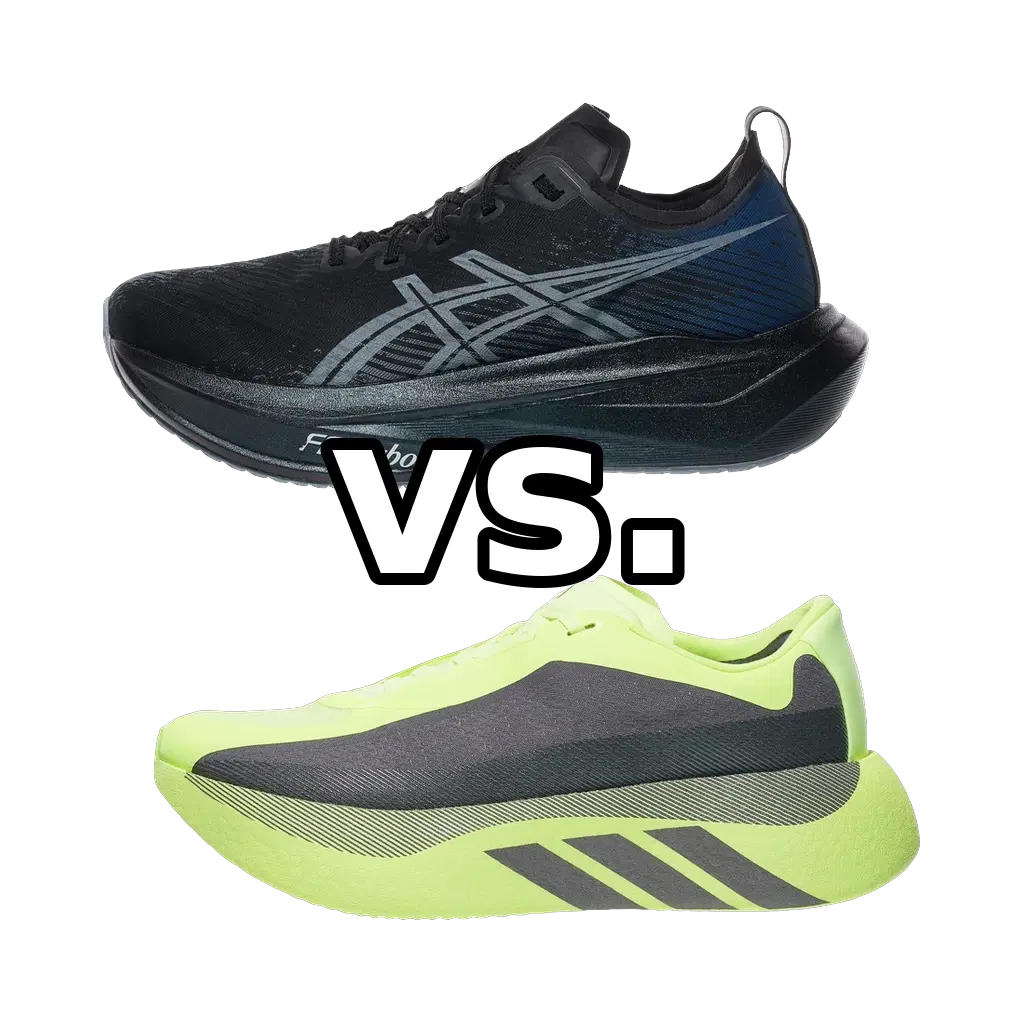
Verdict
It genuinely depends — but on specific things, not vibes. If you want the lighter, steadier, more forgiving do-everything shoe that handles slow miles as gracefully as fast ones, go Megablast. If you want the plushest, springiest PEBA ride and you reliably run with a committed midfoot stride, the Hyperboost Edge rewards that intent. Both nail the half marathon and neither is a short-distance racer; your choice is really lighter-and-steadier (Asics) versus softer-and-more-forward (Adidas).
Pace
4 of 6
Cushioning
6 of 6
Responsiveness
5 of 6
Stability
4 of 6
Drop
8 mm
Support
Neutral
Plate
None
Distances
10KHalfMarathon
Pace
4 of 6
Cushioning
6 of 6
Responsiveness
5 of 6
Stability
3 of 6
Drop
7 mm
Support
Neutral
Plate
None
Distances
10KHalfMarathon
At a Glance
Asics MegablastAdidas Hyperboost Edge
Who Should Choose Each Shoe
Choose
Asics Megablast
Choose the Asics Megablast if you want the more versatile, nimbler all-rounder — a lighter shoe that stays composed across easy recovery miles, tempo sessions, and the occasional 10K-to-marathon race without feeling like a handful. Its extra gram-for-gram lightness and steadier, broader platform make it the safer pick for runners who log slower or fatigued miles, and the slightly more ramped 8 mm drop suits heel and midfoot strikers alike. It's the better default for an experienced recreational runner who wants one shoe to do almost everything.
Choose
Adidas Hyperboost Edge
Choose the Adidas Hyperboost Edge if you prize the deepest, softest PEBA rebound and a more forward-leaning ride, and you run with intent — its lower 7 mm drop and plush, deeply compressing foam come alive most during deliberate tempo-to-marathon efforts. It best suits an efficient midfoot-landing runner who won't be bothered by the slightly perched feel and modest stability at slow paces, and who values protective, high-energy cushioning over outright lightness. If your week skews toward steady and uptempo long runs rather than plodding recovery jogs, it's the more rewarding tool.
Head-to-Head
Start with what they share: an identical 45 mm heel stack, maximum cushioning rated 6/6, high foam-driven responsiveness (5/6), and no plate, so the energy in both comes purely from resilient superfoam rather than a rigid snap. The differences are real but fine-grained. The Megablast is the lighter shoe at about 218 g in a men's US 9 versus 247 g for the Hyperboost Edge — roughly 29 g, which you feel as quicker, nimbler turnover in the Asics. Geometry diverges slightly too: the Megablast's 45/35 mm platform sits on a more ramped forefoot (its official 8 mm drop, with a steeper effective offset), while the Hyperboost's 45/38 mm build gives a flatter 7 mm drop and a more forward-leaning, lower-to-the-ground forefoot feel. On stability they split by one notch — the Megablast's broader platform earns 4/6 and holds together a touch better when you're slow and tired, whereas the Hyperboost is more modest at 3/6, a bit perched and prone to a slight wobble at jogging pace, so it rewards a deliberate midfoot landing. The foams give each its character: Asics' FF Turbo² A-TPU reads as lively and soft-but-controlled, bouncing best once you're rolling, while Adidas's Hyperboost Pro PEBA compresses more deeply and springs back with a plusher, higher-energy rebound. That shows up in their tuned zones — the Megablast is optimal around 4:45–5:30 min/km (good down to ~4:20), the Hyperboost is pitched a hair faster at 4:15–5:00 min/km and peaks nearer 4:00 — so the Adidas leans a little more tempo-biased while the Asics is the slightly more easygoing all-rounder. Neither is a short-course racer; drop below their fast zones and a plated shoe serves you better.
Similar Comparisons
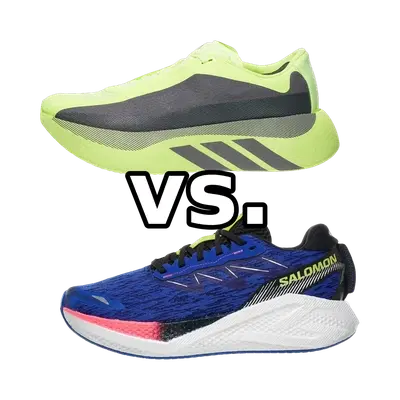
Adidas Hyperboost Edge vs Salomon Aero Glide 4
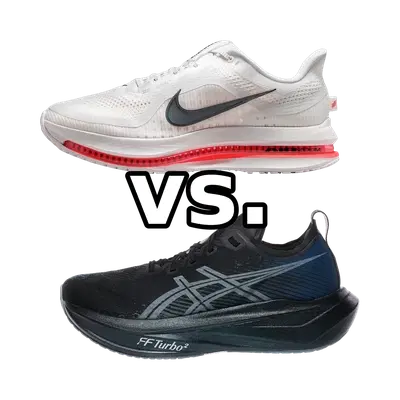
Nike Pegasus Premium vs Asics Megablast
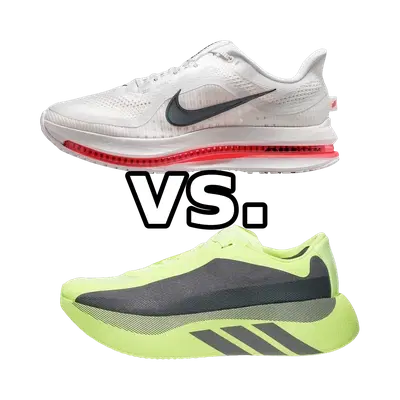
Nike Pegasus Premium vs Adidas Hyperboost Edge
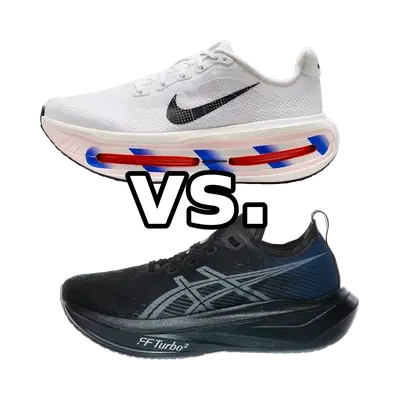
Nike Vomero Premium vs Asics Megablast
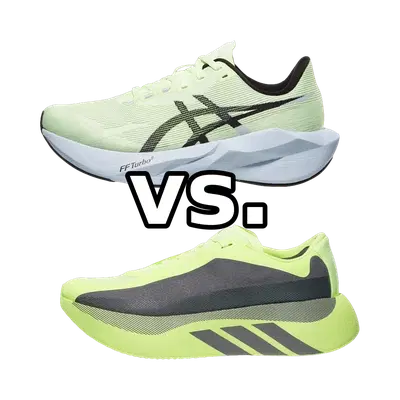
Asics Novablast 6 vs Adidas Hyperboost Edge
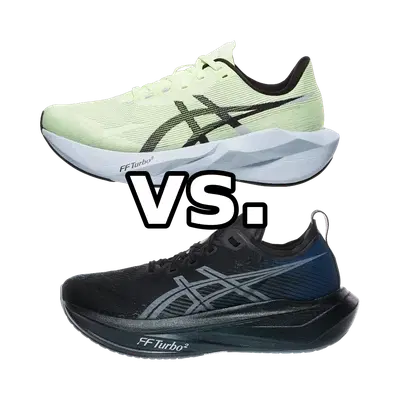
Asics Novablast 6 vs Asics Megablast
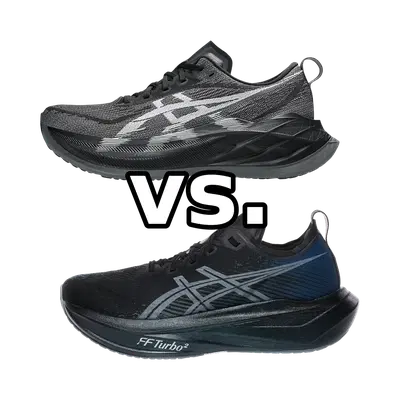
Asics Superblast 2 vs Asics Megablast
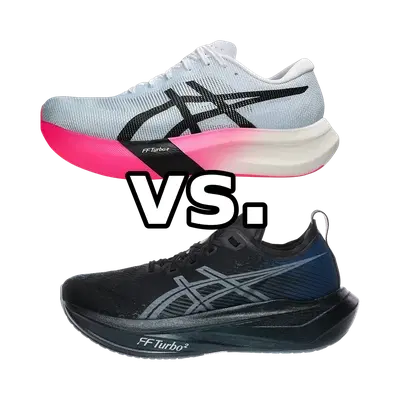
Asics Metaspeed Sky Paris vs Asics Megablast
© 2026 longrunshoes.ai | All rights reserved.
Use of materials from this site is permitted only with proper attribution and a link to longrunshoes.ai.