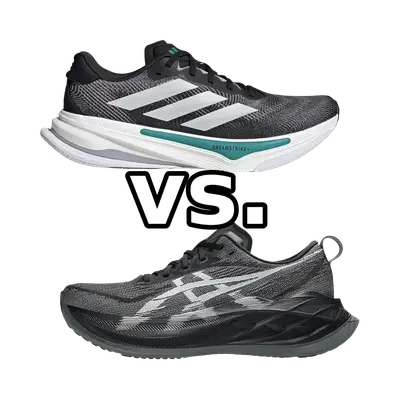
Asics Superblast 2 vs Asics Megablast:
Which to Choose
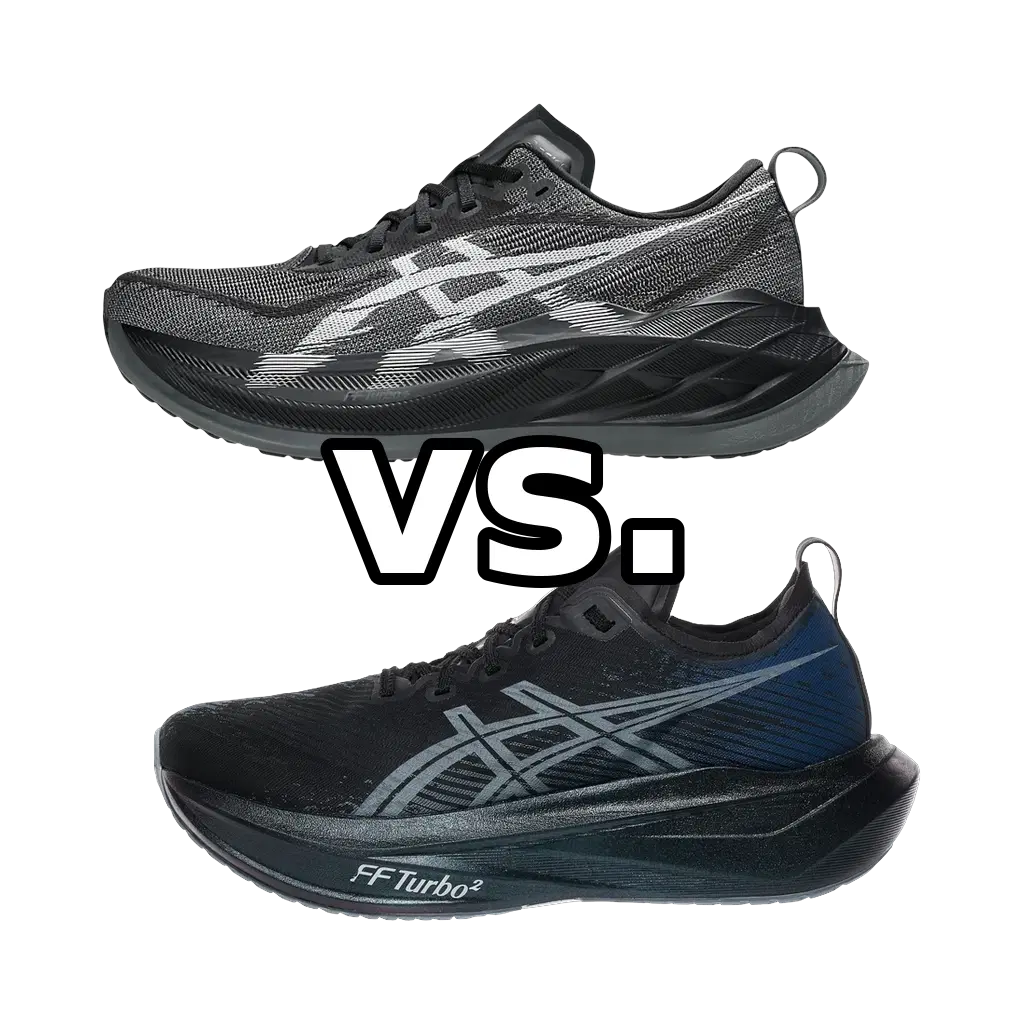
Verdict
It comes down to how you'll actually use it. If your weekly rotation is mostly quality — tempo, uptempo long runs, and races you'd rather not buy a dedicated racer for — the plusher, springier Superblast 2 is the more rewarding tool. If you want the single lightest, most versatile max-cushion trainer to cover everything from easy miles to the occasional race, the newer Megablast's ~30g weight savings and all-round A-TPU ride make it the smarter one-shoe pick. They're close enough that you won't regret either — the deciding factor is easy-mile comfort and weight (Megablast) versus plush, race-ready bounce (Superblast 2).
Pace
5 of 6
Cushioning
6 of 6
Responsiveness
5 of 6
Stability
4 of 6
Drop
8 mm
Support
Neutral
Plate
None
Distances
10KHalfMarathon
Pace
4 of 6
Cushioning
6 of 6
Responsiveness
5 of 6
Stability
4 of 6
Drop
8 mm
Support
Neutral
Plate
None
Distances
10KHalfMarathon
At a Glance
Asics Superblast 2Asics Megablast
Who Should Choose Each Shoe
Choose
Asics Superblast 2
Choose the Superblast 2 if you want one shoe that can genuinely stand in for a carbon racer on the days you don't want to lace one up — an intermediate-to-experienced runner doing tempo sessions, uptempo long runs, and the occasional half or full marathon who likes a deep, plush, PEBA-driven bounce underfoot. Its dual-density stack rewards pushing the pace, so it's the better pick if most of your mileage is quality work rather than easy jogging. If you value that maximal, protective softness over shaving every last gram, this is the one.
Choose
Asics Megablast
Choose the Megablast if you want the lightest possible big-stack super trainer to be your single do-it-all shoe — easy days, tempo, long runs, and the rare race — without swapping between a trainer and a racer. At around 218g it carries its 45mm of A-TPU foam more nimbly than the Superblast 2, and its single-foam ride is comfortable enough to soak up relaxed miles yet lively enough to reward picking up the pace. It's the better fit for the runner who prioritizes low weight and broad, everyday versatility over the plushest possible cushion.
Head-to-Head
Geometrically these two are near twins — both stand near 45mm at the heel with an 8mm drop, both are neutral, both carry maximum cushioning with no plate, so transitions in each are smooth and rolling rather than snappy. The clearest measurable split is weight: the Megablast comes in around 218g in a men's US9 versus roughly 248g for the Superblast 2, a genuine ~30g gap that makes the newer shoe feel noticeably lighter on foot for the same amount of stack. The bigger character difference is in the midsole recipe. The Superblast 2 runs a dual-density stack — a top layer of FF Turbo Plus PEBA over a firmer FF Blast Plus Eco base — which gives it a plush, deep, springy feel and, per its tuning, a faster effective range, rewarding runners who push into tempo and race efforts and feeling slightly wasted at an easy shuffle. The Megablast instead uses a single full-length slab of FF Turbo² A-TPU foam, which reads as lively and soft-but-controlled and is pitched as a true do-everything trainer that will happily absorb easy miles as well as uptempo work. Both feel a touch tippy at very slow, tired paces — an unavoidable trade-off of this much height — and both stabilize once you're rolling on their broad, sculpted platforms. In short: same silhouette, same distances, but the Superblast 2 is the plusher, slightly race-leaning tool, while the lighter Megablast spreads its versatility wider across the pace range.
Similar Comparisons
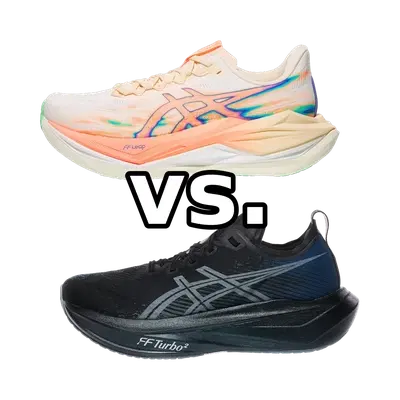
Asics Superblast 3 vs Asics Megablast
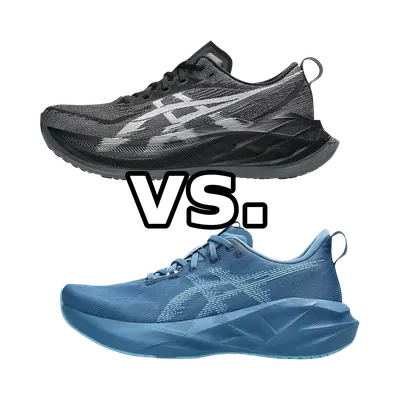
Asics Superblast 2 vs Asics Novablast 5
Nike Pegasus Premium vs Asics Megablast
Asics Superblast 2 vs Asics Superblast 3
Nike Vomero Premium vs Asics Megablast
Asics Superblast 2 vs Brooks Hyperion Max 3
Asics Novablast 6 vs Asics Megablast
Asics Metaspeed Sky Paris vs Asics Megablast
© 2026 longrunshoes.ai | All rights reserved.
Use of materials from this site is permitted only with proper attribution and a link to longrunshoes.ai.