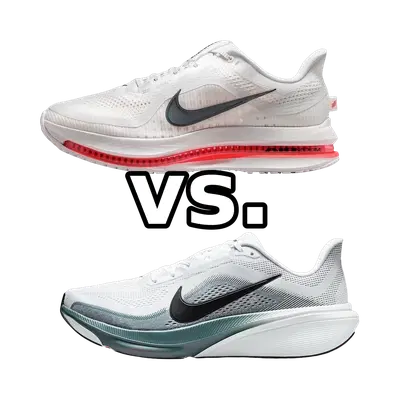
Nike Pegasus Premium vs Nike Pegasus 41:
Which to Choose
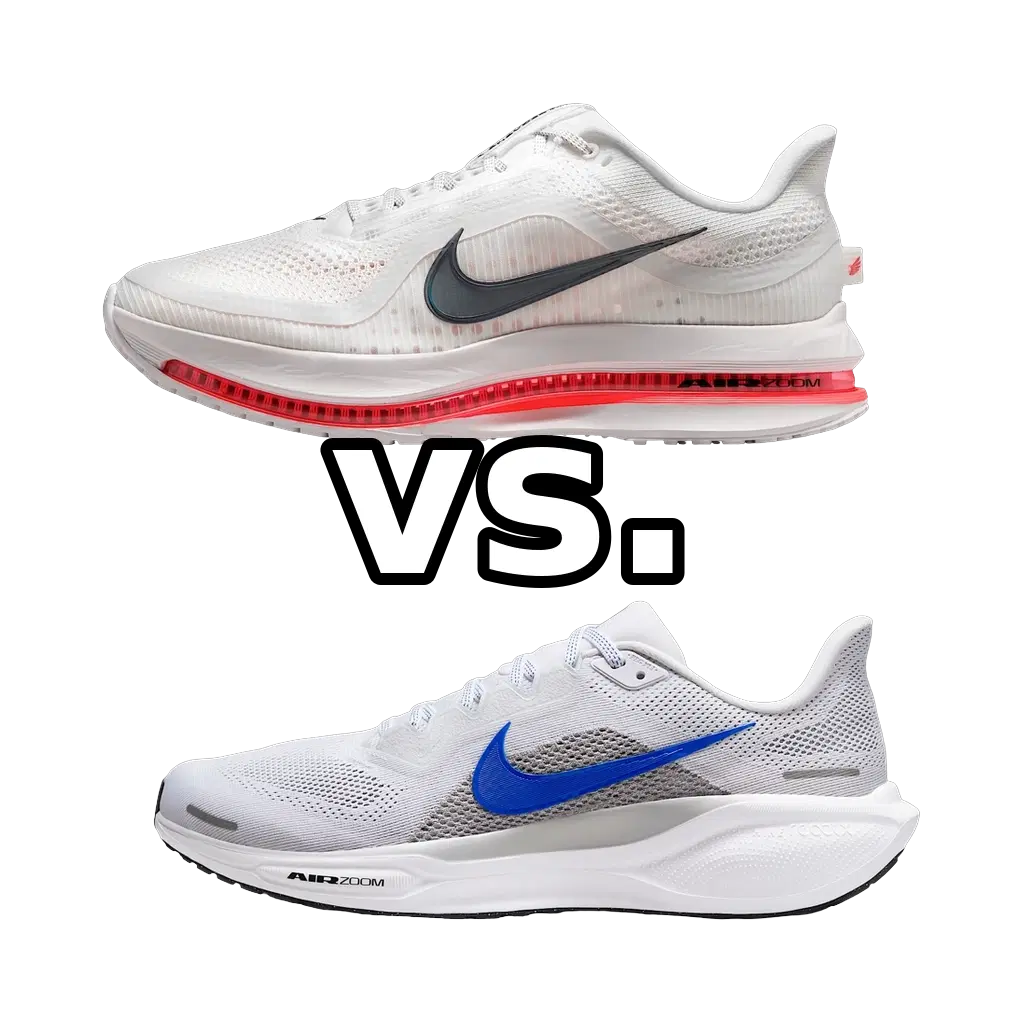
Verdict
It genuinely depends on how much shoe you want underfoot. Go with the Pegasus Premium if you prize maximal cushioning, energy return, and long-run comfort and can accept the extra weight and height; go with the Pegasus 41 if you want a lighter, more stable, ground-connected everyday trainer that's nimbler when the pace picks up. Cushioning depth and bounce point to the Premium; lower-profile stability, agility, and workhorse versatility point to the 41.
Pace
4 of 6
Cushioning
6 of 6
Responsiveness
5 of 6
Stability
3 of 6
Drop
10 mm
Support
Neutral
Plate
None
Distances
10KHalfMarathon
Pace
4 of 6
Cushioning
4 of 6
Responsiveness
4 of 6
Stability
4 of 6
Drop
10 mm
Support
Neutral
Plate
None
Distances
5K10KHalf
At a Glance
Nike Pegasus PremiumNike Pegasus 41
Who Should Choose Each Shoe
Choose
Nike Pegasus Premium
Choose the Pegasus Premium if your priority is plush, protective cushioning and a bit of bounce for long runs, recovery miles, and marathon-distance training, and you want one maximal shoe to soak up the bulk of your week. It rewards neutral runners who value comfort and energy return over ground feel and don't mind carrying a taller, heavier platform. If you're logging big mileage and want your legs to feel fresher at the end of a long effort, this is the pick.
Choose
Nike Pegasus 41
Choose the Pegasus 41 if you want a lighter, more planted, lower-to-the-ground trainer for dependable daily miles, steady runs, and the occasional uptempo 10K, with stability and ground connection mattering more to you than deep plushness. It's an ideal choice for beginners finding their rhythm and for experienced runners who want a durable, no-fuss workhorse that holds up over high mileage. If you prefer a secure, predictable ride and tend to run shorter-to-mid distances, the 41 fits better.
Head-to-Head
The clearest difference is stack and the ride that comes with it. The Pegasus Premium stands tall at roughly 45mm heel / 35mm forefoot, pairing soft, springy ZoomX over a ReactX base with a full-length Air Zoom unit for a cushy, slightly bouncy landing and a lively rebound as you roll forward. The Pegasus 41 sits noticeably lower at about 37mm heel / 27mm forefoot, using ReactX foam with separate forefoot and heel Air Zoom units for a moderately soft but planted, ground-connected feel rather than a springy pop. Both keep the same 10mm drop, so the heel-forward geometry feels familiar either way, but the extra height of the Premium is why it rates a touch lower for stability (3/6 vs the 41's 4/6) and can feel slightly tippy at very slow paces or on tight corners, where the broader, lower 41 stays more secure. Weight follows stack: the Premium is the heavier shoe at around 326g (11.5 oz) versus roughly 281g (about 9.9 oz) for the 41, and you feel that difference most when the pace lifts. On use case, the Premium stretches comfortably out to the marathon with the half as its sweet spot and genuinely enjoys steady long runs, while the 41 is happiest from 5K to the half with uptempo 10K work as its highlight. Neither is a racer — both are plateless and will feel like more shoe than you want if you try to run truly fast — but the 41 is the more honest workhorse for high-mileage training thanks to its durable rubber outsole and lighter build, while the Premium trades some of that nimbleness for depth of cushioning and energy return.
Similar Comparisons
Nike Pegasus 41 vs Nike Pegasus 42
Nike Pegasus Premium vs Asics Megablast

Nike Pegasus 41 vs Salomon Aero Blaze 4
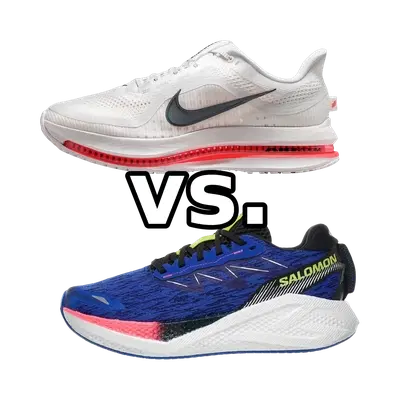
Nike Pegasus Premium vs Salomon Aero Glide 4

Nike Pegasus 41 vs Hoka Mach 7
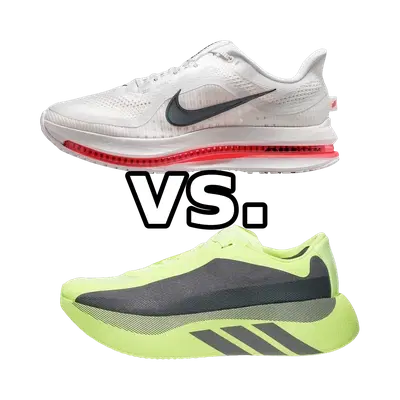
Nike Pegasus Premium vs Adidas Hyperboost Edge

Nike Pegasus 41 vs Puma Velocity Nitro 3
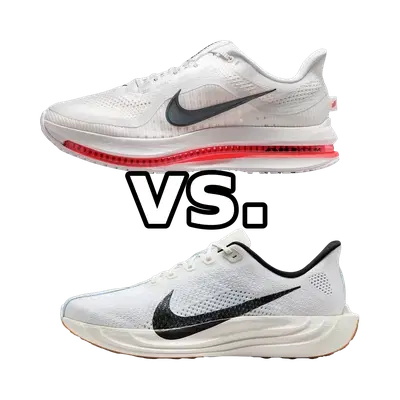
Nike Pegasus Premium vs Nike Pegasus Plus
© 2026 longrunshoes.ai | All rights reserved.
Use of materials from this site is permitted only with proper attribution and a link to longrunshoes.ai.