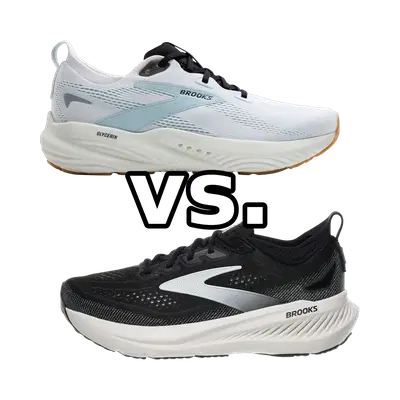
Brooks Glycerin 22 vs Asics Gel-Cumulus 28:
Which to Choose
Verdict
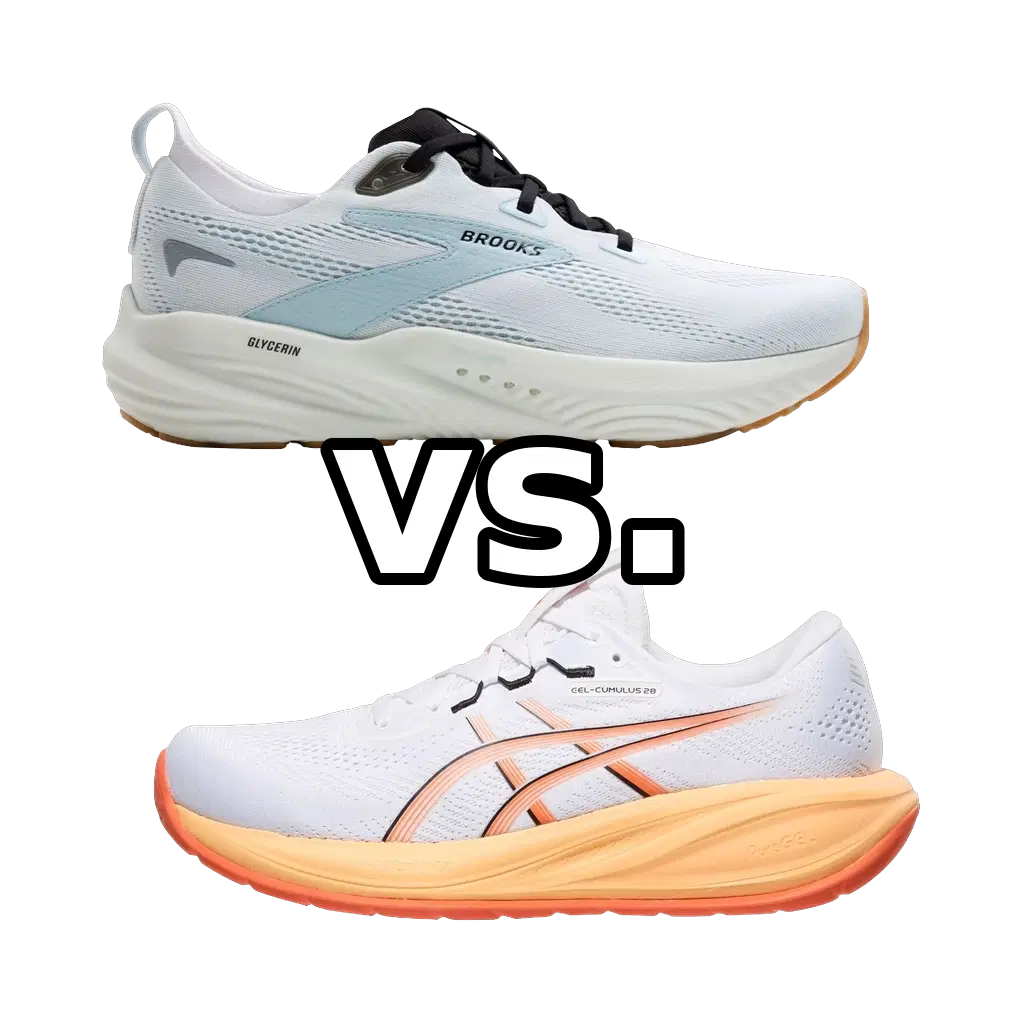
These are genuinely close shoes serving the same purpose, so it comes down to fit and ride preference, not a quality gap. Go with the Cumulus 28 if you're a heel striker who wants the tallest, softest, most impact-absorbing platform and the higher 13mm ramp; go with the Glycerin 22 if you want a slightly lower 10mm drop, a marginally springier foam, and a more versatile ride across strike patterns. Try both on if you can — the taller, steeper Cumulus and the lower, livelier Glycerin feel different enough underfoot that your own legs will tell you quickly.
Pace
3 of 6
Cushioning
5 of 6
Responsiveness
4 of 6
Stability
4 of 6
Drop
10 mm
Support
Neutral
Plate
None
Distances
10KHalfMarathon
Pace
3 of 6
Cushioning
5 of 6
Responsiveness
4 of 6
Stability
4 of 6
Drop
13 mm
Support
Neutral
Plate
None
Distances
10KHalfMarathon
At a Glance
Brooks Glycerin 22Asics Gel-Cumulus 28
Who Should Choose Each Shoe
Choose
Brooks Glycerin 22
Pick the Glycerin 22 if you want a plush daily trainer with a slightly more grounded, lower 10mm drop and a touch more pop to the foam — ideal for a neutral runner who mixes heel and midfoot striking and wants one shoe that handles easy days, long runs, and the occasional steadier stretch. It's the better call if you prefer a marginally more responsive, versatile ride and don't need the tallest, softest platform available. Beginners and high-mileage recreational runners who value a composed, durable everyday feel will be well served.
Choose
Asics Gel-Cumulus 28
Choose the Gel-Cumulus 28 if you're a committed heel striker who wants the gentlest possible landings and the maximum amount of cushion underfoot — its taller 43mm stack, 13mm drop, and PureGEL heel are purpose-built for that, rolling you smoothly through the gait on long, conversational-pace miles. It's also the lighter of the two, so if you want deep, protective comfort for stacking up easy volume without feeling the weight, this is the pick. Runners who prize impact absorption and a tall, cushioned cruise over a livelier, more connected ride will prefer it.
Head-to-Head
Both shoes are built for the same job — protective, high-cushion everyday training for neutral runners who want comfort over snap — and both lean soft enough that quick paces feel vague, so neither is a tempo tool. The clearest split is geometry. The Cumulus 28 sits on a taller platform (roughly 43mm heel / 30mm forefoot) with a steep 13mm heel-to-toe drop, while the Glycerin 22 is lower and more moderate (about 38.5mm heel / 28–29mm forefoot) at a 10mm drop. That gives the Cumulus a taller, more rolling, more heel-biased ride — and its PureGEL heel insert reinforces that, making landings exceptionally gentle for runners who come down hard on the heel. The Glycerin's lower, 10mm setup feels a touch closer to the ground and plays better across heel and midfoot strikes, so it's the more versatile of the two underfoot. Foam character differs too: the Glycerin's nitrogen-infused DNA Tuned foam carries a gentle, moderate spring that keeps the stride a little livelier, whereas the Cumulus's FF Blast Max with the gel insert absorbs and smooths more than it pushes back, prioritizing shock relief over rebound. Both use accommodating engineered mesh uppers and both anchor the ride with a wide, sidewall-supported base rather than a medial post, so stability is comparable and firmly in neutral territory. On weight the Glycerin is the heavier of the two — around 293g versus roughly 275g for the Cumulus — which, combined with the lower drop and slightly springier foam, makes the Brooks feel marginally more willing when you lift the pace, while the Asics stays most at home at relaxed, long-haul effort.
Similar Comparisons

Asics Gel-Nimbus 28 vs Asics Gel-Cumulus 28
Brooks Glycerin 22 vs Brooks Glycerin Flex
Asics Gel-Cumulus 27 vs Asics Gel-Cumulus 28

Brooks Glycerin 22 vs Brooks Glycerin GTS 23

Puma Magnify Nitro 3 vs Asics Gel-Cumulus 28

Brooks Glycerin 22 vs Salomon Aero Glide 3

Salomon Aero Glide 3 vs Asics Gel-Cumulus 28

Puma Magnify Nitro 3 vs Brooks Glycerin 22
© 2026 longrunshoes.ai | All rights reserved.
Use of materials from this site is permitted only with proper attribution and a link to longrunshoes.ai.