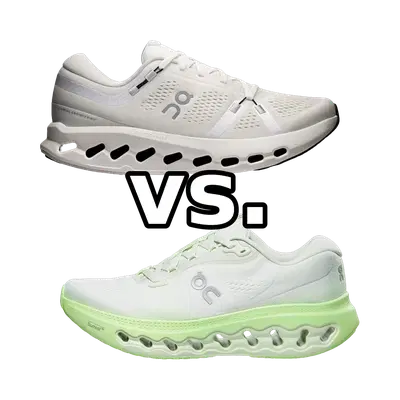
On Cloudstratus 3 vs On Cloudsurfer 3:
Which to Choose
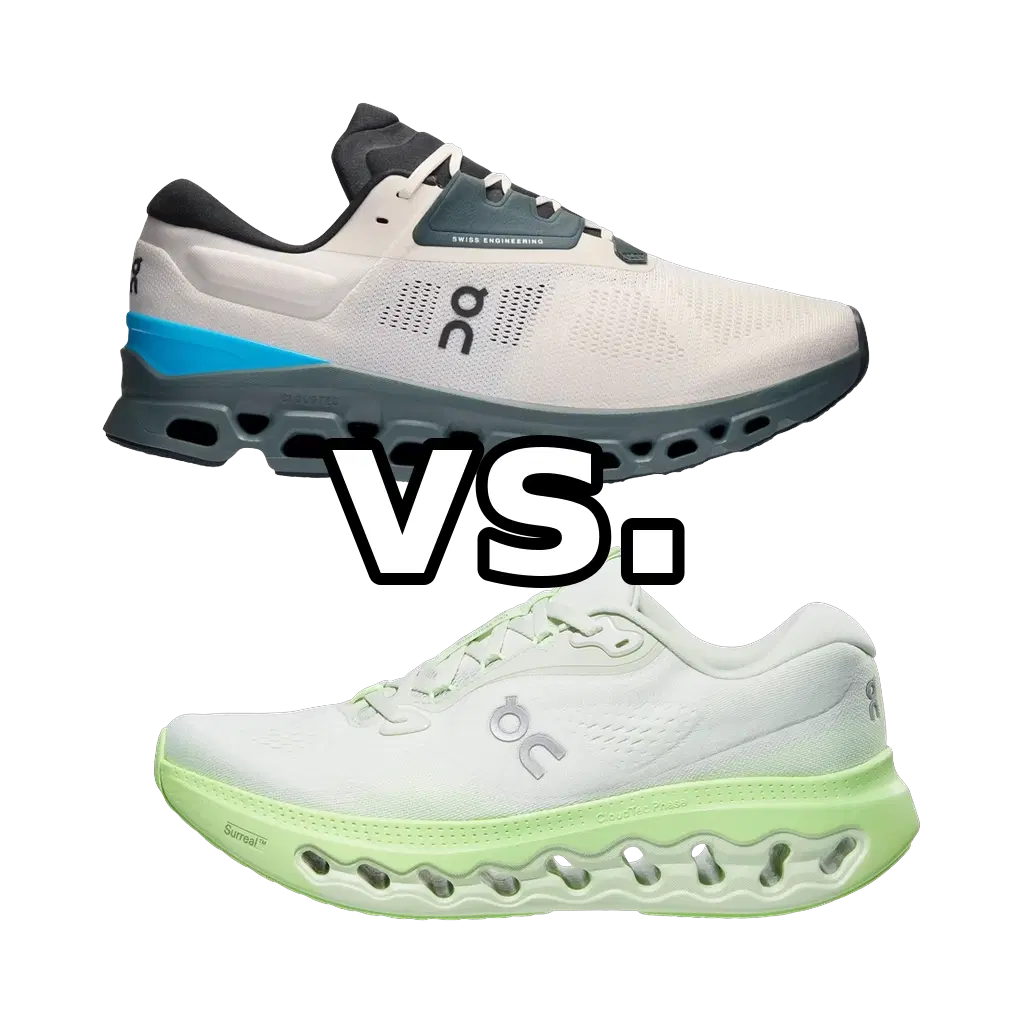
Verdict
It depends on ride feel and range, not on which is "better." Go Cloudstratus 3 if you want a firmer, more stable, plate-guided trainer that can carry you from steady half-marathon efforts up to the marathon; go Cloudsurfer 3 if you want a taller, softer, max-cushion ride for easy and long base miles and don't need the extra stability or marathon reach. Runners who prioritize a planted, controlled feel should lean toward the Cloudstratus, while those who prioritize plush comfort should take the Cloudsurfer.
Pace
3 of 6
Cushioning
5 of 6
Responsiveness
3 of 6
Stability
4 of 6
Drop
6 mm
Support
Stable Neutral
Plate
Composite
Distances
10KHalfMarathon
Pace
3 of 6
Cushioning
6 of 6
Responsiveness
4 of 6
Stability
3 of 6
Drop
8 mm
Support
Neutral
Plate
None
Distances
10KHalf
At a Glance
On Cloudstratus 3On Cloudsurfer 3
Who Should Choose Each Shoe
Choose
On Cloudstratus 3
Pick the Cloudstratus 3 if you're a neutral to mild-overpronating runner who wants a planted, controlled workhorse for long, steady efforts and the occasional marathon, and you value stability and a firm, composed platform over plush softness. Its wider dual-pod base, firmer Helion foam and composite Speedboard make it the better choice for runners who want a shoe that holds its shape as the pace lifts toward tempo and that stays secure late in a long run. If you've found tall, soft trainers feel wobbly or vague underfoot, this lower, steadier ride will suit you better.
Choose
On Cloudsurfer 3
Choose the Cloudsurfer 3 if you want maximum soft cushioning for easy and long aerobic base miles and you prize plush, forgiving comfort over structure or speed. It's a strong fit for beginners building weekly volume and for experienced runners who want a relaxed, high-stack cruiser for comfortable training days, with the higher 8 mm drop easing Achilles strain. Just know its soft, tall, heavier platform rewards a steady cruising rhythm rather than surging, and it's best kept to 10K and half-marathon distances.
Head-to-Head
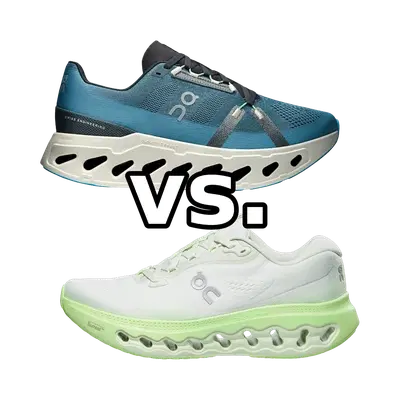
The clearest physical difference is underfoot height and feel. The Cloudsurfer 3 sits on a tall 45 mm heel / 37 mm forefoot platform of soft, supercritical "Surreal" EVA with no plate, so it feels plush and slightly springy, compressing through its CloudTec Phase pods for a cushioned, cruising roll-through. The Cloudstratus 3 is lower and firmer at 37 mm heel / 31 mm forefoot, pairing dual-layer Helion CloudTec pods with an embedded composite Speedboard; the result is a firm-yet-damped, planted ride that guides the transition rather than cushioning you into the ground. On On's own scale the Cloudsurfer rates maximum cushioning (6/6) versus the Cloudstratus's high-but-controlled 5/6, and it edges it slightly on responsiveness (4/6 vs 3/6) through foam-driven spring — but that spring is soft rather than snappy. Stability flips the other way: the Cloudstratus is the steadier shoe (4/6, stable-neutral) thanks to its wide dual-pod base and firmer foam, while the taller, softer Cloudsurfer (3/6, neutral) can feel a touch vague when you pick up the pace. Drop differs too — 6 mm on the Cloudstratus versus 8 mm on the Cloudsurfer — with the Cloudsurfer's higher ramp easing Achilles load and the Cloudstratus's lower offset contributing to its flatter, more grounded feel. Both are firmly on the heavier, protective end of daily trainers rather than lightweight speed tools, and their optimal paces overlap in the roughly 5:00–6:00 min/km zone, with the plated Cloudstratus holding form a touch better when you push toward tempo. The telling range difference is distance: the Cloudstratus officially stretches to the marathon, while the Cloudsurfer tops out comfortably at the half.
© 2026 longrunshoes.ai | All rights reserved.
Use of materials from this site is permitted only with proper attribution and a link to longrunshoes.ai.