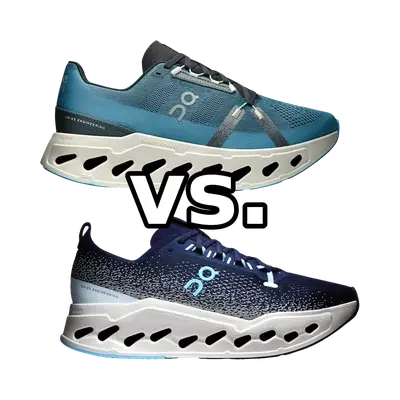
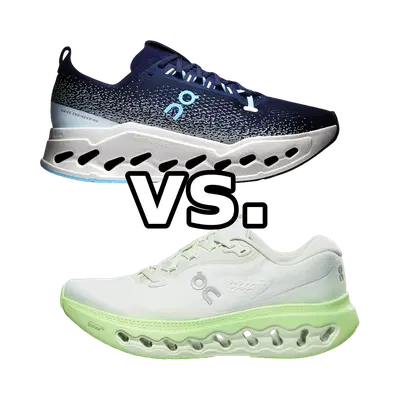
On Cloudeclipse vs On Cloudsurfer 3:
Which to Choose
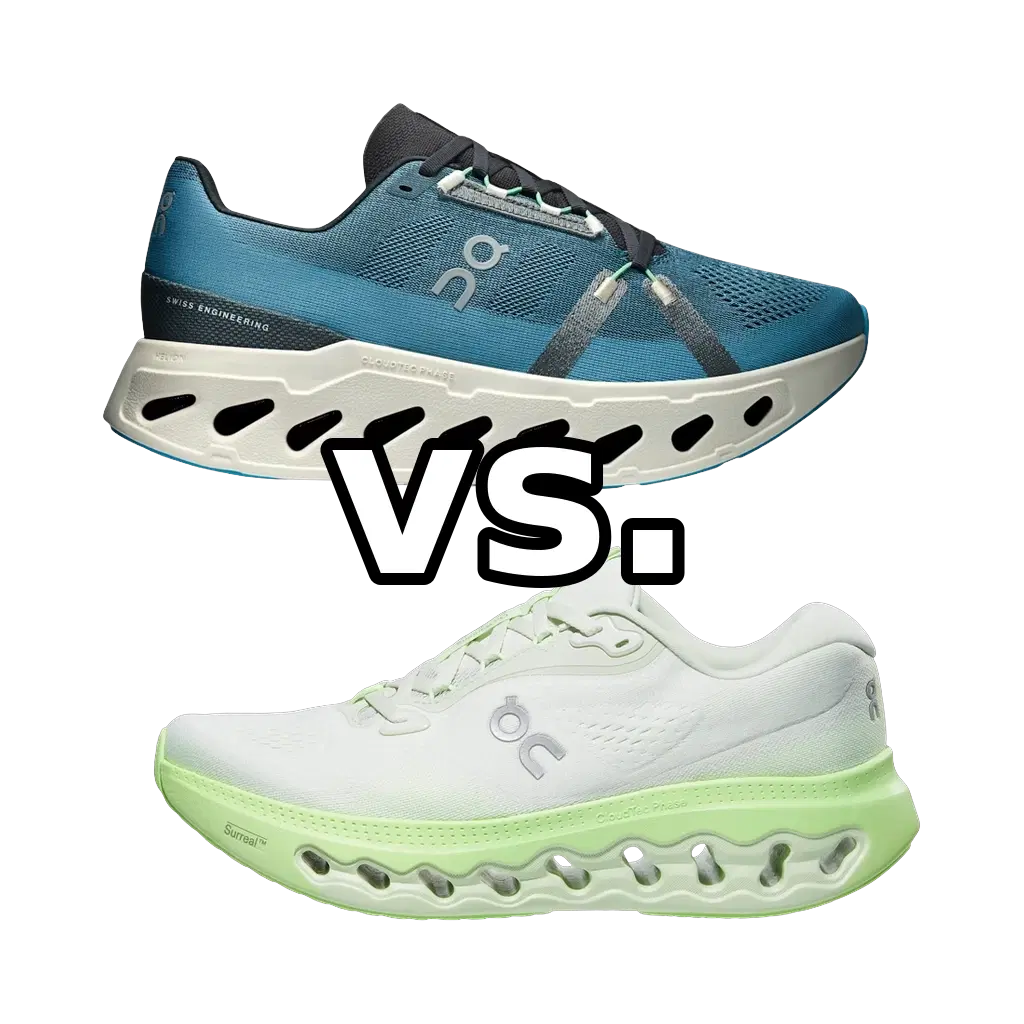
Verdict
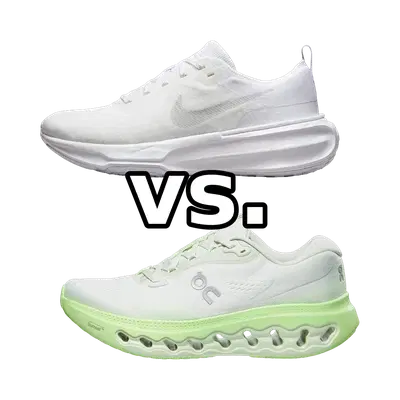
This is genuinely close: same category, same distances, nearly the same stack, and neither is meant for speed. It comes down to ride character — go Cloudeclipse for a more stable, plate-guided, lower-drop ride that stays composed over long miles with muted rebound, or Cloudsurfer 3 for a plateless, springier, higher-drop plush ride with more bounce but less structure. If stability and a planted feel matter most, take the Cloudeclipse; if you want soft liveliness and a gentler ramp, take the Cloudsurfer 3.
Pace
3 of 6
Cushioning
5 of 6
Responsiveness
3 of 6
Stability
4 of 6
Drop
6 mm
Support
Neutral
Plate
Composite
Distances
10KHalf
Pace
3 of 6
Cushioning
6 of 6
Responsiveness
4 of 6
Stability
3 of 6
Drop
8 mm
Support
Neutral
Plate
None
Distances
10KHalf
At a Glance
On CloudeclipseOn Cloudsurfer 3
Who Should Choose Each Shoe
Choose
On Cloudeclipse
Pick the Cloudeclipse if you want the more structured, planted max-cushion cruiser — a neutral runner logging long, steady, easy miles who values a shoe that stays composed and holds its form deep into a run rather than collapsing soft. Its Speedboard and broader platform make it the steadier, more guided pick, and its 6 mm drop with a touch more forefoot cushion suits runners who prefer a flatter ride. Choose it if you'll happily trade springy pop for all-day impact protection and stability.
Choose
On Cloudsurfer 3
Pick the Cloudsurfer 3 if you want the plusher, slightly bouncier feel of a plateless foam ride — a base-mileage runner who prioritizes soft forgiveness and a bit of spring over structure, and doesn't need the extra guidance or stability. Its 8 mm drop is the friendlier choice if your Achilles or calves prefer a higher ramp. It's the better everyday cushion-and-cruise shoe for runners who like a softer, more lively underfoot sensation and keep their efforts relaxed.
Head-to-Head
Start with what's shared: both are tall, soft, neutral trainers built on On's segmented CloudTec Phase geometry, both roll through the gait in a staged, pod-by-pod sequence, and both are on the heavier end of daily trainers rather than anything light or snappy. Their stack heights are very close — the Cloudeclipse measures roughly 44 mm heel / 39 mm forefoot, the Cloudsurfer 3 roughly 45 mm heel / 37 mm forefoot — so neither is meaningfully taller than the other underfoot. The differences live elsewhere. First, drop: the Cloudeclipse runs a 6 mm offset while the Cloudsurfer 3 sits at 8 mm, so the Cloudsurfer ramps slightly more and takes a touch of load off the Achilles, while the Cloudeclipse sits flatter with marginally more forefoot cushion. Second, and most important, the plate: the Cloudeclipse uses a composite Speedboard — a plastic guidance plate, not carbon — that gives it a more structured, planted, composed ride that holds its shape and stays fresh deeper into long miles, and it rates as the more stable of the two. The trade-off is muted rebound; it cushions and steadies rather than springs. The Cloudsurfer 3 has no plate and leans entirely on its supercritical "Surreal" EVA foam, which makes it the livelier, slightly springier, more responsive shoe of the pair — but also the one more prone to feeling vague or mushy once the pace picks up, and a hair less planted. Foam chemistry differs too: dual-layer Helion in the Cloudeclipse versus the single Surreal EVA in the Cloudsurfer. Both top out around 5:00 min/km before the soft platform turns imprecise, so neither is a speed tool — the choice is purely about ride character at easy effort.
© 2026 longrunshoes.ai | All rights reserved.
Use of materials from this site is permitted only with proper attribution and a link to longrunshoes.ai.