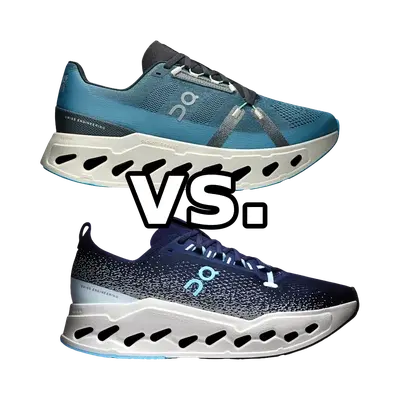
On Cloudeclipse vs Mizuno Wave Skyrise 6:
Which to Choose
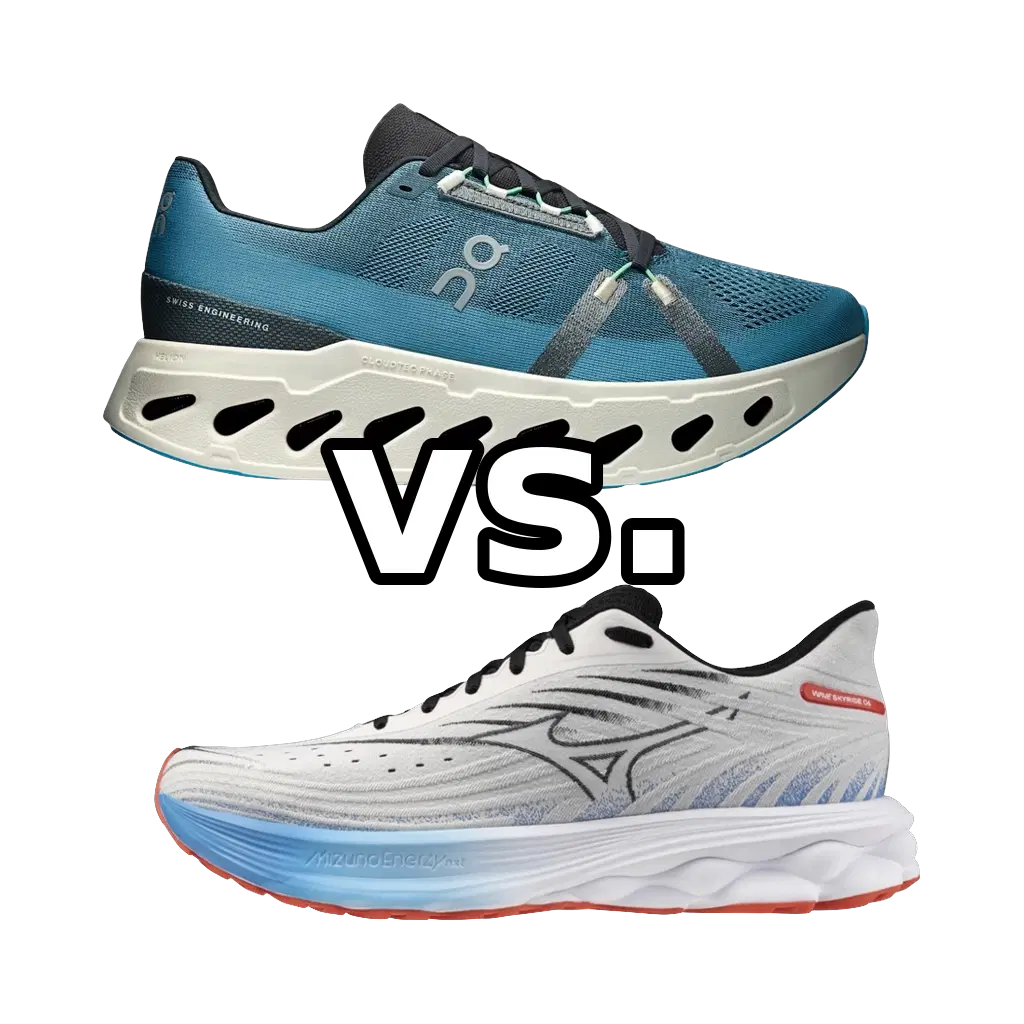
Verdict
It genuinely depends — but on clear, decidable things, not vague preference. Go Mizuno Wave Skyrise 6 if you're marathon-training, want a lighter and marginally more responsive ride, and like a hint of built-in guidance at a traditional 8mm drop. Go On Cloudeclipse if you want the softer, more deeply cushioned of the two, prefer a lower 6mm drop and a fully neutral feel, and your longest efforts are halves and easy long runs rather than full marathons.
Pace
3 of 6
Cushioning
5 of 6
Responsiveness
3 of 6
Stability
4 of 6
Drop
6 mm
Support
Neutral
Plate
Composite
Distances
10KHalf
Pace
3 of 6
Cushioning
5 of 6
Responsiveness
4 of 6
Stability
4 of 6
Drop
8 mm
Support
Stable Neutral
Plate
Composite
Distances
10KHalfMarathon
At a Glance
On CloudeclipseMizuno Wave Skyrise 6
Who Should Choose Each Shoe
Choose
On Cloudeclipse
Choose the On Cloudeclipse if your priority is pure impact absorption and a soft, cushioned cruiser for easy and recovery days, and you prefer a lower 6mm drop and a fully neutral platform with no built-in corrective feel. It's the better pick for a neutral runner — beginner or experienced — whose weekly mileage is mostly relaxed 5K-to-half-marathon running and who values comfort and a planted, well-damped landing over snap, responsiveness, or saving a few grams.
Choose
Mizuno Wave Skyrise 6
Choose the Mizuno Wave Skyrise 6 if you want a plush trainer that still gives you a little guidance underfoot and can stretch all the way to marathon distance, not just the half. Its lighter 260g build, slightly more responsive Wave-plate ride, and higher 8mm drop make it the stronger choice for a neutral runner who likes a touch of stability, is training for a longer race, and wants one shoe to log everything from easy miles to marathon-pace long runs.
Head-to-Head
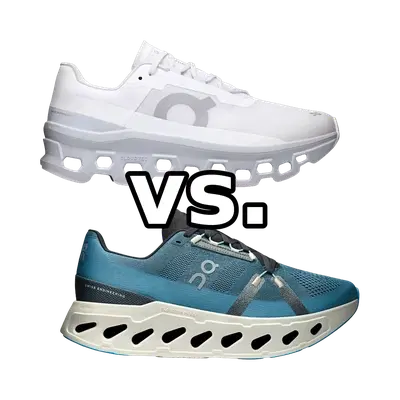
On paper these two are strikingly close: both sit around a 37mm heel stack, both pair a soft top foam over a firmer base (On's dual-layer Helion in CloudTec Phase, Mizuno's ENERZY NXT over ENERZY), and both use a plastic composite plate rather than carbon — a guidance element for smooth transitions, not a propulsion spring. Where they part ways is in feel and intent. The Cloudeclipse runs at a lower 6mm drop and is the softer, more deeply damped of the two; its CloudTec pods collapse in a staged sequence that keeps you rolling forward but returns muted rebound (responsiveness 3/6), so it feels protective and planted rather than lively. The Skyrise 6 sits at a traditional 8mm drop and threads its signature Wave plate under the foam, which steadies the platform and adds a bit of bounce-back (responsiveness 4/6) — On is purely neutral, while Mizuno is "stable-neutral," offering a touch of inherent guidance without being a motion-control shoe. Weight is the other real separator: the Skyrise 6 is 260g in reference men's sizing, while the Cloudeclipse is the heavier shoe at roughly 285g, and that difference shows up when you try to pick up the pace. On range, the Mizuno is the more versatile distance tool — it's happy from 10K through the full marathon, with the half as its sweet spot — whereas the Cloudeclipse is most at home on easy long runs and tops out comfortably at the half, feeling vague if you push much past a steady effort.
© 2026 longrunshoes.ai | All rights reserved.
Use of materials from this site is permitted only with proper attribution and a link to longrunshoes.ai.