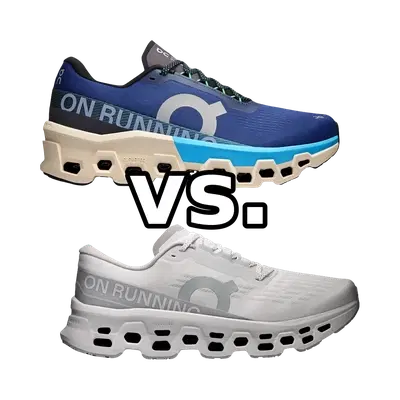
On Cloudmonster 2 vs Mizuno Wave Skyrise 6:
Which to Choose
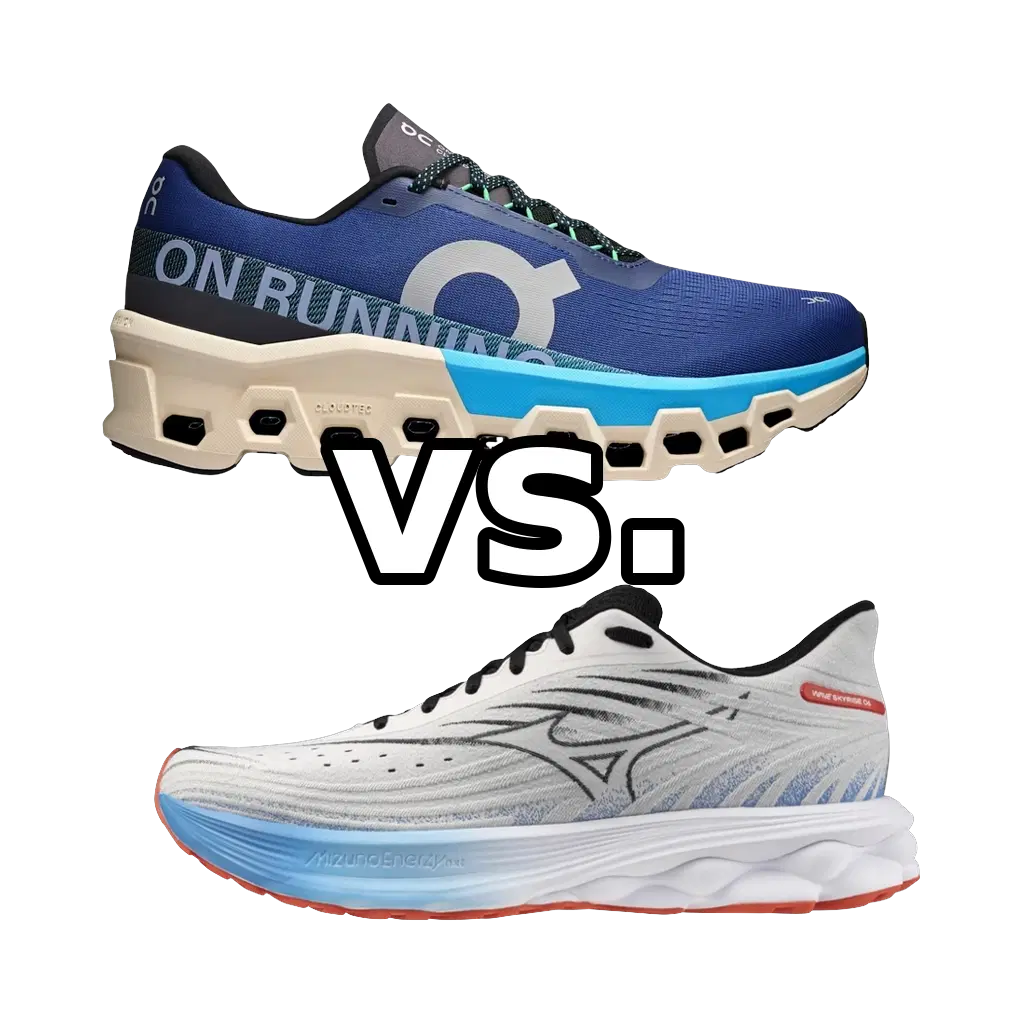
Verdict
These are genuinely close competitors serving the same cushioned-daily-trainer job, so it comes down to ride feel and build rather than capability. Go with the Cloudmonster 2 for a bouncier, more cradled ride and a lower 6mm drop; go with the Skyrise 6 if you want a lighter shoe (260g vs about 295g), a steadier platform with a little built-in guidance, and the more conventional 8mm drop. If you want energy and spring, choose the On; if you want composure, control, and lower weight, choose the Mizuno.
Pace
3 of 6
Cushioning
5 of 6
Responsiveness
4 of 6
Stability
4 of 6
Drop
6 mm
Support
Neutral
Plate
Composite
Distances
10KHalfMarathon
Pace
3 of 6
Cushioning
5 of 6
Responsiveness
4 of 6
Stability
4 of 6
Drop
8 mm
Support
Stable Neutral
Plate
Composite
Distances
10KHalfMarathon
At a Glance
On Cloudmonster 2Mizuno Wave Skyrise 6
Who Should Choose Each Shoe
Choose
On Cloudmonster 2
Pick the Cloudmonster 2 if you're a neutral runner who wants the most bounce and plush, cradled cushioning for easy days and long efforts, and you like a lower, more natural 6mm drop. It's the better fit if you enjoy On's distinctive springy CloudTec feel and don't need any built-in guidance underfoot, and if your running skews toward relaxed steady miles where the extra weight never really matters. Just know it's the heavier of the two and can feel a little soft and disconnected at genuinely slow paces.
Choose
Mizuno Wave Skyrise 6
Choose the Wave Skyrise 6 if you want that same high cushioning but prefer a more composed, grounded ride with a hint of stability — the Wave plate gives mild guidance that suits runners who feel a touch wobbly in purely neutral shoes. It's also the lighter pick at 260g and runs a more traditional 8mm drop with a touch more heel cushioning, so it's the better choice if you like a conventional ramp and a platform that stays planted rather than squishy. Ideal for the everyday runner training up to a marathon who values predictable transitions over maximal bounce.
Head-to-Head
On stack height these two are close but not identical: the Cloudmonster 2 sits at roughly 35mm heel / 29mm forefoot for a 6mm drop, while the Skyrise 6 stacks a bit taller in the heel at 37.5mm / 28.5mm for an 8mm drop. That gives the Mizuno a slightly more pronounced heel-to-toe ramp and a touch more rearfoot cushioning, while the On's lower 6mm offset sits you a hair more naturally and flatter underfoot. The bigger surprise is weight: despite the Skyrise's own reputation as a "substantial" shoe at 260g, it's actually the lighter of the two — the Cloudmonster 2 comes in heavier at about 295g in a men's sample, so if you try to genuinely open up the pace, the On is the one that feels like more shoe on your foot. Ride character is where they truly diverge. The Cloudmonster pairs Helion superfoam with On's oversized, hollow CloudTec pods for a tall, plush, mildly springy feel that cradles the landing and firms up through its composite Speedboard as you push — though at very slow paces those hollow pods can feel soft and a little disconnected from the ground. The Skyrise layers ENERZY NXT over ENERZY for a soft "floating" sensation, but its composite Mizuno Wave plate is tuned to steady and compose the platform rather than to snap you forward, which keeps it from ever feeling mushy. That also shapes their stability: the Cloudmonster is a pure neutral shoe with a wide pod base and no guidance built in, whereas the Skyrise reads as stable-neutral, using the Wave element to add a subtle sense of control underfoot without being a motion-control shoe. Both transition smoothly at conversational to moderate effort and both call the half marathon and long runs their sweet spot, so the choice is less about what they're for and more about how you want the miles to feel.
© 2026 longrunshoes.ai | All rights reserved.
Use of materials from this site is permitted only with proper attribution and a link to longrunshoes.ai.