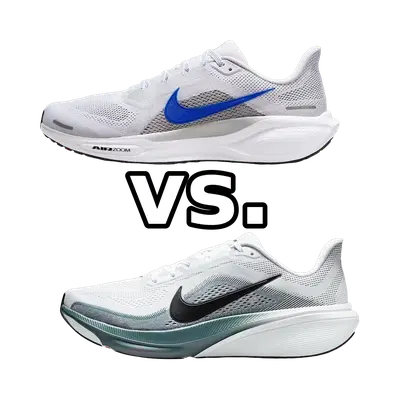
Nike Pegasus 41 vs Nike Vomero 18:
Which to Choose
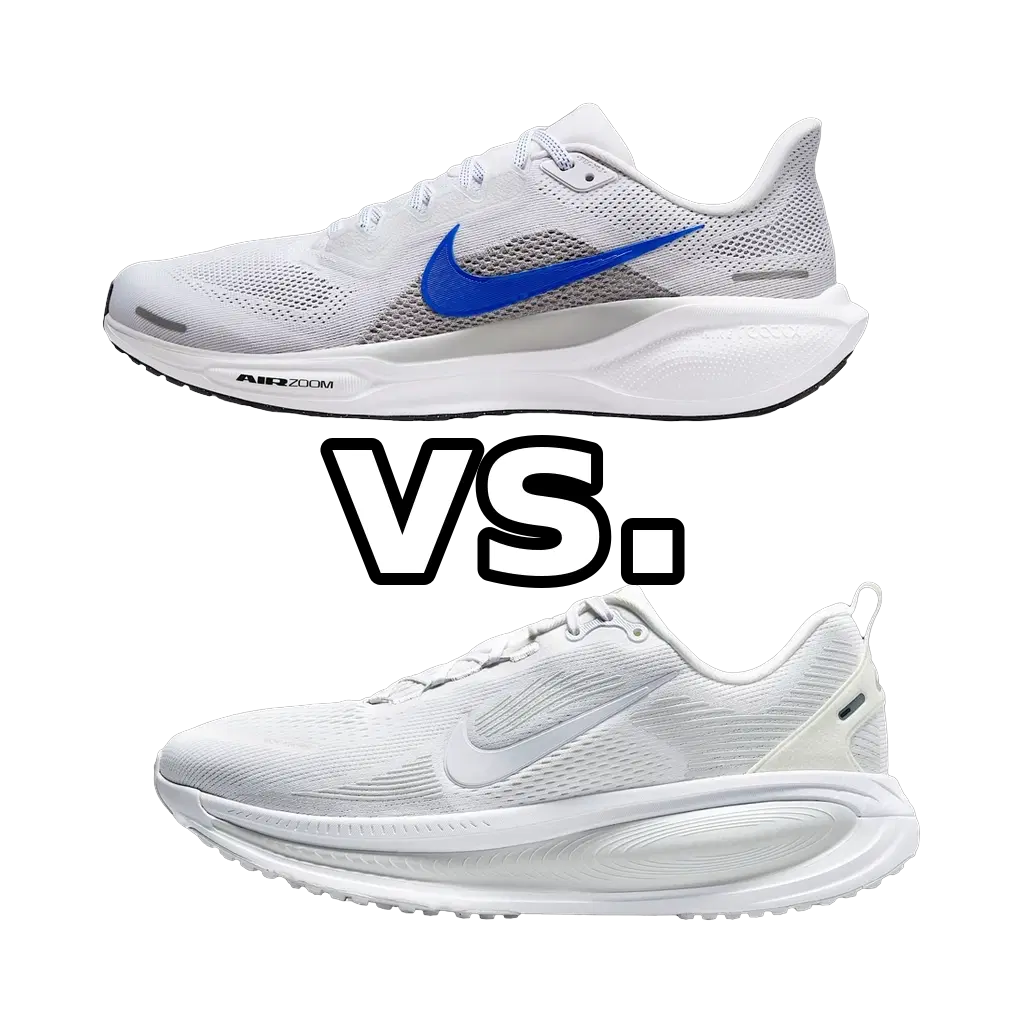
Verdict
It genuinely depends on how you run, not on which shoe is "better." Pick the Pegasus 41 if you want one versatile, slightly quicker trainer that can do a bit of everything; pick the Vomero 18 if you want a dedicated max-cushion ride for comfortable, relaxed miles and are happy to keep your tempo and interval work in another shoe. If you can only own one and your weeks include any faster running, the more adaptable Pegasus is the safer all-rounder; if your training is almost entirely easy and long, the Vomero's extra foam is the more rewarding choice.
Pace
4 of 6
Cushioning
4 of 6
Responsiveness
4 of 6
Stability
4 of 6
Drop
10 mm
Support
Neutral
Plate
None
Distances
5K10KHalf
Pace
3 of 6
Cushioning
6 of 6
Responsiveness
4 of 6
Stability
4 of 6
Drop
10 mm
Support
Neutral
Plate
None
Distances
10KHalf
At a Glance
Nike Pegasus 41Nike Vomero 18
Who Should Choose Each Shoe
Choose
Nike Pegasus 41
Choose the Pegasus 41 if you want one dependable trainer to handle most of your week — easy miles, steady runs, and the occasional pickup or uptempo 10K — without owning a quiver of shoes. It's the better pick for runners who value a firmer, more responsive ride with real ground feel and the ability to shift gears, and for beginners who want a secure, predictable platform that won't box them in as they get fitter and faster.
Choose
Nike Vomero 18
Choose the Vomero 18 if protection and comfort over long time on feet matter more to you than speed — it's the plush cruiser for easy days, recovery runs, and relaxed long efforts up to the half. It suits runners who love a deep, soft, cushioned landing and who do their faster work in a separate, lighter shoe, as well as heavier or higher-mileage runners who want maximum underfoot foam without a noticeable weight penalty.
Head-to-Head
The clearest difference is underfoot stack. The Pegasus 41 runs a moderate 37mm heel / 27mm forefoot of ReactX foam, while the Vomero 18 stacks a far taller 46mm / 36mm of soft ZoomX over a firmer ReactX base — nearly a centimeter more foam at both ends, giving the Vomero its deep, pillowy feel and the Pegasus its more connected, ground-aware ride. Despite that extra material, the two weigh almost the same (both land around 297–298g in a men's sample size), so the Vomero's bulk shows up as a sensation of "a lot of shoe" underfoot rather than as dead weight on the foot. Both share the identical 10mm drop and the same neutral, wide-based stability (4/6 each), so neither offers pronation support and both stay composed — the Vomero simply has to work harder to keep its taller platform from feeling tippy, which the firm ReactX carrier layer handles. Ride feel is where they truly separate: the Pegasus pairs ReactX with dual forefoot and heel Air Zoom units for a subtle liveliness that wakes up when you lift the pace, whereas the Vomero's ZoomX is soothing and plush but soft rather than springy, rewarding a relaxed rhythm over a snappy turnover. That carries into use case — the Pegasus is rated for faster everyday work (optimal around 5:00–6:00 min/km with a sweet spot in uptempo 10K efforts) and genuinely covers 5K, 10K and half, while the Vomero sits a gear slower (optimal 5:30–6:30 min/km), shines at easy and long aerobic cruising, and starts to feel heavy and reluctant the moment you try to run fast.
Similar Comparisons
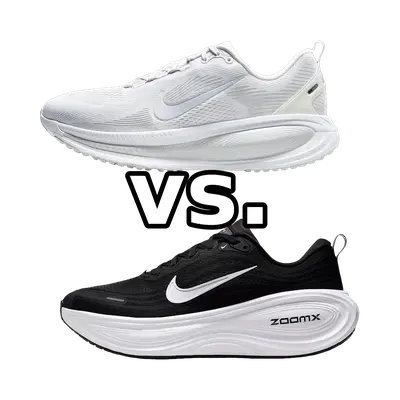
Nike Vomero 18 vs Nike Vomero Plus

Nike Pegasus 41 vs Salomon Aero Blaze 4

Nike Vomero 18 vs Nike Vomero Premium

Nike Pegasus 41 vs Hoka Mach 7
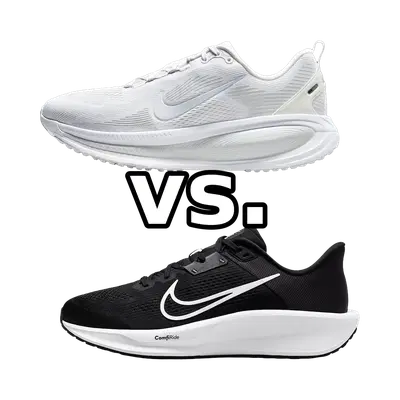
Nike Vomero 18 vs Nike Quest 6
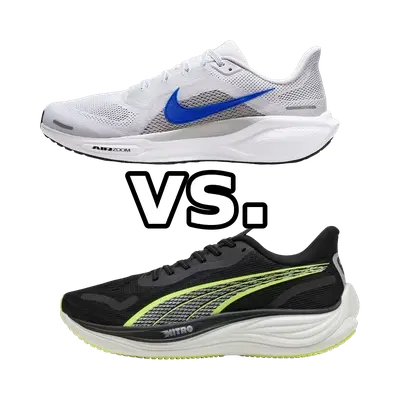
Nike Pegasus 41 vs Puma Velocity Nitro 3
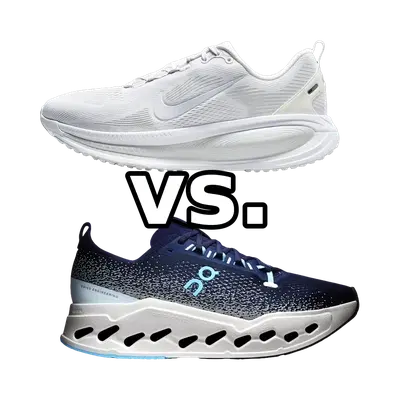
Nike Vomero 18 vs On Cloudsurfer Max
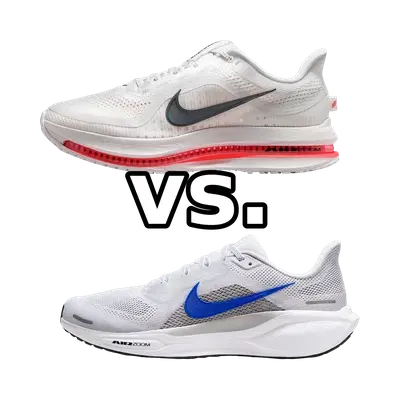
Nike Pegasus Premium vs Nike Pegasus 41
© 2026 longrunshoes.ai | All rights reserved.
Use of materials from this site is permitted only with proper attribution and a link to longrunshoes.ai.