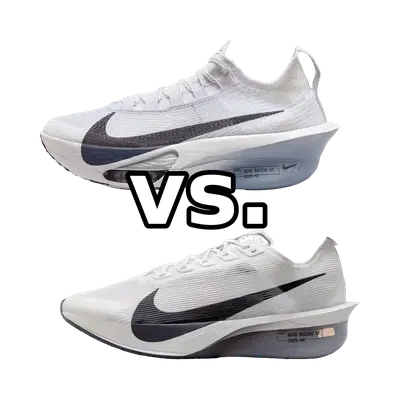
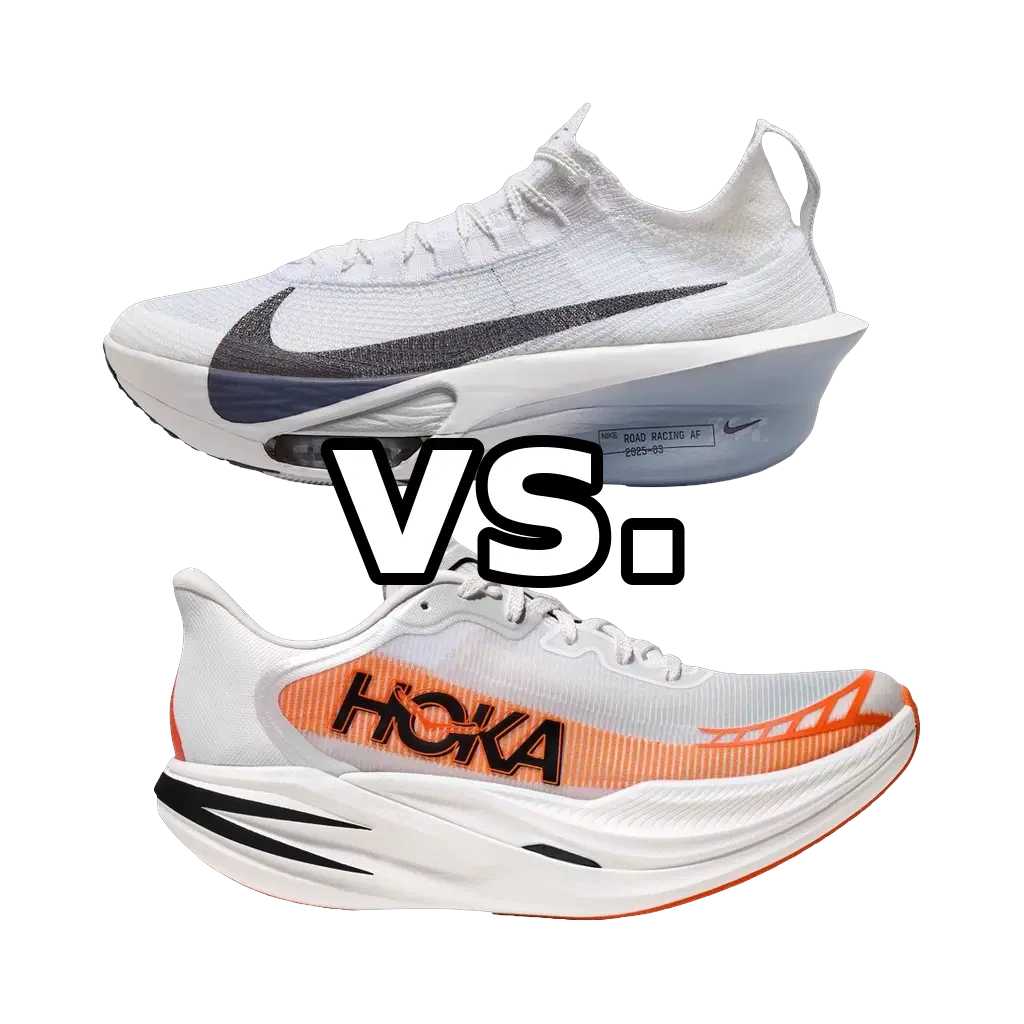
Nike Alphafly 3 vs Hoka Cielo X1 2.0:
Which to Choose
Verdict
These are genuine peers, so it comes down to ride character, not quality. Go Alphafly 3 for a lighter, snappier, more explosive racer that rewards an aggressive forefoot strike; go Cielo X1 2.0 for more foam, more late-race protection, and a smoother, slightly steadier rolling ride. If you prize pop and precision, pick the Nike; if you prize cushion and composure over marathon distance, pick the Hoka.
Pace
6 of 6
Cushioning
5 of 6
Responsiveness
6 of 6
Stability
2 of 6
Drop
8 mm
Support
Neutral
Plate
Carbon
Distances
HalfMarathon
Pace
6 of 6
Cushioning
6 of 6
Responsiveness
6 of 6
Stability
3 of 6
Drop
7 mm
Support
Neutral
Plate
Carbon
Distances
HalfMarathon
At a Glance
Nike Alphafly 3Hoka Cielo X1 2.0
Who Should Choose Each Shoe
Choose
Nike Alphafly 3
Choose the Alphafly 3 if you're a fast, forefoot-driven runner who wants the most explosive, reactive toe-off you can get and values every gram — it's the lighter shoe and its Air Zoom pods give a distinct snap that rewards an aggressive, committed stride. It's the pick for a sharp half or a marathon where you want the shoe to feel fast and responsive rather than merely cushioned, and for runners who already get along with tall, firm-landing racers and won't be unsettled by its low stability.
Choose
Hoka Cielo X1 2.0
Choose the Cielo X1 2.0 if you want maximum cushioning for the back half of a long race and a slightly more stable, forgiving platform under that tall stack. Its deeper PEBA midsole and winged plate suit a runner who pounds out full marathons and wants protection that holds up late, or someone stepping up to super-shoes who'd appreciate the rolling rocker and widened base over the Alphafly's sharper, more demanding ride — you give up a little weight and snap in exchange for plushness and composure.
Head-to-Head
On paper these two sit almost on top of each other — carbon plate, neutral support, marathon sweet spot, and a near-identical drop (8mm on the Alphafly, 7mm on the Cielo). The meaningful differences are in stack, weight, and how each generates its propulsion. The Cielo X1 2.0 is the more maximal shoe: at roughly 48mm heel / 41mm forefoot it carries noticeably more PEBA foam underfoot than the Alphafly's 40mm / 32mm ZoomX stack, which is why it earns a full 6/6 for cushioning versus the Alphafly's 5/6 — that extra depth is cushioning you'll feel protecting your legs in the closing miles of a marathon. The Alphafly answers with weight and a different propulsion mechanism: in a men's US 10 it comes in around 220g against the Cielo's 230g, and instead of relying on stack alone it uses twin Air Zoom pods in the forefoot that deliver a sharp, almost trampoline-like pop at toe-off, on top of the plate and foam. Ride feel diverges accordingly — the Alphafly is aggressive and snappy, rewarding a committed forefoot/midfoot strike with an immediate kick, while the Cielo's winged carbon plate drives a smoother, rolling rocker and its wider base plus that plate geometry give it a slightly more planted, controllable platform (stability 3/6 vs the Alphafly's 2/6). Both feel tall and a touch tippy at jogging pace; the Cielo is the marginally more forgiving of the two when you slow down, while the Alphafly is the more single-minded racer that can feel wobbly and unwieldy until you're genuinely moving. Both trade durability for speed, so neither is a daily trainer — save either for key sessions and race day.
Similar Comparisons
Hoka Cielo X1 2.0 vs Hoka Cielo X1 3.0
Nike Alphafly 3 vs Asics Metaspeed Ray
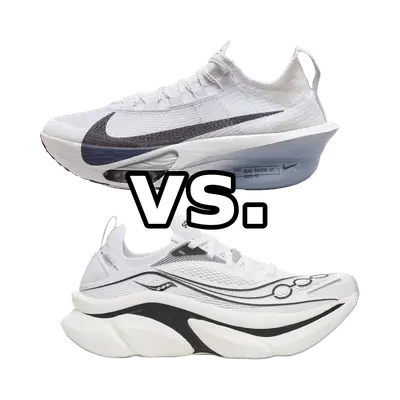
Nike Alphafly 3 vs Saucony Endorphin Elite 3

Nike Alphafly 3 vs Brooks Hyperion Elite 5
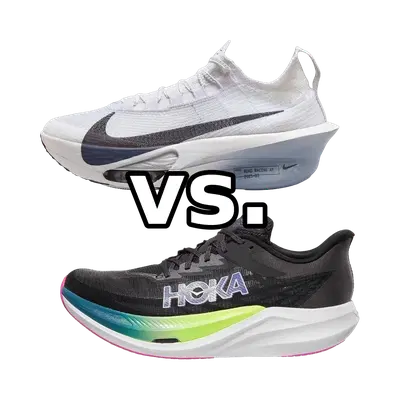
Nike Alphafly 3 vs Hoka Rocket X 3
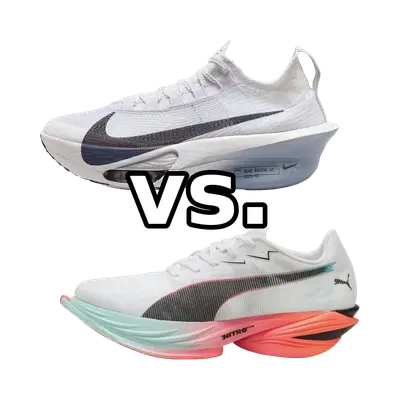
Nike Alphafly 3 vs Puma Fast-R Nitro Elite 3
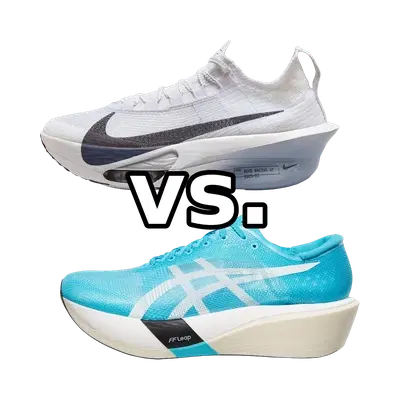
Nike Alphafly 3 vs Asics Metaspeed Edge Tokyo
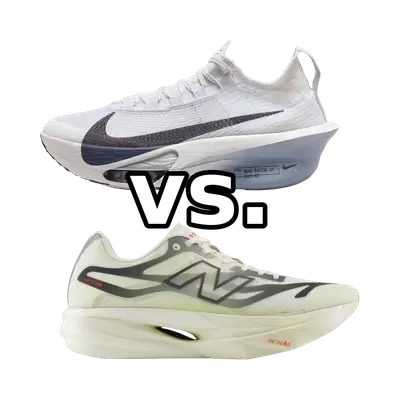
Nike Alphafly 3 vs New Balance FuelCell SuperComp Elite v6
© 2026 longrunshoes.ai | All rights reserved.
Use of materials from this site is permitted only with proper attribution and a link to longrunshoes.ai.