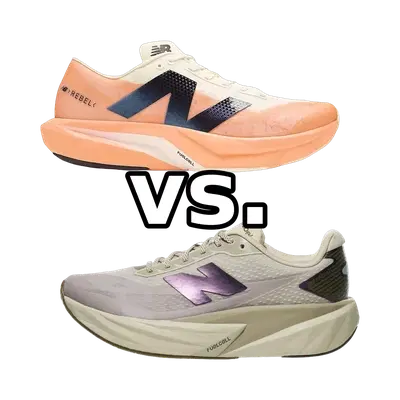
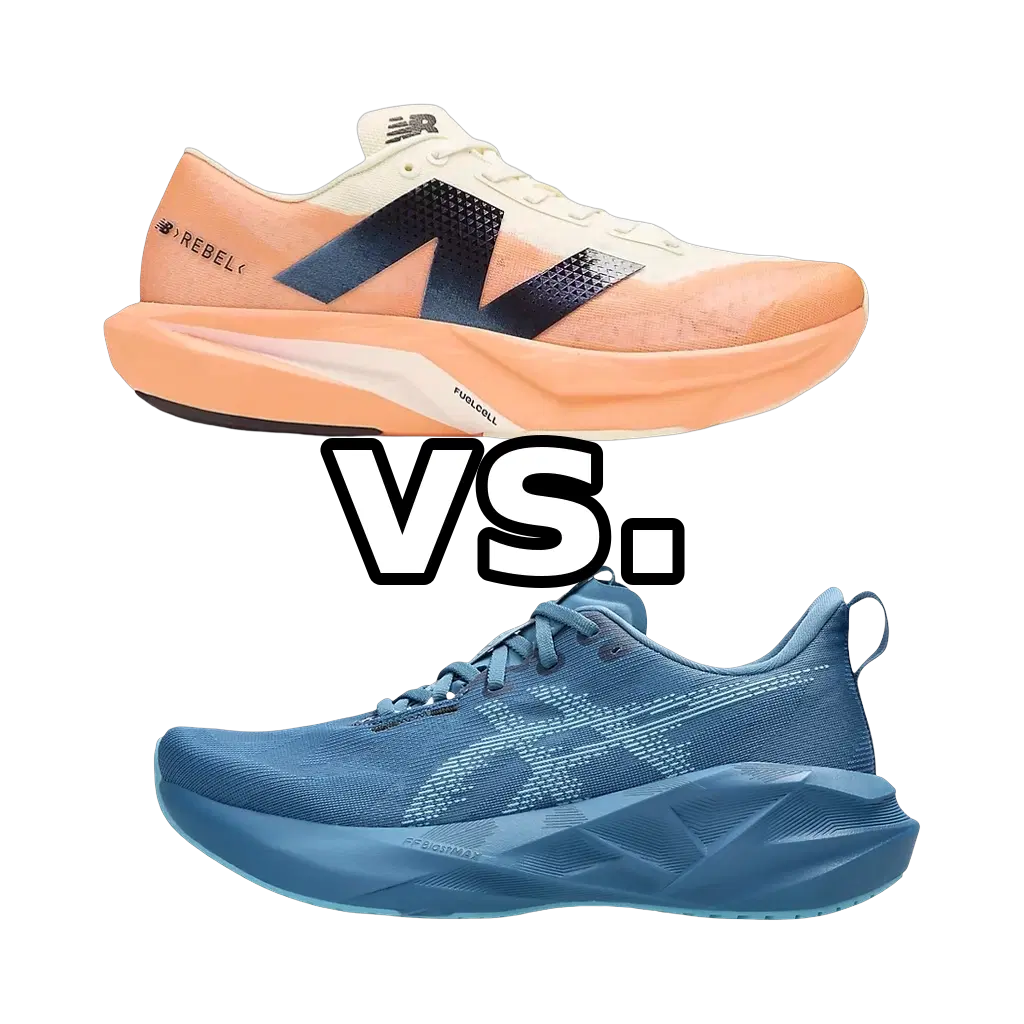
New Balance FuelCell Rebel v4 vs Asics Novablast 5:
Which to Choose
Verdict
It genuinely depends on the job you're buying for. Pick the Rebel v4 for speed: it's lighter (~210g vs ~255g), lower (30/24mm vs 41.5/33.5mm), and sharper, made for tempo and 5K–half racing. Pick the Novablast 5 for range: the taller, more cushioned, slightly more stable platform is the better one-shoe-does-everything daily trainer that still bounces when you push. If you want a fast tool, go New Balance; if you want a versatile workhorse, go Asics.
Pace
5 of 6
Cushioning
4 of 6
Responsiveness
5 of 6
Stability
3 of 6
Drop
6 mm
Support
Neutral
Plate
None
Distances
5K10KHalf
Pace
4 of 6
Cushioning
5 of 6
Responsiveness
5 of 6
Stability
4 of 6
Drop
8 mm
Support
Neutral
Plate
None
Distances
10KHalfMarathon
At a Glance
New Balance FuelCell Rebel v4Asics Novablast 5
Who Should Choose Each Shoe
Choose
New Balance FuelCell Rebel v4
Choose the FuelCell Rebel v4 if your priority is speed in a light, low-slung package — the intermediate-to-experienced runner doing tempo runs, strides, and 5K-to-half racing who wants pop and quick turnover rather than maximum cushion. It's the better call if you're an efficient midfoot striker who likes a lower, closer-to-the-ground 6mm feel and doesn't need one shoe to also handle easy recovery days. If your weekly rotation already has a plush daily trainer and you want a fast, versatile non-carbon option to fill the tempo slot, this is it.
Choose
Asics Novablast 5
Choose the Novablast 5 if you want one cushioned, energetic shoe to cover most of your week — daily miles, long runs, and the occasional pickup — without buying separate trainers for each job. The taller FF Blast Max stack and 8mm drop reward runners who like a protective, bouncy platform underfoot and want the range to go from 10K up through the marathon, and the wide flared base suits heel and midfoot strikers who value a predictable landing. It's the smarter pick if easy-day comfort and long-run protection matter more to you than shaving grams for short races.
Head-to-Head
Start with the platform, because that is where they genuinely diverge. The Novablast 5 rides on a tall FF Blast Max stack — about 41.5mm at the heel and 33.5mm at the forefoot — with an 8mm drop, giving it that distinct trampoline-like bounce and a generous cushion for long efforts. The Rebel v4 sits much lower at 30mm heel / 24mm forefoot on nitrogen-infused FuelCell PEBA, with a 6mm drop that keeps you forward and encourages a quicker turnover. That difference shows up in weight: the Rebel v4 is around 210g in a men's 9 versus roughly 255g for the Novablast 5, and you feel those ~45 grams the moment you accelerate. Both are neutral with no plate, so all of the pop comes from the foam itself, and both rate highly for responsiveness — but the character differs. The Rebel's low, light, soft platform compresses and springs back eagerly, which is why it truly shines at 5K, 10K, and the half, with the 10K as its sweet spot; the trade-off is that it can feel a little vague and unstructured at slow, easy paces. The Novablast's taller geometry carries more foam underfoot and a wider, flared base, making it the steadier, more protective ride over distance — it covers 10K through the marathon and is happiest on long runs and steady half efforts, with the quirk that the tall stack can feel floaty when you're just plodding. On stability both are neutral and moderate, with the Novablast's wide base giving its taller stack a slight predictability edge. Simply put: the Rebel is the sharper, racier instrument that wants tempo and short-course speed, while the Novablast is the cushioned mileage-eater that still enjoys a pickup but tops out a touch slower before plated shoes take over.
Similar Comparisons
Adidas Adizero SL2 vs Asics Novablast 5
New Balance FuelCell Rebel v4 vs Brooks Hyperion Max 2
Adidas Supernova Solution 2.0 vs Asics Novablast 5
New Balance FuelCell Rebel v4 vs Adidas Adizero Evo SL
Adidas Adizero Boston 13 vs Asics Novablast 5
Asics Novablast 5 vs Asics Dynablast 5
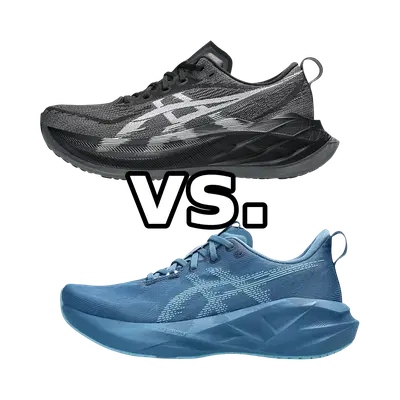
Asics Superblast 2 vs Asics Novablast 5
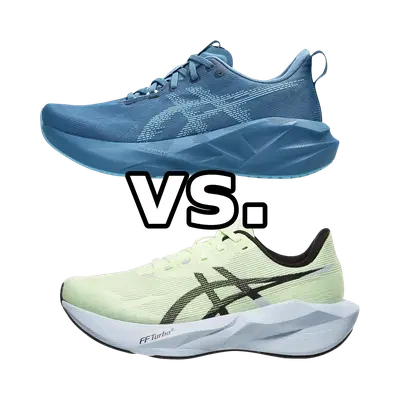
Asics Novablast 5 vs Asics Novablast 6
© 2026 longrunshoes.ai | All rights reserved.
Use of materials from this site is permitted only with proper attribution and a link to longrunshoes.ai.