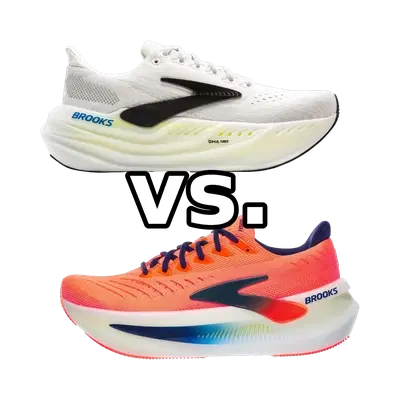
Brooks Glycerin Max 2 vs Brooks Hyperion Max 3:
Which to Choose

Verdict
It genuinely depends — not on which is "better," but on how fast you run most of your miles. If the bulk of your training is easy and long and you want comfort and impact protection, the Glycerin Max 2 is the clear pick; if you want a lighter, bouncier shoe that comes alive at tempo and can carry you from 10K to marathon at pace, the Hyperion Max 3 wins. Runners who do both will find the Hyperion the more versatile single shoe, while the Glycerin is the better specialist for slow, protective mileage.
Pace
2 of 6
Cushioning
6 of 6
Responsiveness
4 of 6
Stability
4 of 6
Drop
8 mm
Support
Neutral
Plate
None
Distances
10KHalf
Pace
5 of 6
Cushioning
6 of 6
Responsiveness
5 of 6
Stability
3 of 6
Drop
11 mm
Support
Neutral
Plate
Composite
Distances
10KHalfMarathon
At a Glance
Brooks Glycerin Max 2Brooks Hyperion Max 3
Who Should Choose Each Shoe
Choose
Brooks Glycerin Max 2
Choose the Glycerin Max 2 if your weekly running is mostly easy and long miles and you want maximum plush protection under tired legs — recovery days, joint-friendly cruising, and relaxed 10Ks or halves run for comfort rather than the clock. It's an ideal fit for beginners building volume, heavier runners wanting a forgiving daily cushion, and anyone who values a deep, pillowy landing over turnover and doesn't mind carrying the extra weight.
Choose
Brooks Hyperion Max 3
Choose the Hyperion Max 3 if you're an intermediate-to-experienced neutral runner who wants one shoe to handle tempo sessions, uptempo long runs, and faster steady mileage with a race-day feel. Its lighter frame, PEBA bounce, and nylon plate reward pace, so it suits the runner training toward a fast half or marathon who'd rather have liveliness and roll than maximum softness — not someone shopping for a slow-paced recovery cruiser.
Head-to-Head
On paper both score 6/6 for cushioning and sit on nearly identical total stacks — 45mm/37mm on the Glycerin Max 2 versus 46mm/35mm on the Hyperion Max 3 — but that's where the similarity ends. The drop differs meaningfully: 8mm on the Glycerin versus 11mm on the Hyperion, giving the Hyperion a more pronounced heel-biased roll. The bigger split is in foam and intent. The Glycerin uses nitrogen-infused DNA Tuned foam in a dual-cell layout (plusher heel, firmer forefoot) with a GlideRoll rocker and no plate, producing a deep, pillowy, impact-swallowing ride that's happiest cruising at conversational pace. The Hyperion stacks a 100% PEBA DNA Gold layer over a DNA Flash v2 base with a flexible nylon SpeedVault plate and RapidRoll geometry — a bouncier, more connected ride that comes alive as you pick up the pace, with the plate adding smoothness rather than a rigid carbon snap. Weight reinforces the divide: the Glycerin is a substantial 318g (men's US 9), while the Hyperion is a noticeably lighter 283g, and that ~35g difference you feel most when the pace drops below threshold. Their optimal pace windows barely touch — the Glycerin is tuned for roughly 5:45–6:45 min/km and starts fighting you if you push much past 5:15, whereas the Hyperion wants 3:45–4:45 min/km and only feels fully rewarding when you're running fast. Stability is close and both are neutral with wide-but-tall platforms that can feel a touch tippy; the Glycerin's slightly lower, heavier build makes it marginally more planted at easy speeds, while the Hyperion's extra height and lighter frame trade some low-speed steadiness for speed. Neither offers medial posting, so true overpronators should look elsewhere regardless.
Similar Comparisons

Brooks Hyperion Max 2 vs Brooks Hyperion Max 3

Nike Vomero Plus vs Brooks Glycerin Max 2
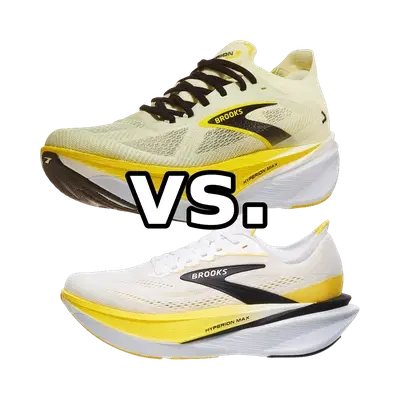
Brooks Hyperion Max 3 vs Brooks Hyperion Max 4

Hoka Bondi 9 vs Brooks Glycerin Max 2

Asics Superblast 3 vs Brooks Hyperion Max 3
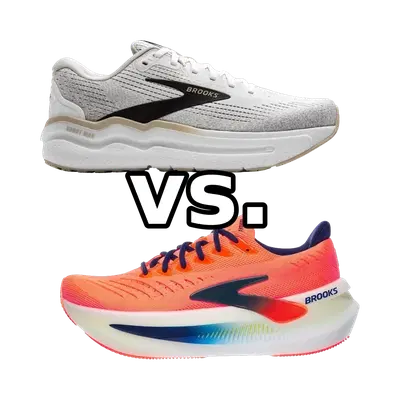
Brooks Ghost Max 2 vs Brooks Glycerin Max 2

Asics Superblast 2 vs Brooks Hyperion Max 3
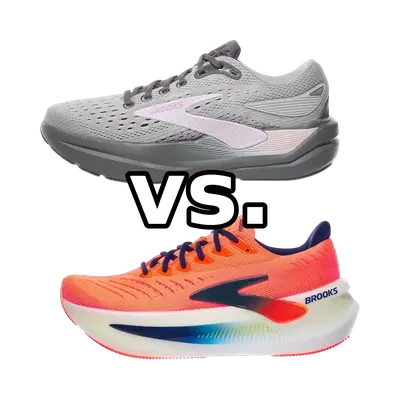
Brooks Ghost Max 3 vs Brooks Glycerin Max 2
© 2026 longrunshoes.ai | All rights reserved.
Use of materials from this site is permitted only with proper attribution and a link to longrunshoes.ai.