
Asics Novablast 5 vs Asics Superblast 3:
Which to Choose

Verdict
It genuinely depends on where your miles live. If most of your running is easy-to-steady volume and you prize a stable, planted, forgiving ride, the Novablast 5 is the smarter buy; if you want more foam, less weight, and a shoe that eggs you on at tempo and doubles as a marathon option, the Superblast 3 is the more versatile and faster-feeling pick. Both are excellent tall-stack neutral trainers with the same DNA — decide by how much fast running you actually do.
Pace
4 of 6
Cushioning
5 of 6
Responsiveness
5 of 6
Stability
4 of 6
Drop
8 mm
Support
Neutral
Plate
None
Distances
10KHalfMarathon
Pace
5 of 6
Cushioning
6 of 6
Responsiveness
5 of 6
Stability
3 of 6
Drop
8 mm
Support
Neutral
Plate
None
Distances
10KHalfMarathon
At a Glance
Asics Novablast 5Asics Superblast 3
Who Should Choose Each Shoe
Choose
Asics Novablast 5
Choose the Novablast 5 if the bulk of your week is easy and steady mileage and you want a bouncy but planted daily trainer you can put on without thinking. Its slightly lower stack and wider, more stable base make it more forgiving at plodding recovery paces, and its high cushioning and moderate weight suit heel and midfoot strikers building toward a 10K, half, or marathon without needing a faster gear. It's the better pick for the recreational runner who values predictability and all-day comfort over top-end speed.
Choose
Asics Superblast 3
Choose the Superblast 3 if you want a single shoe that handles long easy miles and honest tempo work without swapping into a race shoe. Its lighter weight, deeper max cushioning, and livelier response reward runners who press the pace — it truly sings from tempo through half-marathon effort and can stretch into marathon race day. It's the stronger option for the neutral runner chasing faster training and a versatile do-everything trainer, provided you don't mind a taller platform that feels its best once you're moving quickly.
Head-to-Head
These are closer cousins than the different names suggest — same 8mm drop, same neutral support, no plate in either, and both get their bounce purely from foam and geometry rather than a stiff insert. The biggest hardware difference is the platform: the Superblast 3 towers at 46mm heel / 38mm forefoot, versus the Novablast 5's 41.5mm heel / 33.5mm forefoot, so the Superblast simply gives you more foam underfoot and grades out as maximum cushioning (6/6) against the Novablast's high (5/6). The counterintuitive part is weight — despite the taller stack, the Superblast 3 comes in around 235g for a men's US 9, lighter than the Novablast 5's roughly 254g, thanks to its premium FF Leap A-TPU-over-FF Blast+ build versus the Novablast's single FF Blast Max slab. That weight-to-cushion ratio is why the Superblast feels quicker and rates higher for pace (5/6 vs 4/6): it comes alive from roughly 4:00–4:45/km and can dip to about 3:50/km before a racer takes over, whereas the Novablast is happiest at 4:45–5:45/km and tops out closer to 4:15–4:30/km. The trade-off is stability and easy-pace manners: the Novablast's wider, lower, flared base (4/6 stability) feels more planted and predictable at slow, plodding paces, while the Superblast's extra height (3/6) can feel slightly tippy until you settle into a rhythm and press into it. Both share the same character — soft, trampoline-like rebound that rewards rolling forward — and both have exposed foam sidewalls that ask for a little durability care.
Similar Comparisons

Hoka Skyward X vs Asics Superblast 3

Adidas Adizero Boston 13 vs Asics Novablast 5
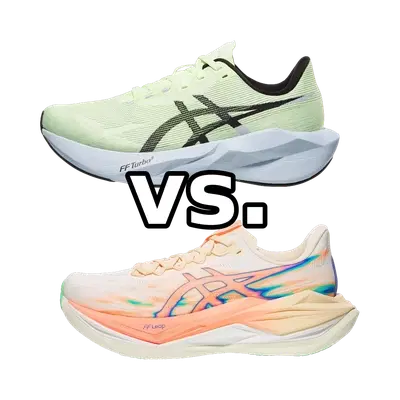
Asics Novablast 6 vs Asics Superblast 3

Adidas Adizero SL2 vs Asics Novablast 5
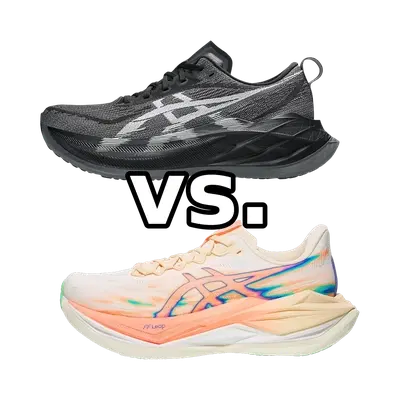
Asics Superblast 2 vs Asics Superblast 3
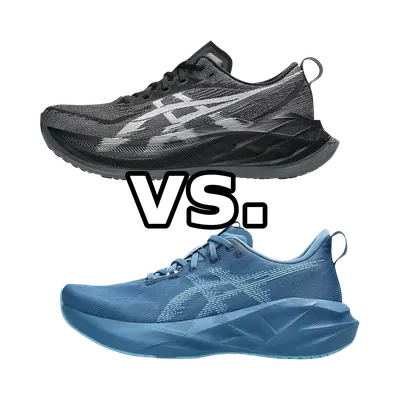
Asics Superblast 2 vs Asics Novablast 5
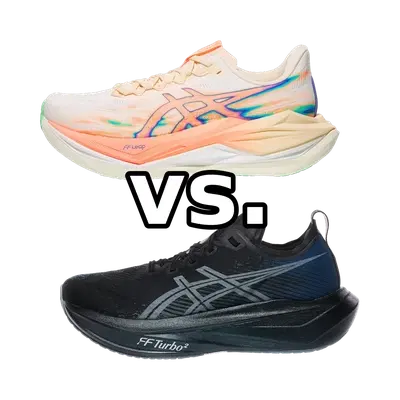
Asics Superblast 3 vs Asics Megablast
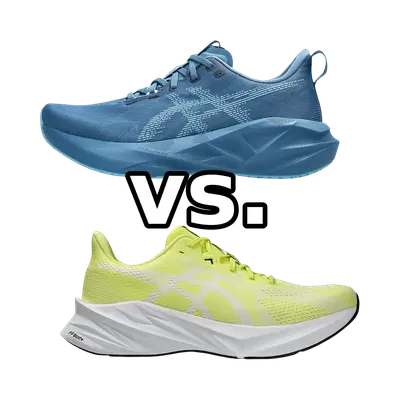
Asics Novablast 5 vs Asics Dynablast 5
© 2026 longrunshoes.ai | All rights reserved.
Use of materials from this site is permitted only with proper attribution and a link to longrunshoes.ai.