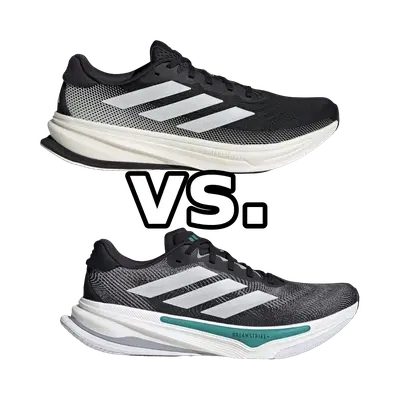
Adidas Supernova Prima 2 vs Adidas Supernova Rise 3:
Which to Choose
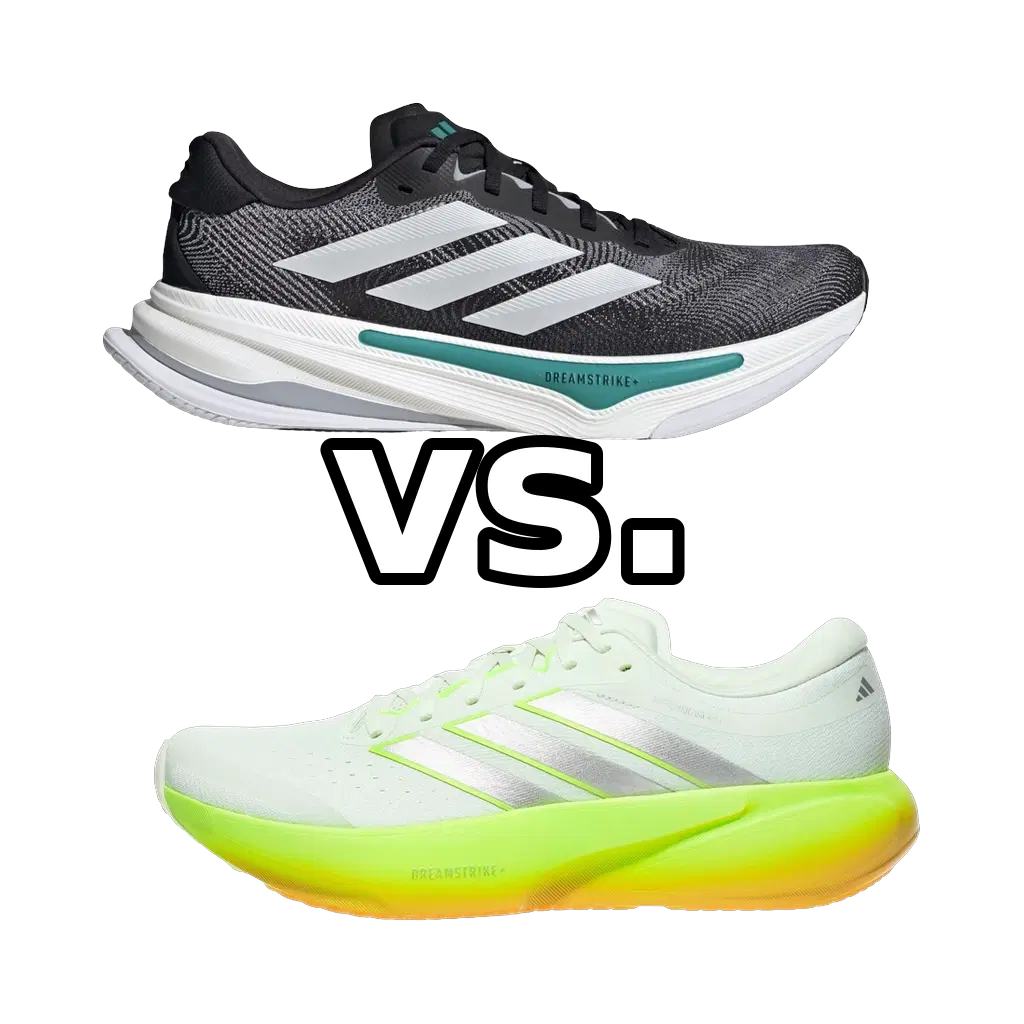
Verdict
It genuinely depends — but on ride feel, not on which is "better," since both cover the same daily-trainer job from 10K to the marathon. Go with the Prima 2 if you want maximum cushion and a stabilizing, planted ride and will accept the extra weight for it; go with the Rise 3 if you'd rather have a lighter, springier, purely neutral shoe. If you're a neutral runner with no stability needs, the lighter and more responsive Rise 3 is the easier shoe to recommend as a one-quiver trainer.
Pace
3 of 6
Cushioning
5 of 6
Responsiveness
4 of 6
Stability
5 of 6
Drop
8 mm
Support
Stable Neutral
Plate
None
Distances
10KHalfMarathon
Pace
3 of 6
Cushioning
4 of 6
Responsiveness
5 of 6
Stability
4 of 6
Drop
8 mm
Support
Neutral
Plate
None
Distances
10KHalfMarathon
At a Glance
Adidas Supernova Prima 2Adidas Supernova Rise 3
Who Should Choose Each Shoe
Choose
Adidas Supernova Prima 2
Choose the Supernova Prima 2 if your priority is a planted, protective ride for base-building and long, steady efforts, and you value feeling settled over feeling fast. It's the better pick for neutral-to-mild overpronators who want the reassurance of the Dreamstrings cords and don't mind carrying a bit more shoe in return for its taller, more cushioned, more stable platform. Runners coming from heavier max-cushion trainers who want all-day comfort for marathon training will feel at home here.
Choose
Adidas Supernova Rise 3
Choose the Supernova Rise 3 if you want the same everyday versatility in a lighter, livelier package and you don't need added stability structure. Its PEBA-based Dreamstrike+ foam gives a bouncier, more energetic toe-off and its lower weight makes it the more willing partner when an easy run turns into a moderate progression. It's the smarter buy for efficient neutral runners who want one do-everything trainer that still has a little pep for half-marathon and long steady work.
Head-to-Head
On paper these two are close cousins, and the differences are real but a matter of degree. The Prima 2 is the more cushioned and more stable of the pair — it carries the slightly taller platform (roughly 37mm heel / 29mm forefoot versus the Rise 3's 35mm / 27mm) and leans on Dreamstrings TPU cords that wrap the midfoot to steady the stride, giving it a planted, predictable feel that neutral runners and mild overpronators can trust on long days. The trade-off is weight: at about 278g (men's US 9) it's noticeably heavier than the Rise 3's roughly 264g, and that extra mass plus the stability hardware makes transitions smooth and unhurried rather than quick. The Rise 3 flips the emphasis toward liveliness — its full-length Dreamstrike+ PEBA midsole is tuned to be softer and bouncier, scoring higher on responsiveness, so toe-off returns a bit more energy and the shoe feels readier to roll through moderate pickups. In exchange you give up some of the Prima 2's lateral steadiness: the Rise 3 is a true neutral shoe with a broad base but no added guidance cords, so it rewards efficient runners who don't need the extra structure. Both ride best in the same 5:00–6:00 min/km everyday zone and both fade above about 4:45 min/km, where a plated racer takes over. In short: Prima 2 = more cushion, more stability, more weight; Rise 3 = lighter, springier, more neutral.
Similar Comparisons
Adidas Supernova Rise 2 vs Adidas Supernova Rise 3
Adidas Supernova Prima 2 vs Asics Superblast 2
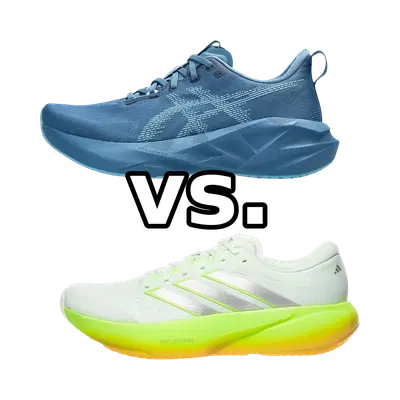
Asics Novablast 5 vs Adidas Supernova Rise 3
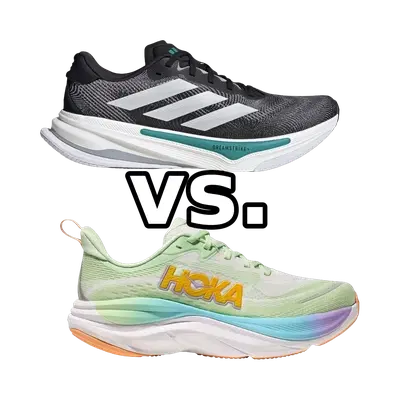
Adidas Supernova Prima 2 vs Hoka Skyflow
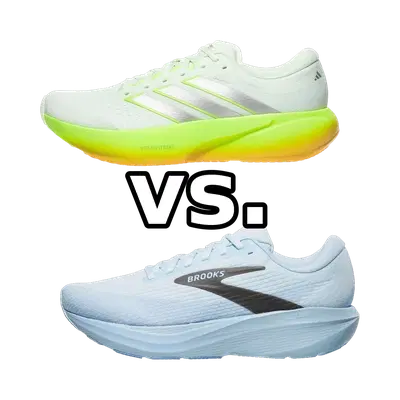
Adidas Supernova Rise 3 vs Brooks Ghost AMP
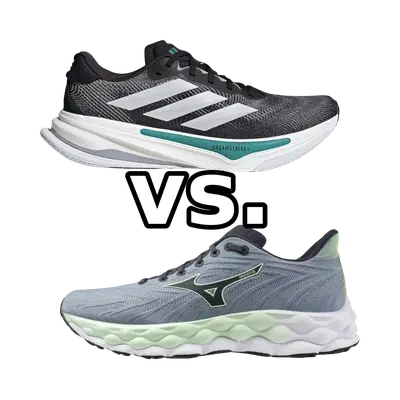
Adidas Supernova Prima 2 vs Mizuno Wave Sky 8
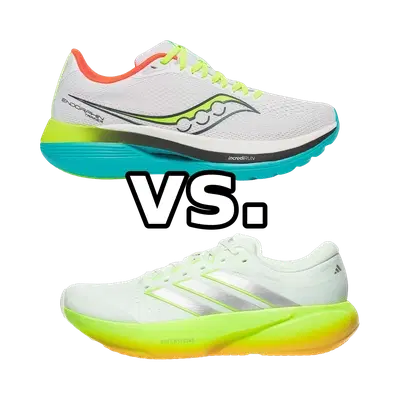
Saucony Endorphin Trainer vs Adidas Supernova Rise 3
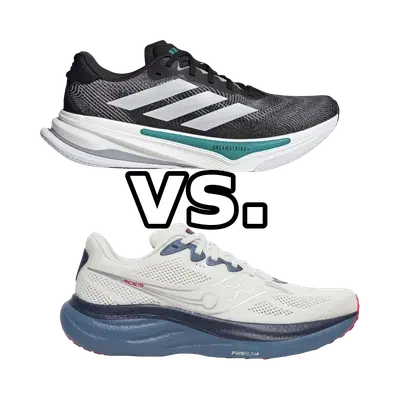
Adidas Supernova Prima 2 vs Saucony Ride 19
© 2026 longrunshoes.ai | All rights reserved.
Use of materials from this site is permitted only with proper attribution and a link to longrunshoes.ai.