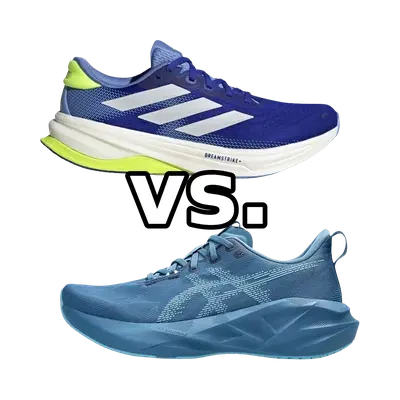
Asics Novablast 5 vs Adidas Supernova Rise 3:
Which to Choose
Verdict
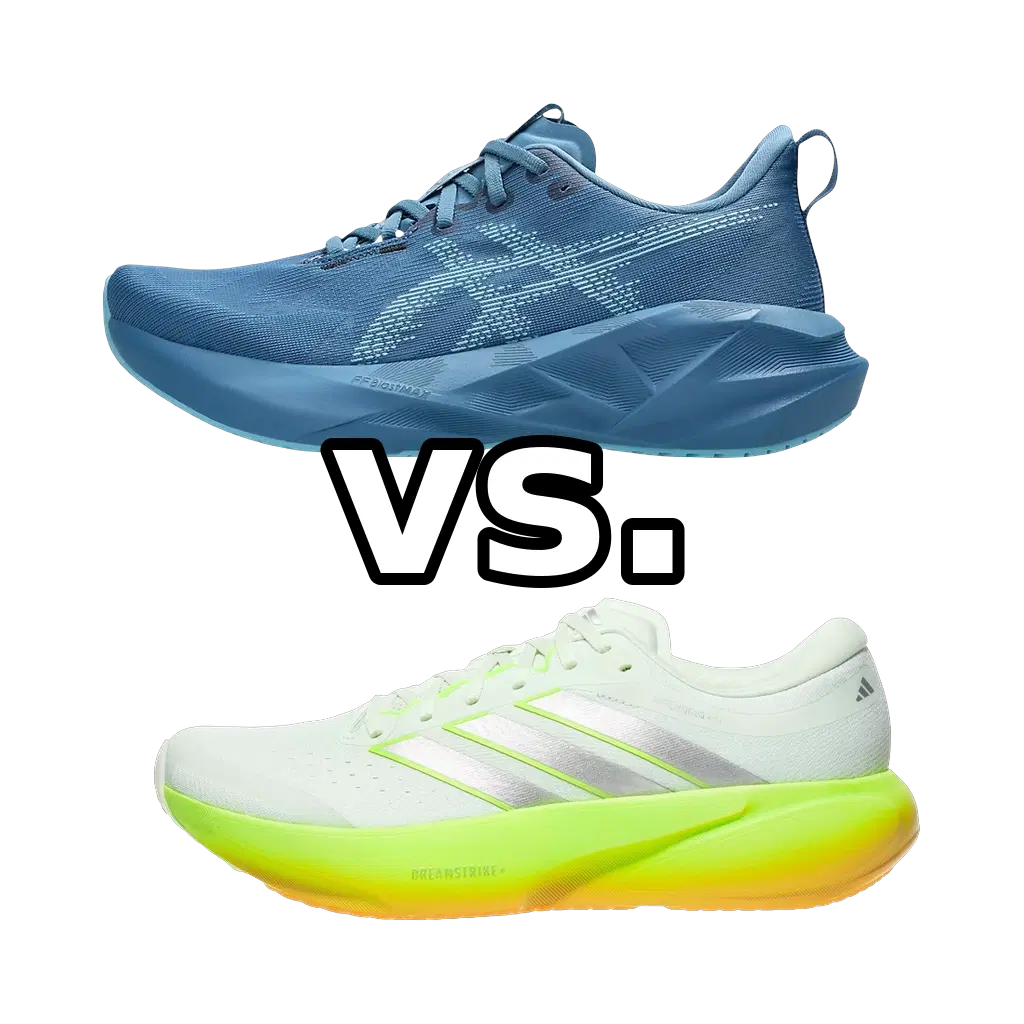
It comes down to how much shoe you want under you and whether you'll ever pick up the pace. The Novablast 5 is the taller, springier, more versatile choice that still comes in lighter and rewards the occasional tempo effort; the Rise 3 is the lower, more grounded, comfort-first cruiser for runners whose weeks are built on easy and steady miles. If you want one shoe that can go long and occasionally go fast, take the Novablast 5 — if you want a settled, forgiving everyday trainer and never plan to sprint in it, the Rise 3 is the more natural fit.
Pace
4 of 6
Cushioning
5 of 6
Responsiveness
5 of 6
Stability
4 of 6
Drop
8 mm
Support
Neutral
Plate
None
Distances
10KHalfMarathon
Pace
3 of 6
Cushioning
4 of 6
Responsiveness
5 of 6
Stability
4 of 6
Drop
8 mm
Support
Neutral
Plate
None
Distances
10KHalfMarathon
At a Glance
Asics Novablast 5Adidas Supernova Rise 3
Who Should Choose Each Shoe
Choose
Asics Novablast 5
Choose the Novablast 5 if you want one do-everything trainer that can also stretch its legs — a runner logging long runs and steady halves who still likes to throw in the occasional faster pickup and wants a tall, bouncy, energetic platform to reward it. It's the better pick if you enjoy a high, springy ride and plan to occasionally push toward 4:15–4:30 min/km, and if you don't mind that a maximal stack can feel a little floaty on your slowest recovery shuffles.
Choose
Adidas Supernova Rise 3
Choose the Supernova Rise 3 if your miles are mostly easy to moderate and you value a planted, forgiving, low-fuss ride over maximal bounce — a dependable workhorse for daily training, recovery runs, and long steady efforts rather than tempo work. It's especially well-suited to runners who find tall stacks unsettling and prefer more ground connection, or to newer runners who want something soft, stable, and easy to like from the first step without any intention of chasing intervals.
Head-to-Head
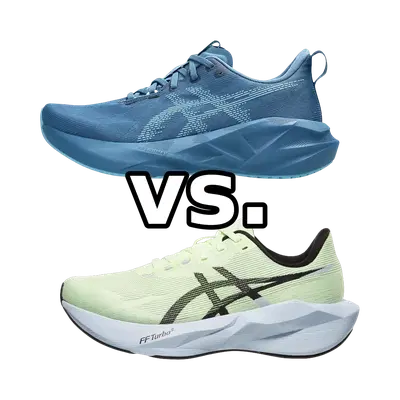
The clearest difference is stack height and the ride personality that comes with it. The Novablast 5 sits on a tall 41.5mm heel / 33.5mm forefoot platform of FF Blast Max foam, giving it a distinctly high, trampoline-like bounce that springs you forward — protective for long efforts but occasionally tall and floaty at very slow, plodding paces before the geometry finds its rhythm. The Rise 3 is considerably lower to the ground at 35mm heel / 27mm forefoot on supercritical PEBA-based Dreamstrike+ foam, trading some of that airy bounce for a more planted, grounded, forgiving feel. Both are genuinely responsive with no plate, but the character differs: the Novablast's rebound is springy and lively, while the Rise 3's is a gentler, rolling return tuned more for comfortable cruising than snappy pickups. Cushioning follows the same split — the Novablast is the more maximal, energetic shoe, the Rise 3 plush-but-moderate. On pace, the Novablast is the more versatile of the two: it's happy from roughly 4:45–5:45 min/km and holds together down to about 4:15–4:30 when you lift the tempo, whereas the Rise 3 is centered on everyday 5:00–6:00 min/km territory and starts asking for a racer below about 4:45. Weight, interestingly, cuts against the stack: despite its much taller platform, the Novablast 5 is a touch lighter at around 255g (men's US 9) versus the Rise 3's roughly 264g. Stability is comparable — both are neutral with wide, planted bases and no medial posting — so neither is a support shoe, though the Rise 3's lower stack feels inherently more settled while the Novablast leans on its flared base to keep the tall platform predictable.
Similar Comparisons

Adidas Supernova Rise 2 vs Adidas Supernova Rise 3

Adidas Adizero Boston 13 vs Asics Novablast 5

Adidas Adizero SL2 vs Asics Novablast 5
Asics Superblast 2 vs Asics Novablast 5
Asics Novablast 5 vs Asics Dynablast 5
Asics Novablast 5 vs Asics Novablast 6

Asics Novablast 5 vs Asics Superblast 3
© 2026 longrunshoes.ai | All rights reserved.
Use of materials from this site is permitted only with proper attribution and a link to longrunshoes.ai.