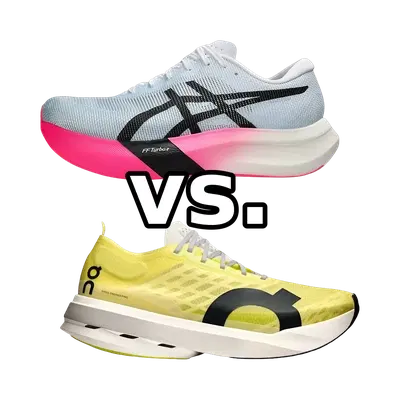
On Cloudboom Strike vs On Cloudboom Strike 2:
Which to Choose
Verdict
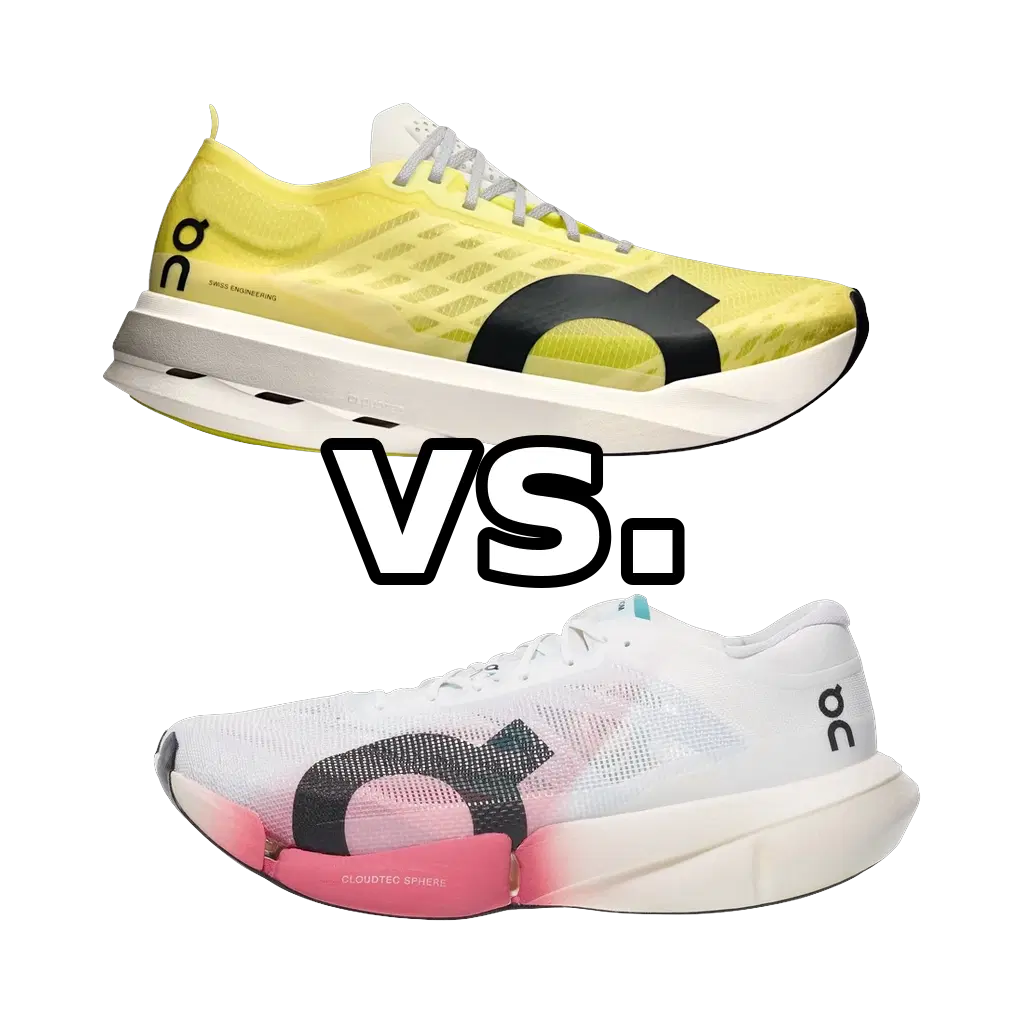
If you're a current Strike owner, upgrade only if you race long and fast: the Strike 2 is lighter (~200 g standard, ~158 g LightSpray vs ~215 g), sits on a stiffer plate, and has a more rockered forefoot that makes it a sharper marathon and half weapon. But it also narrows its range, trading the original's 10K-to-marathon versatility for a marathon-first focus — so if you race a mix of distances and your first-gen pair still has life, there's no rush. Both remain uncompromising forefoot-striker's racers with no stability net; the Strike 2 simply does the same job a little lighter, a little firmer up front, and with a more single-minded eye on the longest races.
Pace
6 of 6
Cushioning
5 of 6
Responsiveness
6 of 6
Stability
2 of 6
Drop
4 mm
Support
Neutral
Plate
Carbon
Distances
10KHalfMarathon
Pace
6 of 6
Cushioning
5 of 6
Responsiveness
6 of 6
Stability
2 of 6
Drop
5 mm
Support
Neutral
Plate
Carbon
Distances
HalfMarathon
At a Glance
On Cloudboom StrikeOn Cloudboom Strike 2
Who Should Choose Each Shoe
Choose
On Cloudboom Strike
The original Cloudboom Strike is the pick for the racer whose calendar runs shorter and more varied — someone who wants one carbon shoe that feels at home in a 10K as much as a half or marathon. Its marginally taller, more evenly balanced forefoot and slightly more forgiving 4 mm geometry make it a touch more versatile across distances, and if you already own a pair that's holding up, there's no urgent performance reason to replace a race shoe you trust.
Choose
On Cloudboom Strike 2
The Cloudboom Strike 2 is the better buy for the marathon and half specialist who lands on the forefoot or midfoot and wants the sharpest, most propulsive ride On makes. It's lighter, its stiffer plate and CloudTec Sphere forefoot make toe-off snappier and more aggressively rockered, and the optional LightSpray build shaves weight to a remarkable ~158 g for those hunting every second over 26.2. Choose it if your racing centers on longer road efforts held at a hard, sustained pace and you value featherweight propulsion over versatility or upper durability.
Head-to-Head
On paper these two look nearly identical: both are neutral, low-stability platforms rated 6/6 for pace and responsiveness and 5/6 for cushioning, both use Helion HF PEBA foam and a full-length carbon Speedboard, and both punish slow running. The differences are in the details. The original Strike stacks 39.5 mm at the heel and 35.5 mm at the forefoot for a true 4 mm drop; the Strike 2 raises the heel slightly to 40 mm but drops the forefoot to 33.4 mm, giving a claimed 5 mm drop (caliper checks land closer to 3 mm). That lower, more aggressively rockered forefoot — now built around CloudTec Sphere pods — is the biggest ride change: the Strike 2 rolls harder through toe-off and is tuned to reward a forefoot or midfoot strike holding marathon effort. Weight is the other clear win for the successor: the standard Strike 2 comes in around 200 g in a men's US 9 versus roughly 215 g for the original, and a sprayed LightSpray version drops all the way to about 158 g. The carbon plate is also stiffer and lighter than before, and the upper switches from engineered mesh to a barely-there Lenoweave open weave. Use case shifts too — the original genuinely works from the 10K up through the marathon with the half as its sweet spot, while the Strike 2 narrows its focus to the half and full marathon, with the marathon as its home. Both still ask for roughly 3:00–3:30 min/km to feel their best; neither offers any added stability for heavier or slower runners.
Similar Comparisons
On Cloudboom Strike LS vs On Cloudboom Strike 2
Adidas Adizero Adios Pro 4 vs On Cloudboom Strike
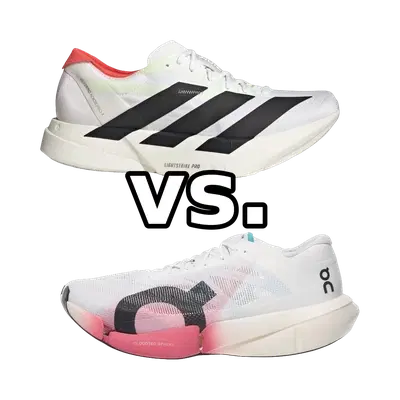
Adidas Adizero Adios Pro 4 vs On Cloudboom Strike 2
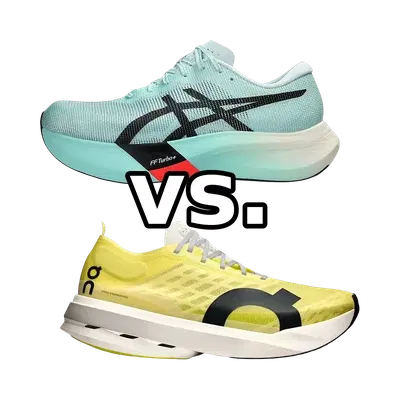
Asics Metaspeed Edge Paris vs On Cloudboom Strike
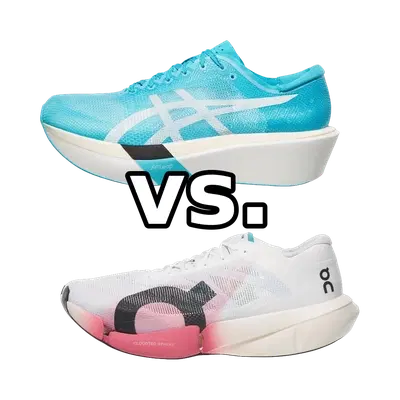
Asics Metaspeed Sky Tokyo vs On Cloudboom Strike 2
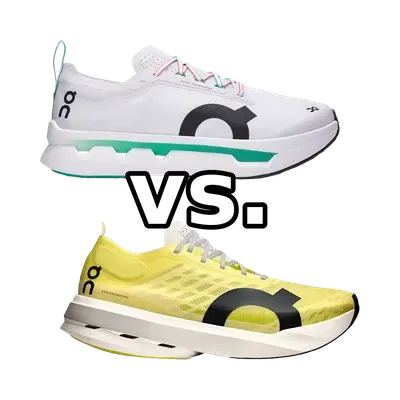
On Cloudboom Zone vs On Cloudboom Strike
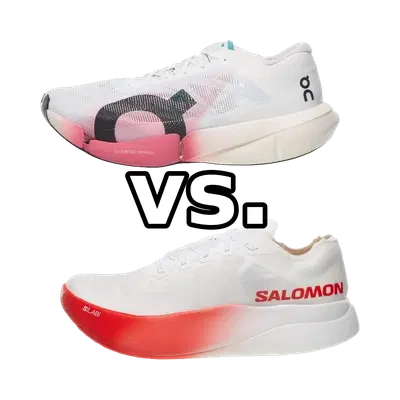
On Cloudboom Strike 2 vs Salomon S/Lab Phantasm 3 SC
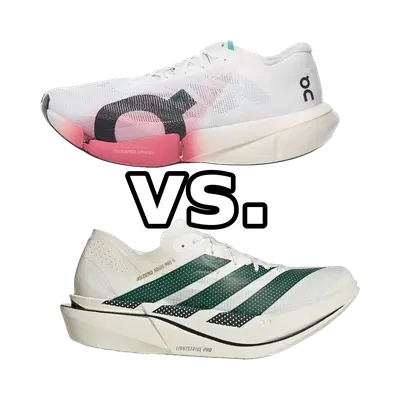
On Cloudboom Strike 2 vs Adidas Adizero Adios Pro 5
© 2026 longrunshoes.ai | All rights reserved.
Use of materials from this site is permitted only with proper attribution and a link to longrunshoes.ai.