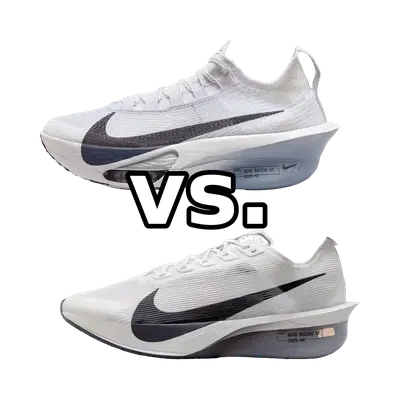
Nike Alphafly 3 vs Asics Metaspeed Edge Paris:
Which to Choose
Verdict
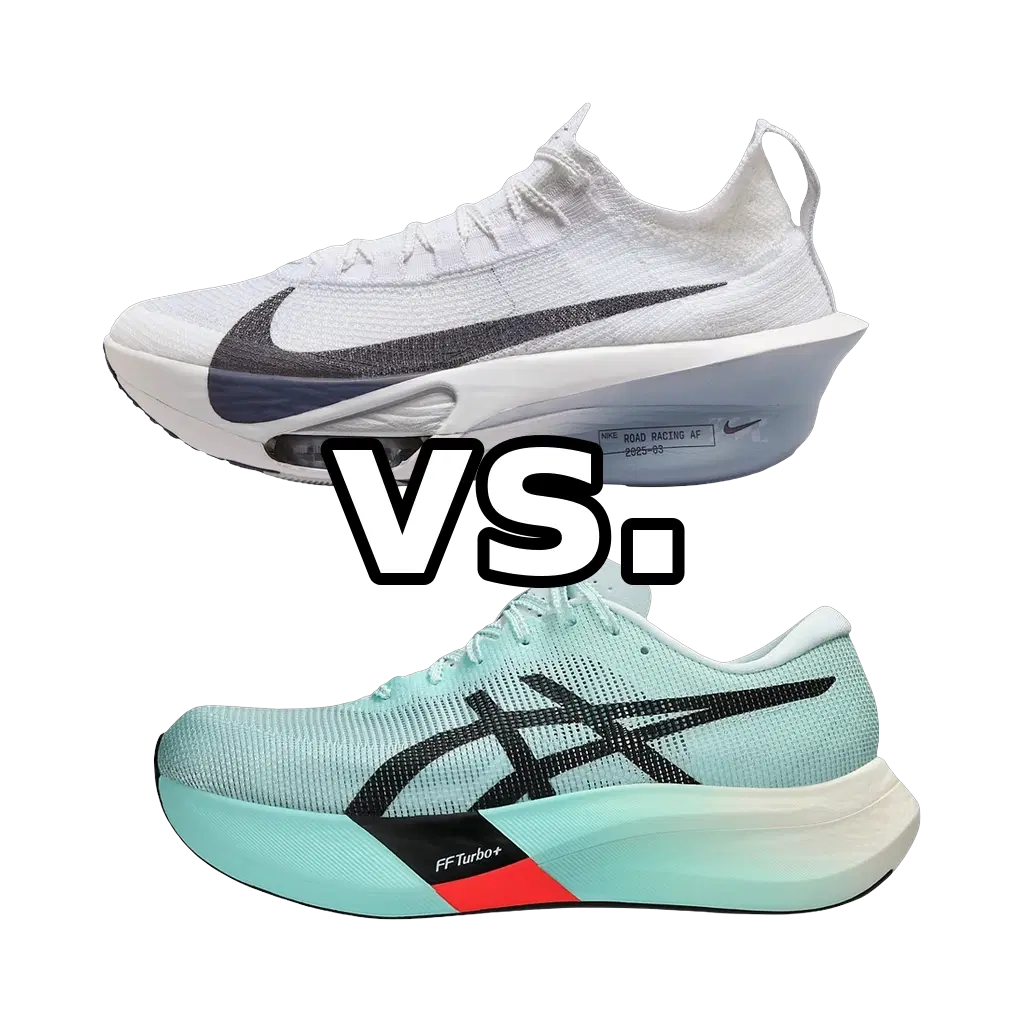
It genuinely depends — but on how you run, not on which is objectively faster. Go Alphafly 3 if you're a floaty, surging runner who wants a soft, bouncy, high-drop platform that pops you off the toe; go Metaspeed Edge Paris if you're an even-paced strength runner who wants a lighter, firmer, lower-drop shoe that rolls you forward through steady turnover. Both are elite marathon racers at the same tier; pick the ride that matches your natural rhythm and foot strike.
Pace
6 of 6
Cushioning
5 of 6
Responsiveness
6 of 6
Stability
2 of 6
Drop
8 mm
Support
Neutral
Plate
Carbon
Distances
HalfMarathon
Pace
6 of 6
Cushioning
5 of 6
Responsiveness
6 of 6
Stability
2 of 6
Drop
5 mm
Support
Neutral
Plate
Carbon
Distances
HalfMarathon
At a Glance
Nike Alphafly 3Asics Metaspeed Edge Paris
Who Should Choose Each Shoe
Choose
Nike Alphafly 3
Choose the Alphafly 3 if you're a runner who makes time by floating and surging — someone who feels fastest when a shoe gives back an obvious, springy pop and encourages the pace to lift. The taller 8mm drop, soft ZoomX, and forefoot Air Zoom pods suit forefoot and midfoot strikers who commit to a genuinely quick effort and want maximum rebound and a slightly more cushioned, bouncier feel underfoot over the marathon.
Choose
Asics Metaspeed Edge Paris
Choose the Metaspeed Edge Paris if you're a steady, metronomic marathoner who holds one strong rhythm rather than injecting surges, and who prefers a firmer, road-connected ride with a smooth forward roll over a soft trampoline bounce. The lower 5mm drop, lighter build, and generous forefoot stack favor efficient, consistent turnover — a good match if you've gotten on well with firmer, cadence-oriented racers and want the most direct feedback from the ground.
Head-to-Head
On paper these two are remarkably close: both carry a full-length carbon plate, both are rated elite/maximum for responsiveness and pace, both are neutral with low stability, and both peak in the same roughly 3:00–3:20 min/km racing zone with the marathon as their sweet spot. Both also hug the 40mm World Athletics stack ceiling. The differences that decide it are in foam character, geometry, and weight. The Alphafly runs an 8mm drop on a 40mm/32mm heel-to-forefoot stack, while the Edge Paris sits lower and flatter at a 5mm drop on about 39.5mm/34.5mm — so the ASICS keeps more foam under the forefoot and a less aggressive ramp. The Edge Paris is also the lighter of the two, at around 185g in a men's size 9 versus roughly 200g for the Alphafly. Ride feel is where they truly diverge: Nike's ZoomX foam plus twin forefoot Air Zoom pods gives a soft, bouncy, almost trampoline-like pop off the toe — a shoe that wants acceleration and rewards runners who float and surge. ASICS' FF Turbo Plus PEBA is firmer and more connected to the road, delivering a propulsive, forward-tipping roll rather than a trampoline bounce; it's tuned for the even-paced "strength" runner who holds a steady, powerful rhythm and relies on turnover rather than big stride changes. Both go vague and awkward at jogging speeds — the Alphafly can feel tall and wobbly, the Edge stiff and narrow — but the Alphafly's soft, pod-driven stack feels tippier and less planted, while the Edge's narrow platform demands attention on corners. Durability caveats apply to both soft racing foams and thin outsoles, so each is best saved for races and sharpening sessions.
Similar Comparisons
Asics Metaspeed Edge Paris vs Asics Metaspeed Sky Paris
Nike Alphafly 3 vs Asics Metaspeed Ray
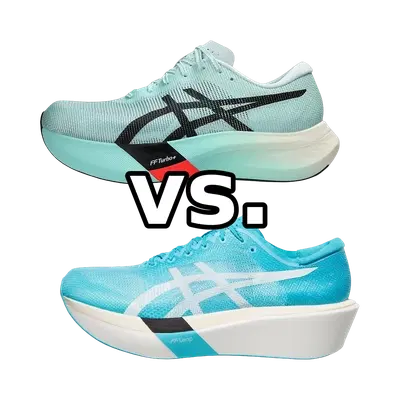
Asics Metaspeed Edge Paris vs Asics Metaspeed Sky Tokyo
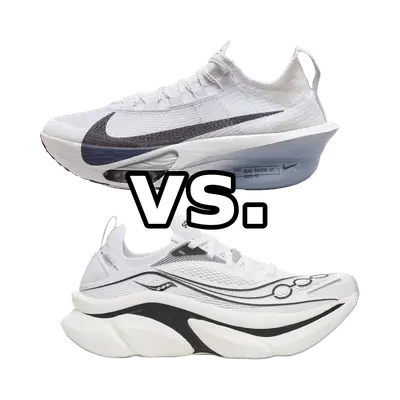
Nike Alphafly 3 vs Saucony Endorphin Elite 3
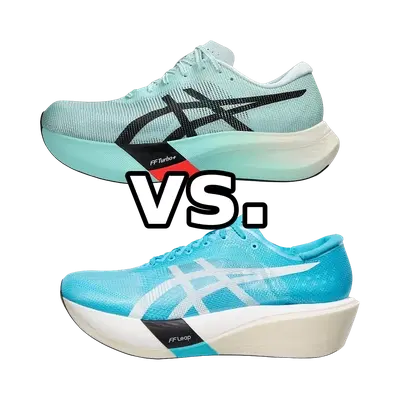
Asics Metaspeed Edge Paris vs Asics Metaspeed Edge Tokyo
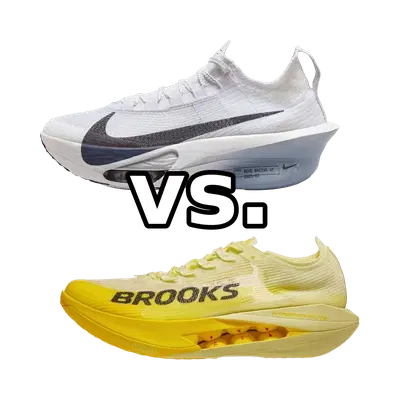
Nike Alphafly 3 vs Brooks Hyperion Elite 5
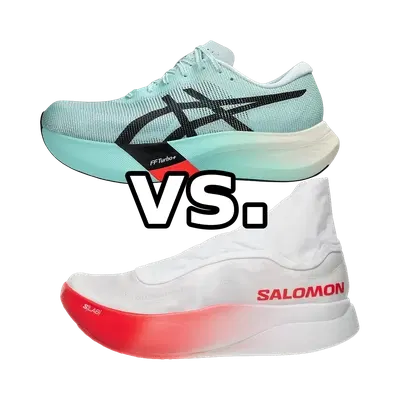
Asics Metaspeed Edge Paris vs Salomon S/Lab Phantasm 3
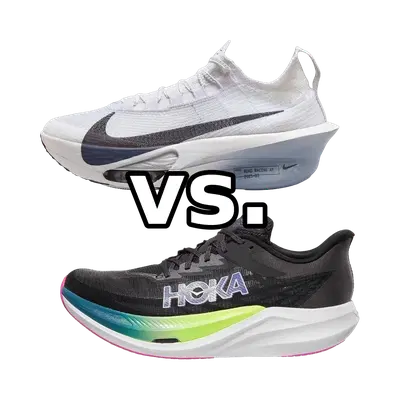
Nike Alphafly 3 vs Hoka Rocket X 3
© 2026 longrunshoes.ai | All rights reserved.
Use of materials from this site is permitted only with proper attribution and a link to longrunshoes.ai.