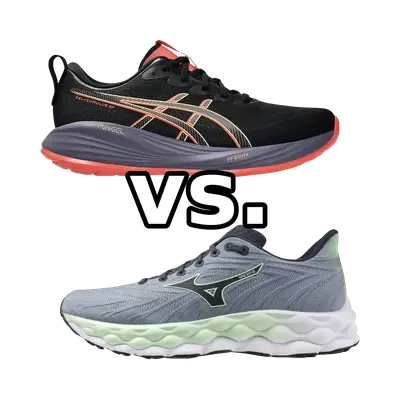
Mizuno Wave Sky 8 vs Mizuno Wave Sky 9:
Which to Choose
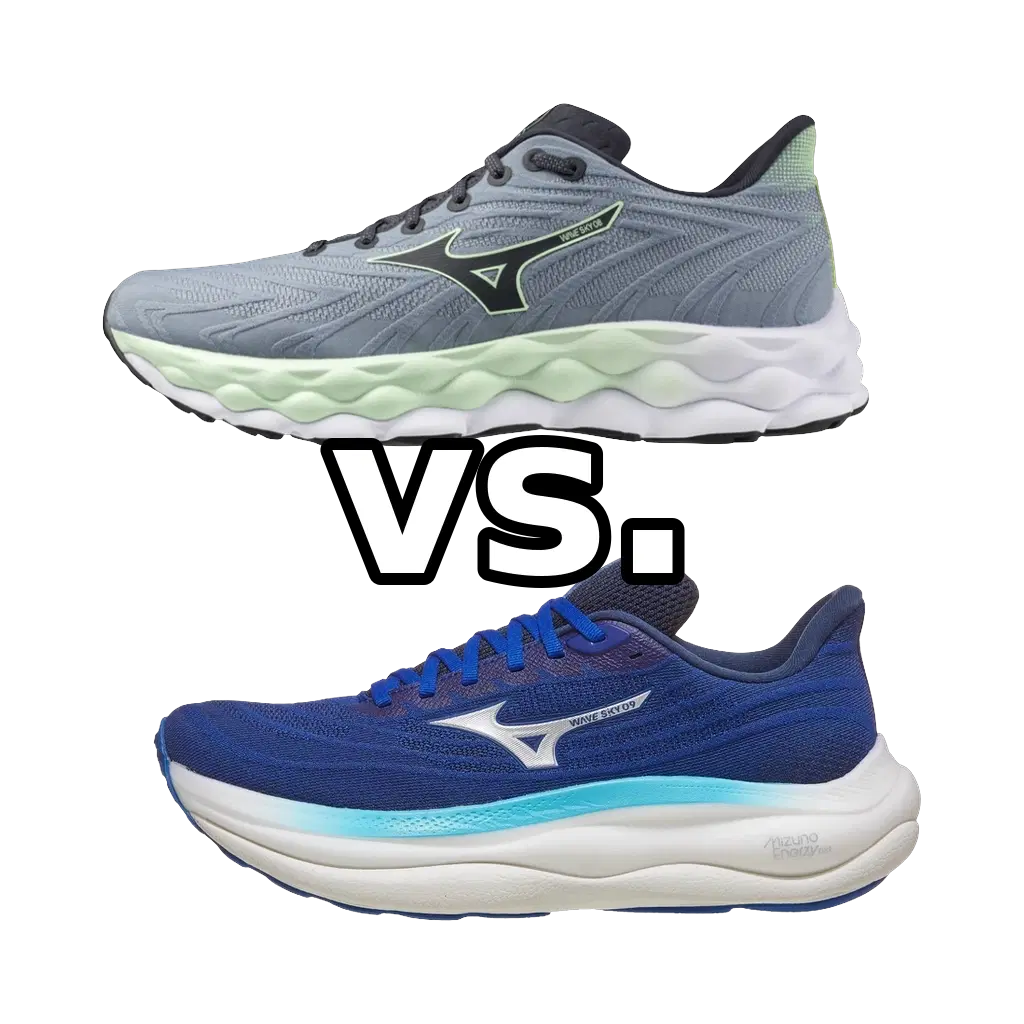
Verdict
It depends on how far and how soft you want to go. Upgrade to the Wave Sky 9 if you're chasing the plushest possible long-run and marathon-distance comfort and don't mind carrying a little more weight for a slightly less springy ride. Stick with — or buy — the Wave Sky 8 if you run mostly 10K-to-half distances and prefer a lighter, lower, more responsive shoe with a bit more life underfoot. Neither is a speed tool, so if you want turnover, look elsewhere in Mizuno's range entirely.
Pace
3 of 6
Cushioning
5 of 6
Responsiveness
4 of 6
Stability
4 of 6
Drop
8 mm
Support
Stable Neutral
Plate
None
Distances
10KHalf
Pace
3 of 6
Cushioning
6 of 6
Responsiveness
3 of 6
Stability
4 of 6
Drop
6 mm
Support
Neutral
Plate
None
Distances
HalfMarathon
At a Glance
Mizuno Wave Sky 8Mizuno Wave Sky 9
Who Should Choose Each Shoe
Choose
Mizuno Wave Sky 8
Choose the Wave Sky 8 if your bread-and-butter is easy daily miles, 10Ks, and half marathons and you value a touch more spring and ground connection over sheer plushness — its lower stack and springier Enerzy foam give a slightly livelier, less floaty roll through the stride. It's also the better call for neutral-to-mild-overpronating runners who appreciated the 8's stable-neutral feel, and for anyone who wants the lighter shoe of the pair (277 g). If you already own and like the 8 and mostly run halves and shorter, there's no urgent reason to upgrade.
Choose
Mizuno Wave Sky 9
Choose the Wave Sky 9 if your priority is maximum underfoot protection for long training runs, recovery jogs, and stepping up to relaxed marathon efforts — the taller 44/38 mm stack and softer nitrogen-infused Enerzy NXT deliver the more cushioned, forgiving landing, especially in the forefoot. It suits neutral runners and beginners logging steady base miles who want their legs shielded and don't care about a springy pop. Existing Sky 8 owners who found the 8 not quite plush enough for their longest days, or who want to push into marathon distance, are the ones who'll feel the upgrade.
Head-to-Head
These two are more evolution than reinvention, but the differences are real and they cut in a specific direction. The Sky 9 grows into a genuinely maximal shoe: its stack rises to 44 mm heel / 38 mm forefoot versus the Sky 8's 40.7 mm / 30.7 mm, with the biggest gain up front, which flattens the drop from 8 mm on the 8 to 6 mm on the 9. That extra forefoot foam, combined with a switch from the 8's dual-density Enerzy EVA to the 9's nitrogen-infused Enerzy NXT top layer over a firmer Enerzy carrier, is what gives the 9 its softer, more cloud-like landing. The trade-off is twofold. First, the 9 is heavier, at 295 g versus 277 g (men's US 9), so it feels like a bit more shoe underfoot. Second, and more surprising for a successor, the 9 is actually the less energetic ride: our cushioning score climbs from 5/6 to a maxed-out 6/6, but responsiveness drops from 4/6 to 3/6 — the newer foam absorbs impact beautifully but returns less pop than the 8's springier EVA when you try to roll through the stride. Everything else is essentially unchanged: both are stability-4/6 neutral platforms with wide, sidewalled bases and no plate, both sit in the same easy-training pace window, and neither wants to be pushed fast before the tall stack goes vague. The clearest practical shift is intended range — the 8 is happiest at 10K-to-half distances, while the deeper, softer 9 is comfortable stretching from the half out to a relaxed-effort marathon.
Similar Comparisons
Nike Vomero Plus vs Mizuno Wave Sky 9
Mizuno Wave Sky 8 vs Saucony Ride 19
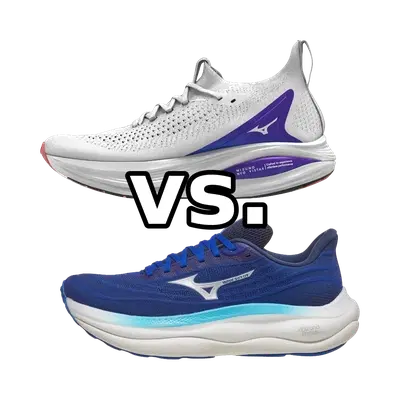
Mizuno Neo Vista 2 vs Mizuno Wave Sky 9
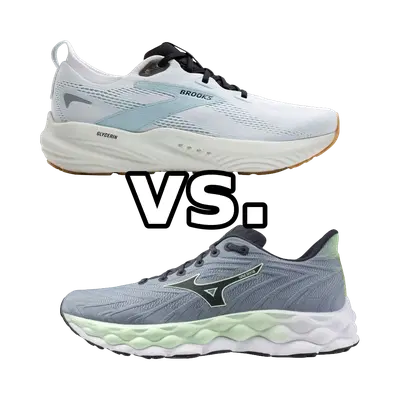
Brooks Glycerin 22 vs Mizuno Wave Sky 8
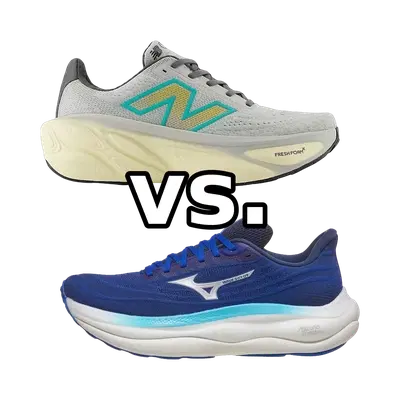
New Balance Foam X More v5 vs Mizuno Wave Sky 9
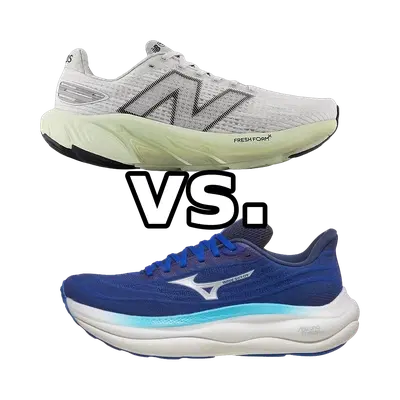
New Balance Fresh Foam X Balos v1 vs Mizuno Wave Sky 9
Mizuno Wave Sky 9 vs Mizuno Sky Prime
© 2026 longrunshoes.ai | All rights reserved.
Use of materials from this site is permitted only with proper attribution and a link to longrunshoes.ai.