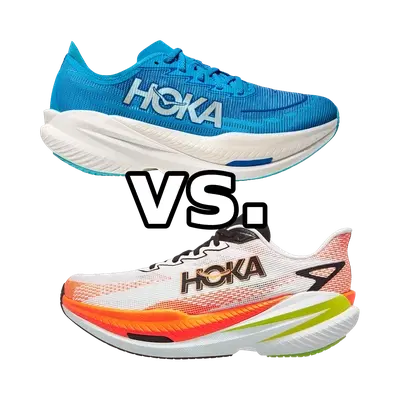
Hoka Mach X 2 vs Hoka Mach 7:
Which to Choose
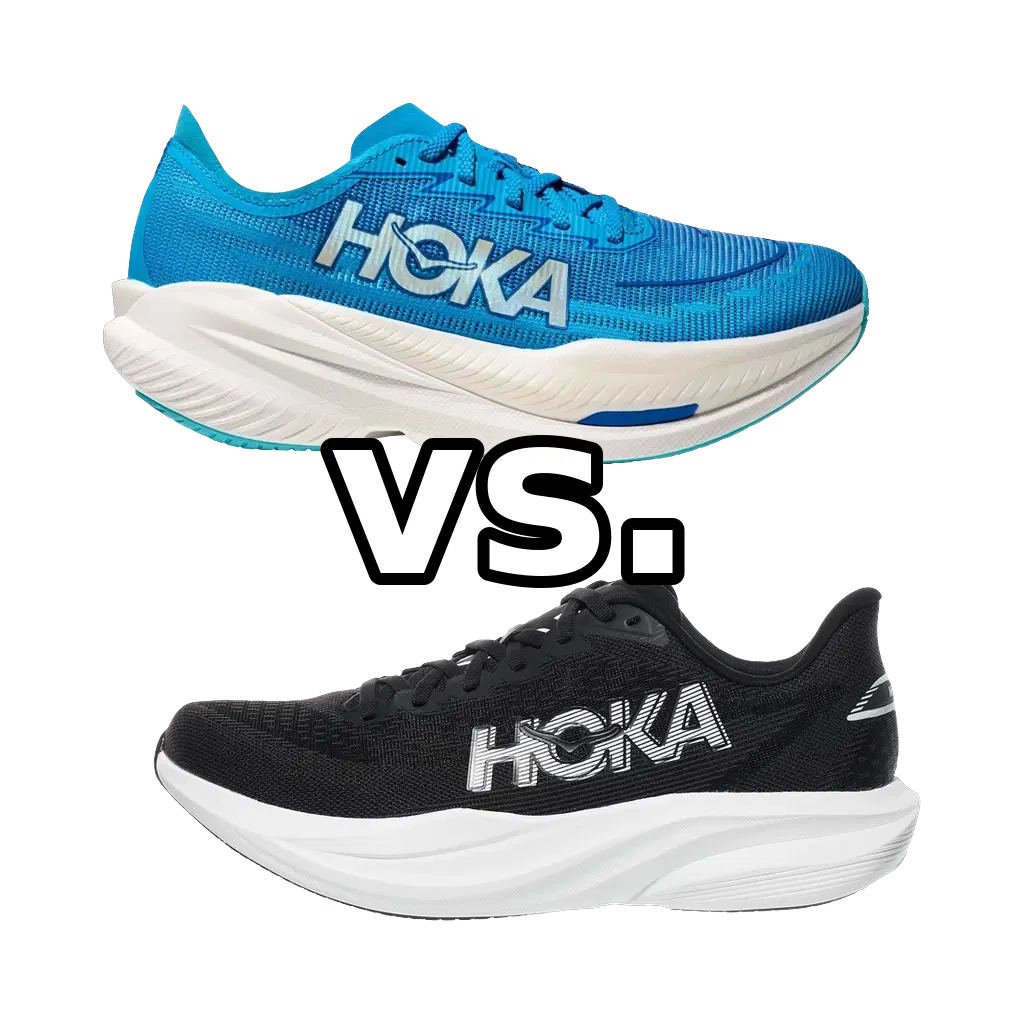
Verdict
It comes down to the role you're filling. If you need a propulsive, plated shoe to anchor your fast days and races, the Mach X 2's PEBA-and-plate ride and taller cushioning earn it. If you want a lighter, lower, versatile everyday trainer that still handles uptempo work, the plateless Mach 7 is the more practical daily companion — with the bonus that it's the lighter shoe despite being the simpler one.
Pace
5 of 6
Cushioning
5 of 6
Responsiveness
5 of 6
Stability
3 of 6
Drop
5 mm
Support
Neutral
Plate
Composite
Distances
10KHalfMarathon
Pace
4 of 6
Cushioning
4 of 6
Responsiveness
4 of 6
Stability
3 of 6
Drop
10 mm
Support
Neutral
Plate
None
Distances
10KHalfMarathon
At a Glance
Hoka Mach X 2Hoka Mach 7
Who Should Choose Each Shoe
Choose
Hoka Mach X 2
Choose the Mach X 2 if you want a single shoe that genuinely doubles as a tempo-session and race tool from 10K through the marathon, and you like the feel of a plate underfoot. It rewards runners who regularly drop into faster paces (roughly 4:00–4:45/km) and want the extra PEBA bounce and higher stack to carry them late in a workout or long run. It's the better pick for the improving intermediate or experienced neutral runner who prioritizes propulsion and protection over minimal weight.
Choose
Hoka Mach 7
Choose the Mach 7 if you want one lightweight, versatile daily trainer for the bulk of your week — easy miles, steady runs, and the occasional tempo — without needing a dedicated racer. Its lower platform and firmer, plateless ride suit runners who value ground feel and a connected, businesslike feel over plush stack, and its 10mm drop makes it the friendlier option for heel strikers. It's the smarter buy for the recreational neutral runner who wants a quick, no-frills workhorse rather than plate-driven pop.
Head-to-Head
The clearest split is construction. The Mach X 2 runs a supercritical EVA base topped with a bouncier PEBA layer and split by a composite (Pebax) plate, giving it a snappy, propulsive, rolling ride that wakes up as you speed up; the Mach 7 is plateless supercritical EVA with a mild rocker, so its pop comes purely from the foam and geometry — lively and firm rather than spring-loaded. That shows up in the numbers: the Mach X 2 is the taller, more protective shoe at 44/39mm heel/forefoot, while the Mach 7 sits much lower and closer to the road at 36/26mm, trading cushioning for ground feel. Drop also differs meaningfully — 5mm on the Mach X 2 nudges you toward a midfoot strike, while the Mach 7's 10mm offset is friendlier to heel strikers. Counterintuitively, the more built-up Mach X 2 is the heavier shoe at 252g versus the Mach 7's 224g, because the Mach 7 strips out the plate and the extra foam. On Hoka's own ratings the Mach X 2 grades higher for cushioning, responsiveness, and top-end pace (5/6 across the board) and targets a faster 4:00–4:45/km sweet spot, whereas the Mach 7 scores 4/6 and is happiest at 4:30–5:30/km uptempo daily work. Both are neutral with no pronation support (3/6 stability) and both cover 10K, half, and marathon, so the decision isn't about stability or distance range — it's about plate-driven propulsion and cushioning versus a lighter, lower, simpler ride.
Similar Comparisons
Hoka Mach 6 vs Hoka Mach 7
Hoka Mach X 2 vs New Balance FuelCell SuperComp Rebel
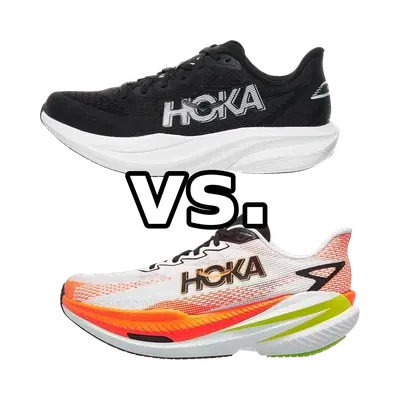
Hoka Mach 7 vs Hoka Mach X 3
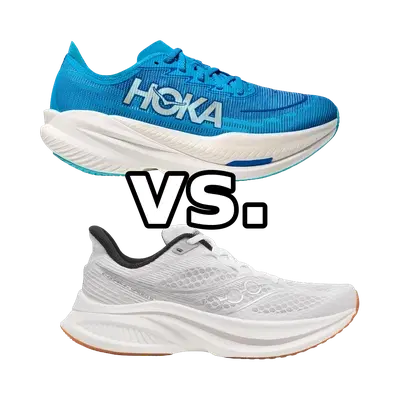
Hoka Mach X 2 vs Saucony Endorphin Speed 5
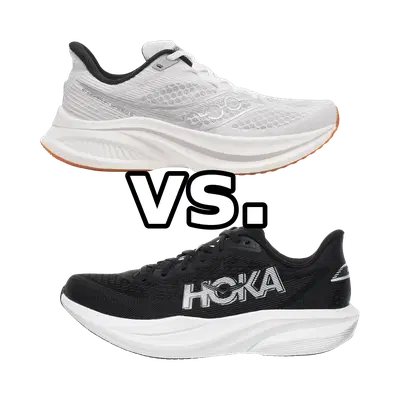
Saucony Endorphin Speed 5 vs Hoka Mach 7
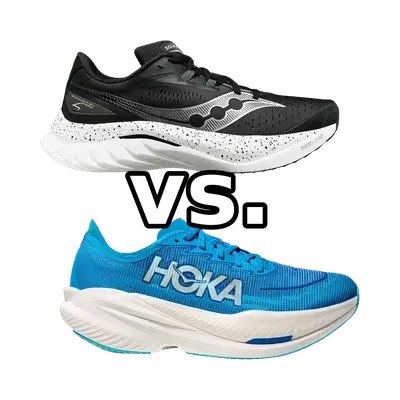
Saucony Endorphin Speed 4 vs Hoka Mach X 2
Puma Deviate Nitro 4 vs Hoka Mach 7
Adidas Adizero Boston 13 vs Hoka Mach X 2
© 2026 longrunshoes.ai | All rights reserved.
Use of materials from this site is permitted only with proper attribution and a link to longrunshoes.ai.