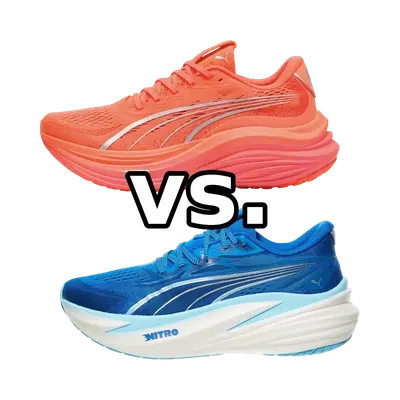
Puma MagMax Nitro vs Salomon Aero Glide 3:
Which to Choose
Verdict
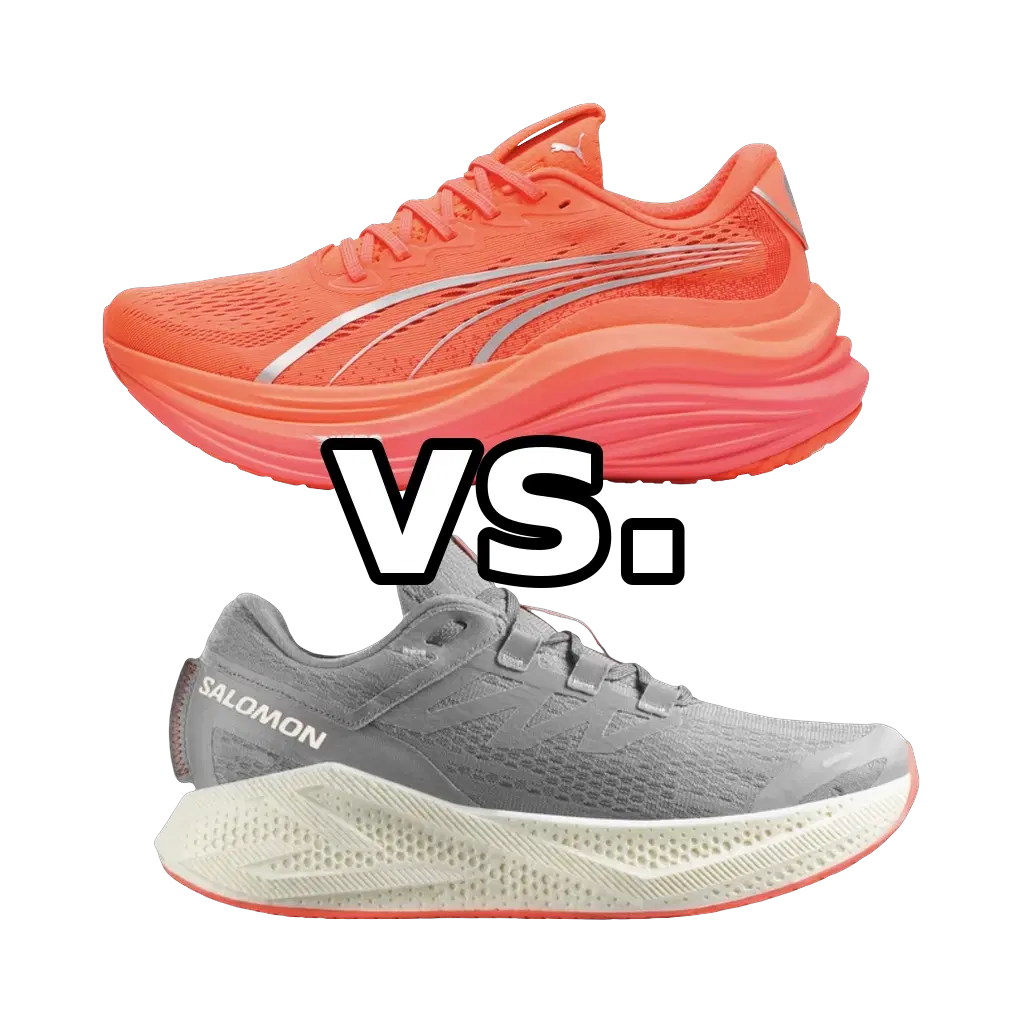
It comes down to one question: softest possible ride, or lighter and more adaptable? If you want the maximum cushioning and will spend almost all your time at an easy-to-steady marathon effort, the MagMax Nitro's taller, plusher stack is the one. If you want a near-equal amount of comfort in a shoe that's about 35g lighter and handles everything from 10K to the marathon with more willingness to pick up the pace, the Aero Glide 3 is the smarter all-rounder — and the better default for most runners choosing between the two.
Pace
3 of 6
Cushioning
6 of 6
Responsiveness
4 of 6
Stability
4 of 6
Drop
10 mm
Support
Neutral
Plate
None
Distances
HalfMarathon
Pace
3 of 6
Cushioning
5 of 6
Responsiveness
4 of 6
Stability
4 of 6
Drop
10 mm
Support
Neutral
Plate
None
Distances
10KHalfMarathon
At a Glance
Puma MagMax NitroSalomon Aero Glide 3
Who Should Choose Each Shoe
Choose
Puma MagMax Nitro
Choose the MagMax Nitro if your priority is protection above all — you're logging high easy mileage, long steady training runs, and the occasional marathon at a comfortable effort, and you want the maximum amount of soft foam a tall stack can give you. It's the better pick for the runner who values a deep, forgiving, leg-saving cruise over any sense of pace, and who doesn't mind carrying a little extra weight to get that plush PEBA ride underfoot.
Choose
Salomon Aero Glide 3
Choose the Aero Glide 3 if you want most of that long-run cushioning but in a lighter, more versatile shoe that doesn't feel sluggish when you lift the effort. It's the stronger option for a runner whose weekly rotation spans 10K up to the marathon, for beginners building volume who want one forgiving do-everything trainer, and for anyone who found a very tall max-stack shoe a bit wallowy or slow and wants a planted-but-nimbler alternative.
Head-to-Head
The clearest split is cushioning versus weight. The MagMax Nitro is the taller, softer shoe — a 47mm heel stack of supercritical Nitro (PEBA-based) foam, graded a full 6/6 for cushioning, and it feels it: deep, pillowy, road-buzz-swallowing, and happiest when you settle into a relaxed cadence. That height is the trade-off, though, as it weighs about 292g and carries a touch of softness-related sway at very slow, unfocused strides until you find a rhythm, and the soft foam damps energy the moment you reach for real turnover. The Aero Glide 3 sits lower (around a 40mm heel stack) on a resilient TPU/EVA Energy Foam, scored 5/6 for cushioning — still plush and forgiving, just not quite as deep or as cossetting. What it buys with that slightly trimmed stack is weight: at roughly 258g it's about 35g lighter, and that shows in the ride. Both foams give a gentle, cushioned bounce rather than superfoam snap, and both flatten into a merely pleasant roll when you push hard, but the lighter Salomon is more willing to hold a brisk gear — its effective quick zone reaches about 4:40 min/km and it genuinely covers 10K as well as the half and marathon, whereas the Puma's sweet spot is narrower: long runs and the marathon at a comfortable, sustainable effort, fastest around 4:45 min/km before it loses its point. Everything else is close to a wash: same neutral support, same plateless construction, the same moderate 4/6 stability and 4/6 responsiveness, breathable engineered-mesh uppers on both, and that shared ~10mm drop.
Similar Comparisons
Brooks Glycerin 22 vs Salomon Aero Glide 3
Nike Vomero 18 vs Puma MagMax Nitro

Salomon Aero Glide 3 vs Salomon Aero Glide 4
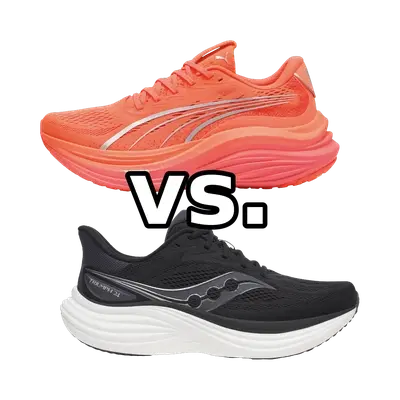
Puma MagMax Nitro vs Saucony Triumph 24
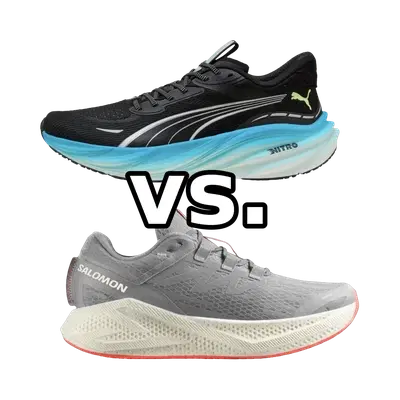
Puma Magnify Nitro 3 vs Salomon Aero Glide 3
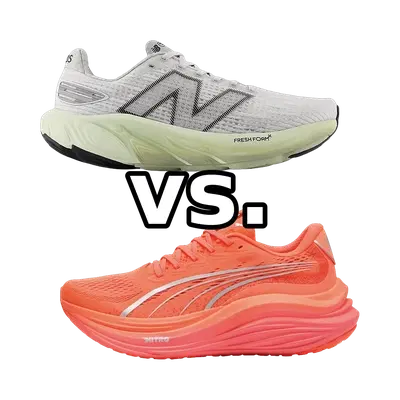
New Balance Fresh Foam X Balos v1 vs Puma MagMax Nitro

Salomon Aero Glide 3 vs Saucony Ride 19
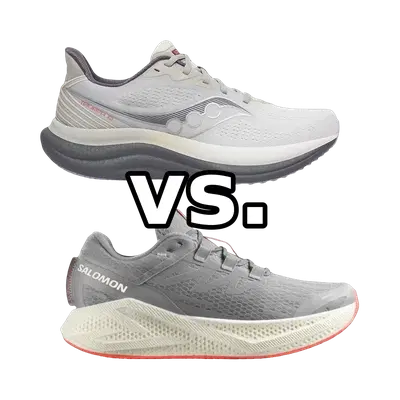
Saucony Triumph 23 vs Salomon Aero Glide 3
© 2026 longrunshoes.ai | All rights reserved.
Use of materials from this site is permitted only with proper attribution and a link to longrunshoes.ai.