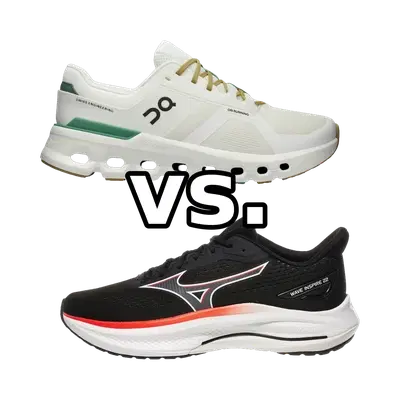
On Cloudrunner 2 vs Mizuno Wave Inspire 21:
Which to Choose
Verdict
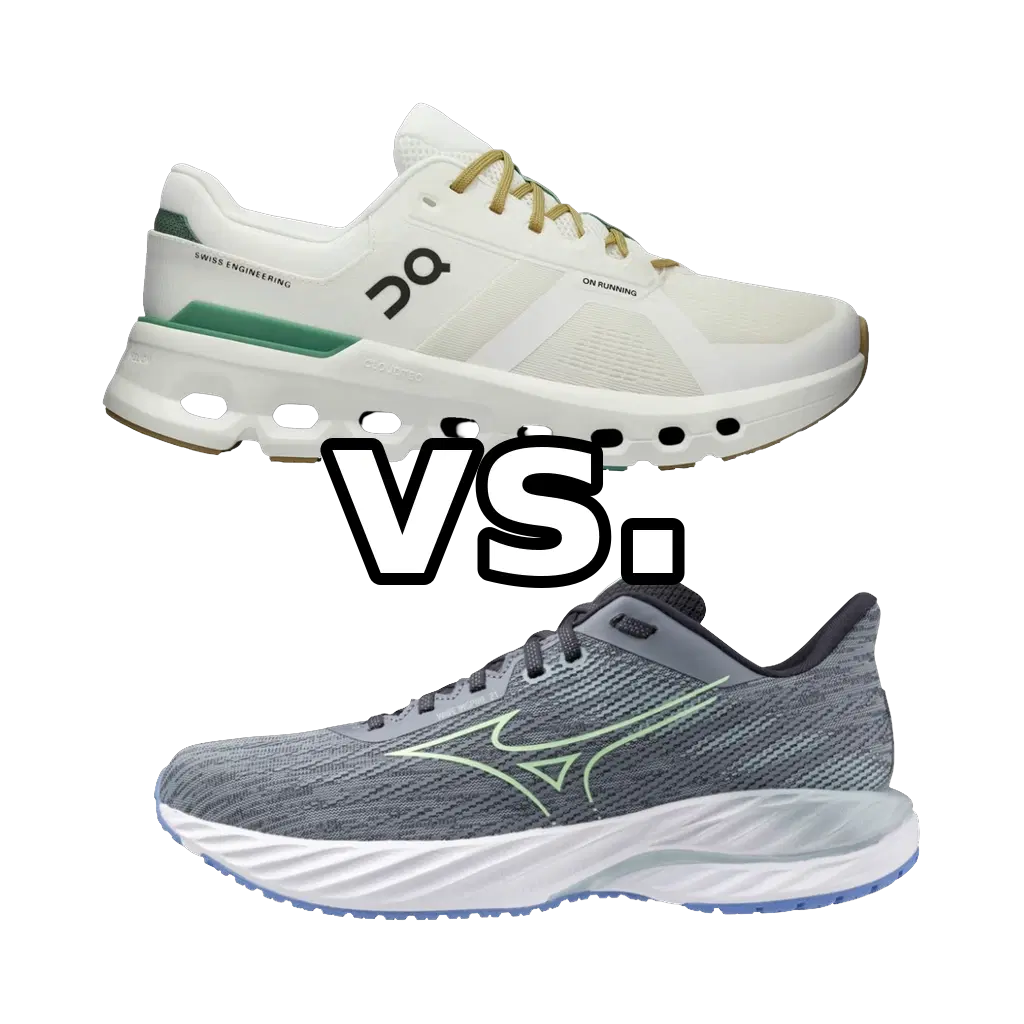
These two are closely matched daily stability trainers, so the choice hinges on your gait and your distance. If you need genuine pronation control, want a taller, more protective platform, or plan to train up to the marathon, the Wave Inspire 21 is the safer, more capable pick. If you don't overpronate, want a lighter and lower-riding shoe, and your longest efforts cap out around the half, the Cloudrunner 2 is the more natural, nimble fit.
Pace
3 of 6
Cushioning
4 of 6
Responsiveness
3 of 6
Stability
5 of 6
Drop
10 mm
Support
Stable Neutral
Plate
Composite
Distances
10KHalf
Pace
3 of 6
Cushioning
4 of 6
Responsiveness
3 of 6
Stability
5 of 6
Drop
12 mm
Support
Stability
Plate
Composite
Distances
10KHalfMarathon
At a Glance
On Cloudrunner 2Mizuno Wave Inspire 21
Who Should Choose Each Shoe
Choose
On Cloudrunner 2
Choose the Cloudrunner 2 if you're a neutral or mildly-pronating runner who wants stability from a wide, planted base rather than a corrective post, and you prefer a lower, more ground-hugging ride. It's the lighter, slightly more agile pick for beginner-to-intermediate runners whose bread and butter is 10K-to-half-marathon training and steady daily miles, especially if a 12mm drop feels like too much shoe. Reach for it when comfort and an even-keeled, unobtrusive feel matter more than maximum protection.
Choose
Mizuno Wave Inspire 21
Choose the Wave Inspire 21 if you actually overpronate and want a true guiding hand — the Wave plate delivers structured correction the On doesn't attempt. Its taller stack, firmer Enerzy ride and traditional 12mm drop also make it the better call for heel strikers and for anyone whose long runs stretch toward the marathon, where that extra platform and protection pay off over time. It's the pick if you value predictability and all-day support and don't mind carrying a bit more shoe to get it.
Head-to-Head
The clearest split is the support philosophy. The Cloudrunner 2 is stable-neutral: it has no medial post, instead relying on a wide base and firm sidewalls plus an internal Speedboard to keep you planted — a "guided neutral" shoe for runners who want steadiness without correction. The Wave Inspire 21 is a genuine stability shoe, with the signature plastic Wave plate actively resisting pronation; if your foot rolls in, it gives a firmer corrective hand that the On simply doesn't. Underfoot they also feel different despite identical cushioning scores: the On's Helion EVA blend is comfortable and even-keeled, sitting lower and closer to the ground (31mm heel / 21mm forefoot, 10mm drop), while the Mizuno's Enerzy foam is firmer and grounded but on a noticeably taller platform (38mm / 26mm, 12mm drop) — more shoe and a more traditional high-drop geometry that favors heel strikers and eases the calves. The On is the lighter of the two at about 277g versus roughly 292g for the Mizuno, and that shows in its slightly nimbler feel when you pick up the pace, where the Speedboard keeps transitions crisp before the foam runs flat. Range is the other decider: the Cloudrunner 2 tops out at the half marathon as its sweet spot, whereas the taller, more protective Wave Inspire 21 carries its stability comfortably all the way to the marathon. Neither is built for speed — both start to feel like more shoe than you need once you drop toward 4:45 min/km.
Similar Comparisons
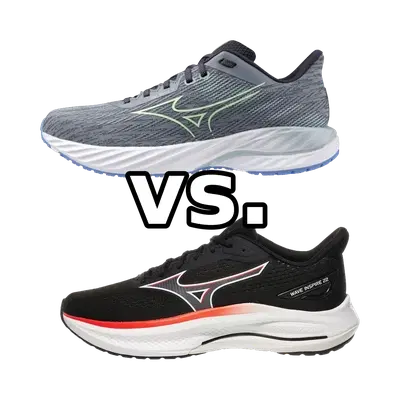
Mizuno Wave Inspire 21 vs Mizuno Wave Inspire 22
© 2026 longrunshoes.ai | All rights reserved.
Use of materials from this site is permitted only with proper attribution and a link to longrunshoes.ai.