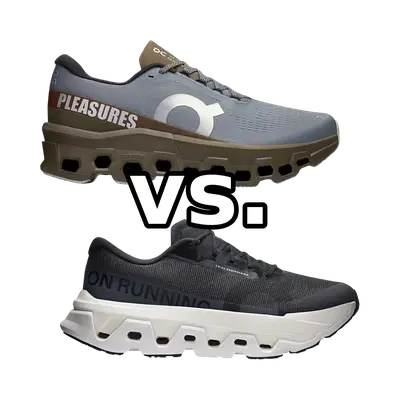
On Cloudmonster 2 Pleasures x The Loop vs On Cloudmonster 3:
Which to Choose
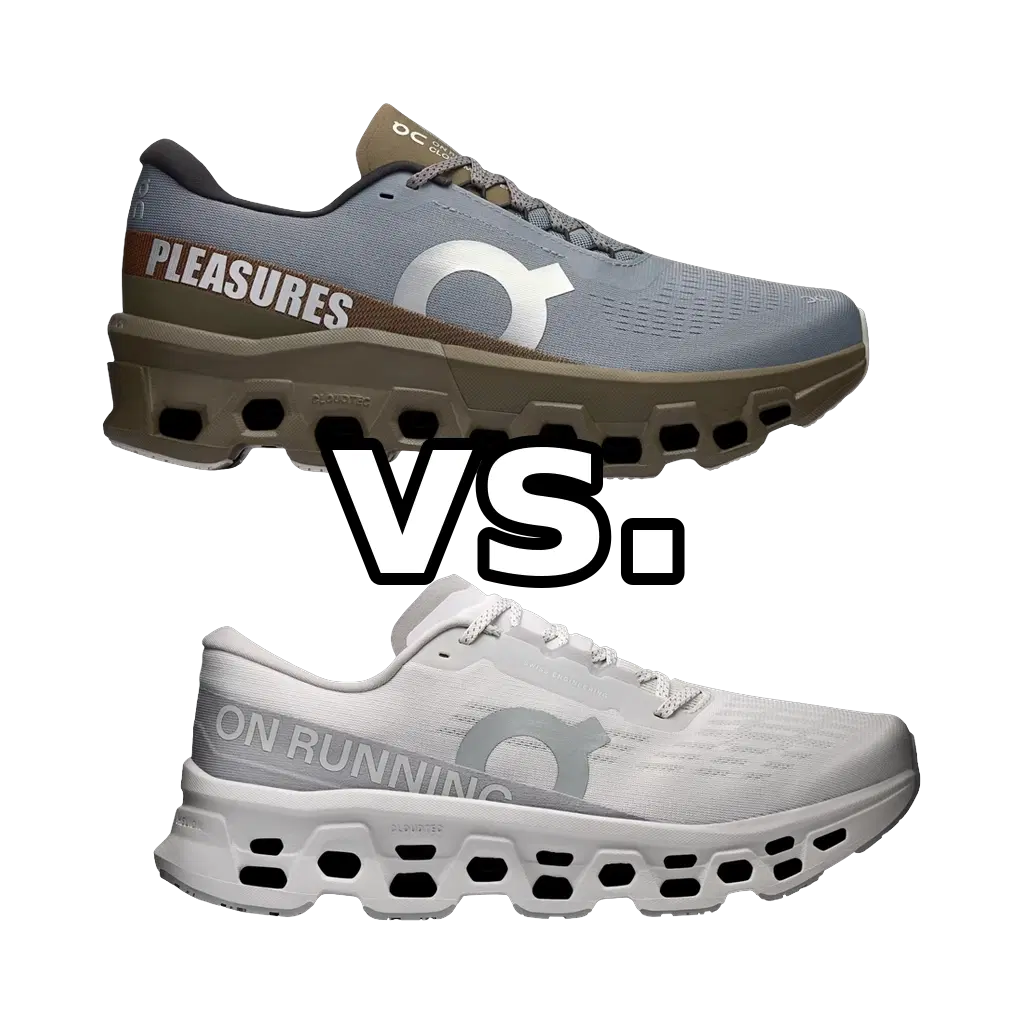
Verdict
It genuinely depends on how you run, not which is "better." Want a bouncier, lower-drop trainer that wakes up when you speed up for 10Ks and halves? Go Cloudmonster 2. Want a taller, firmer, more stable shoe for long steady miles up to the marathon, with maximum protection over spring? Go Cloudmonster 3. They're close in weight and share the same DNA — the deciding factor is bounce and a lower stance versus stability and a longer-distance ride.
Pace
4 of 6
Cushioning
4 of 6
Responsiveness
4 of 6
Stability
3 of 6
Drop
4 mm
Support
Neutral
Plate
Composite
Distances
10KHalf
Pace
3 of 6
Cushioning
5 of 6
Responsiveness
3 of 6
Stability
5 of 6
Drop
7 mm
Support
Stable Neutral
Plate
Composite
Distances
10KHalfMarathon
At a Glance
On Cloudmonster 2 Pleasures x The LoopOn Cloudmonster 3
Who Should Choose Each Shoe
Choose
On Cloudmonster 2 Pleasures x The Loop
Pick the Cloudmonster 2 if you want one cushioned trainer that can also inject some speed — a neutral runner logging steady 10Ks and halves who likes to drop into uptempo efforts and wants to feel the foam bounce back. Its lower 4mm drop and springier ride suit mid-to-forefoot strikers who find most max-cushion trainers too dull, and who don't need a wide, planted base to feel secure.
Choose
On Cloudmonster 3
Choose the Cloudmonster 3 if your priority is protective, predictable mileage over pop — a neutral to mildly pronating runner building long and steady efforts up to the marathon who values a tall, stable, composed platform. Its firmer 39mm stack, 7mm drop, and 5/6 stability make it the safer pick for runners who want a shoe that stays planted mile after mile and don't care about lively acceleration.
Head-to-Head
The clearest split is ride character. The Cloudmonster 2 is the springier shoe — its Helion foam and Speedboard combine for genuine bounce that firms up and rewards you as you accelerate, which is why it's happiest as an uptempo trainer and scores higher for pace and responsiveness (4/6 each). The Cloudmonster 3 takes the same ingredients but tunes them firm and mechanical: cushioning climbs to 5/6 but responsiveness drops to 3/6, so you get composed, protective mileage rather than energy return, and it starts to feel dead if you push the pace. Geometry reinforces this. The CM2 sits on a lower 34.5mm/29mm stack with a low 4mm drop that keeps you mid-to-forefoot but can feel a touch tippy and perched at jogging speeds; the CM3 rides a taller 39mm/32mm stack with a 7mm drop and a wider, more planted platform, pushing its stability to 5/6 (stable-neutral) versus the CM2's more neutral, slightly precarious 3/6. Weight is essentially a wash — the CM2 lands around 295g and the CM3 around 301g in men's US 9, both firmly in daily-trainer rather than lightweight territory. On range, the CM2 tops out at the half marathon and is best in the roughly 4:45–5:15 min/km zone when it comes alive, while the CM3 extends its usefulness up to the full marathon, with its sweet spot on relaxed long runs around 5:30–6:30 min/km. Neither is a racer and neither offers medial pronation support, but the CM3's broader base is the more forgiving, steadying ride.
Similar Comparisons
On Cloudmonster 2 vs On Cloudmonster 3
On Cloudmonster 3 vs On Cloudmonster 3 Hyper
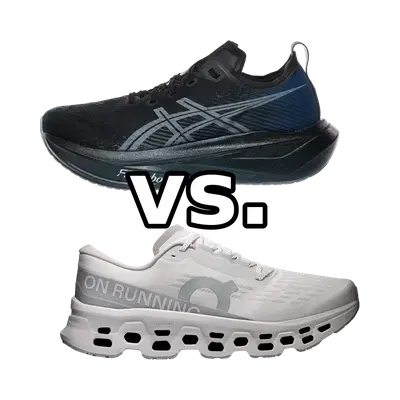
Asics Megablast vs On Cloudmonster 3
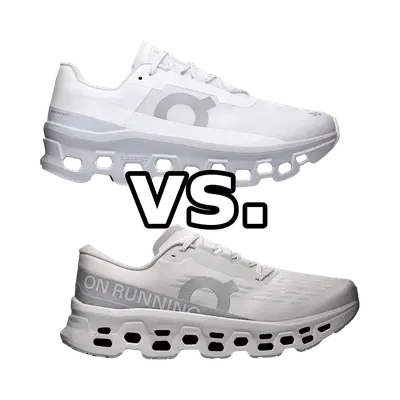
On Cloudmonster vs On Cloudmonster 3
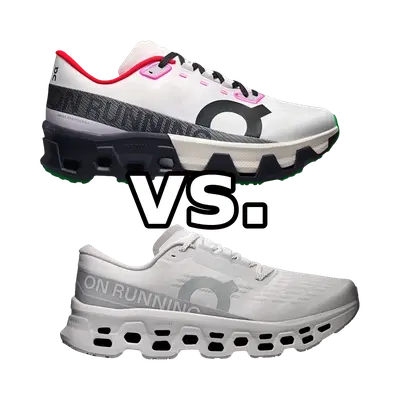
On Cloudmonster Hyper vs On Cloudmonster 3
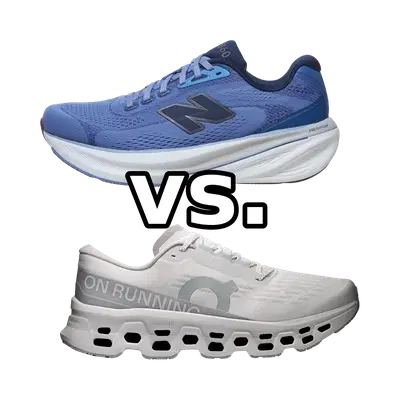
New Balance Fresh Foam X 860v15 vs On Cloudmonster 3
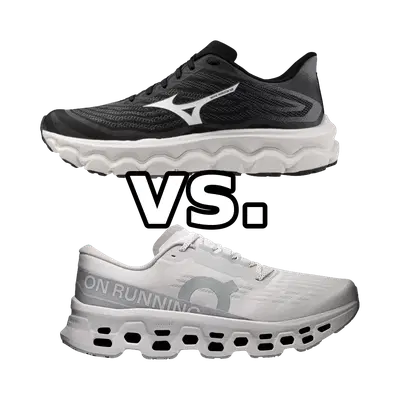
Mizuno Wave Horizon 8 vs On Cloudmonster 3
© 2026 longrunshoes.ai | All rights reserved.
Use of materials from this site is permitted only with proper attribution and a link to longrunshoes.ai.