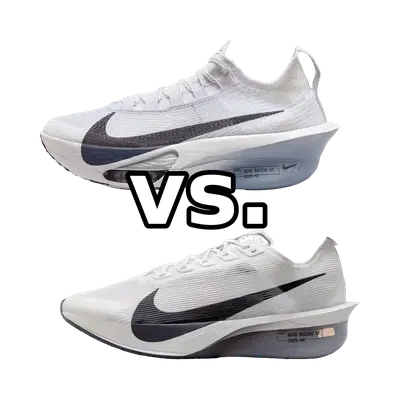
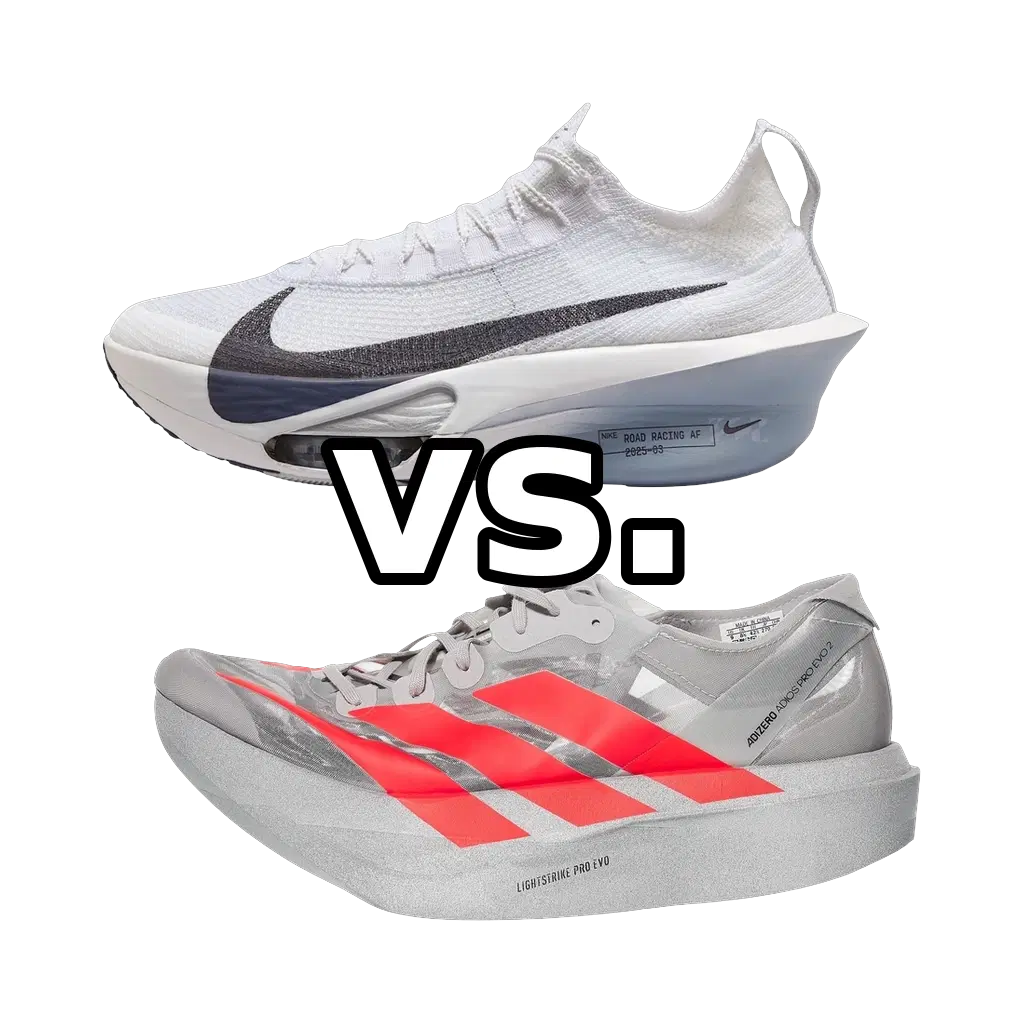
Nike Alphafly 3 vs Adidas Adizero Adios Pro Evo 2:
Which to Choose
Verdict
Both will race a marathon beautifully, so it comes down to feel and fit rather than capability. Go with the Adios Pro Evo 2 for the lightest possible shoe and a smooth, rolling ride if you have a narrow, efficient stride; go with the Alphafly 3 for a punchier, bouncier ride, a roomier fit, and a touch more durability and versatility. If your foot is wider or you want one shoe for both hard sessions and racing, the Alphafly is the safer call; if every gram counts and your form holds up late, the Adios is the sharper weapon.
Pace
6 of 6
Cushioning
5 of 6
Responsiveness
6 of 6
Stability
2 of 6
Drop
8 mm
Support
Neutral
Plate
Carbon
Distances
HalfMarathon
Pace
6 of 6
Cushioning
5 of 6
Responsiveness
6 of 6
Stability
2 of 6
Drop
7 mm
Support
Neutral
Plate
Carbon
Distances
HalfMarathon
At a Glance
Nike Alphafly 3Adidas Adizero Adios Pro Evo 2
Who Should Choose Each Shoe
Choose
Nike Alphafly 3
Choose the Alphafly 3 if you want the most propulsive, high-energy ride and value a shoe you can lean on for both key workouts and race day. It suits runners who like to feel an obvious pop at toe-off, who want a slightly more accommodating fit, and who want a bit more platform and upper substance under them — a strong pick if your foot is on the wider side or if you've raced in previous Alphaflys and trust the Air Zoom feel.
Choose
Adidas Adizero Adios Pro Evo 2
Choose the Adios Pro Evo 2 if outright lightness and a smooth, fast rolling transition matter most, and you're a confident midfoot-to-forefoot striker with efficient late-race form. Its featherweight build disappears underfoot at genuine race effort, making it ideal for the runner who wants the absolute minimum on their foot for a marathon PB — provided you have a narrow-to-medium foot that can live with the snug toebox and you're willing to reserve it strictly for your most important races.
Head-to-Head
Despite matching metrics, these shoes feel meaningfully different underfoot. The biggest hard difference is weight: the Adios Pro Evo 2 is one of the lightest marathon shoes ever made at about 139g in a men's US 9, while the Alphafly 3 comes in around 198g — close to a 60g gap that you notice over the back half of a race. Both ride on near-maximum stack heights right around the 40mm heel limit, so neither is short on foam; the difference is in the engine. The Alphafly pairs ZoomX foam with a full-length carbon plate and twin forefoot Air Zoom pods, producing a pronounced, almost trampoline-like pop at toe-off and a powerful, aggressive turnover once you're pressing. The Adios Pro Evo 2 uses CNC-carved Lightstrike Pro Evo foam over carbon-infused Energy Rods and a rocker, which delivers a smoother, quicker, more rolling transition rather than that snappy Nike bounce. Drops are close — 8mm for the Alphafly versus an effective ~7mm for the Adios — so neither feels dramatically more or less forward-tipping than the other. Both are deliberately unstable neutral platforms that get wobbly and unwieldy at easy jogging paces, but the Adios feels the more precarious of the two on its narrow, ultralight platform if your form breaks down late. Fit also separates them: the Adios runs very snug, especially through a tight toebox, while the Alphafly's AtomKnit upper is the more forgiving of the two. Durability is limited on both — soft superfoams and thin racing outsoles — but the Adios is the more extreme, pared-to-the-bone build meant to be hoarded for the biggest days, whereas the Alphafly is marginally more robust for race-pace workouts as well as racing.
Similar Comparisons
Adidas Adizero Adios Pro Evo 2 vs Adidas Adizero Adios Pro Evo 3
Nike Alphafly 3 vs Asics Metaspeed Ray
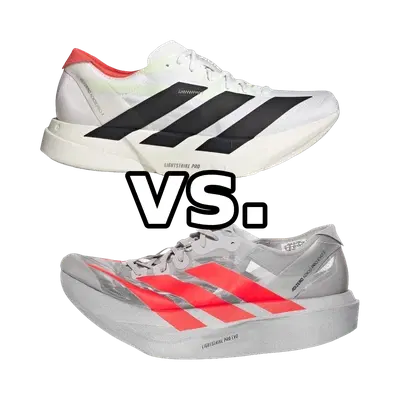
Adidas Adizero Adios Pro 4 vs Adidas Adizero Adios Pro Evo 2
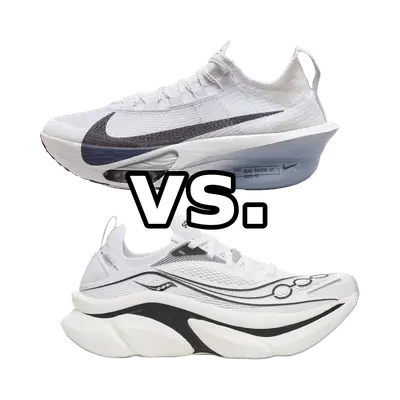
Nike Alphafly 3 vs Saucony Endorphin Elite 3
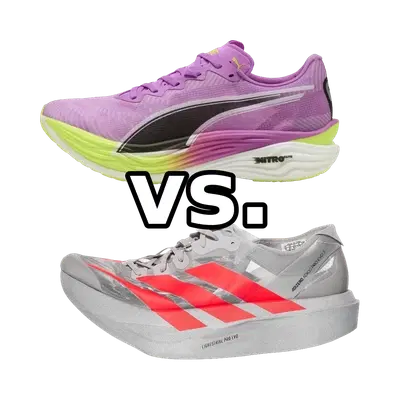
Puma Deviate Nitro Elite 3 vs Adidas Adizero Adios Pro Evo 2

Nike Alphafly 3 vs Brooks Hyperion Elite 5
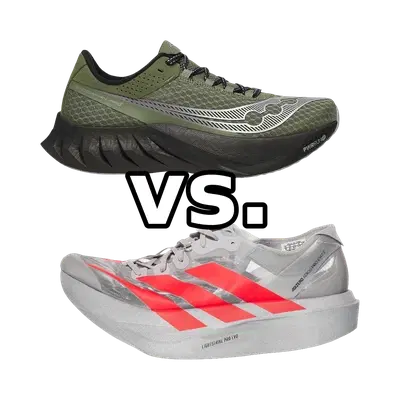
Saucony Endorphin Pro 4 vs Adidas Adizero Adios Pro Evo 2
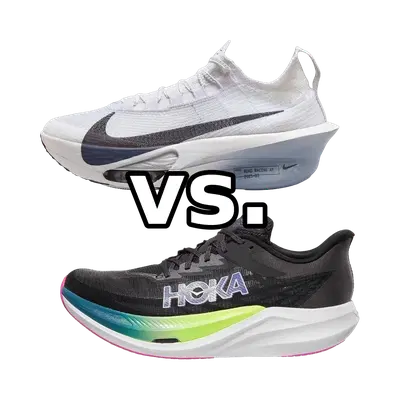
Nike Alphafly 3 vs Hoka Rocket X 3
© 2026 longrunshoes.ai | All rights reserved.
Use of materials from this site is permitted only with proper attribution and a link to longrunshoes.ai.