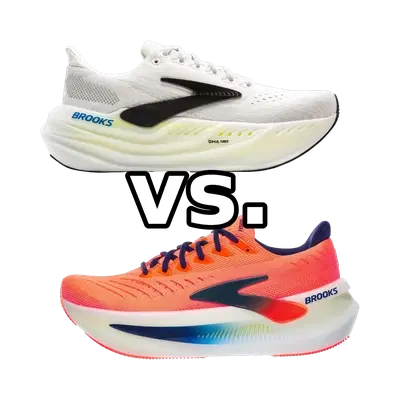
Brooks Glycerin Max 2 vs Puma MagMax Nitro 2:
Which to Choose
Verdict
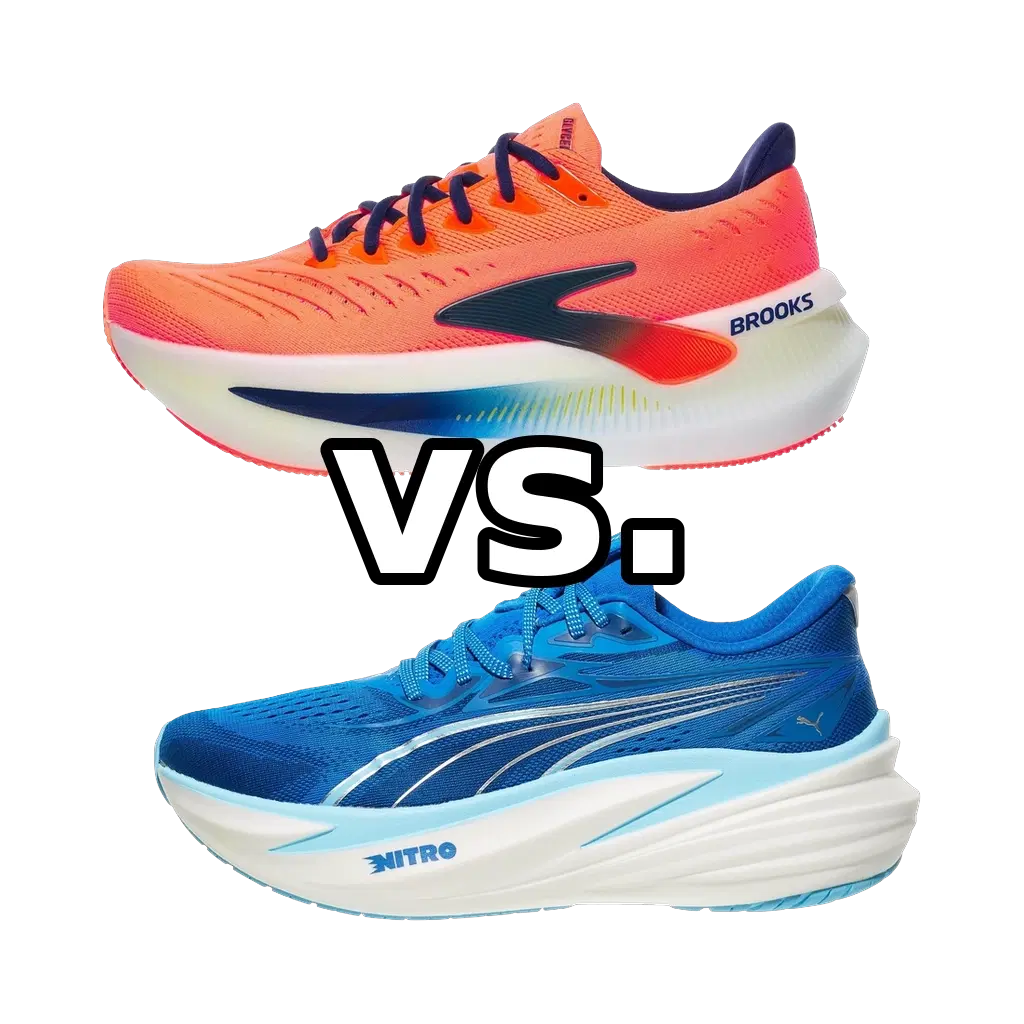
These are genuinely similar shoes — maximal, plush, neutral, plateless cruisers that both want you to relax and roll, so you won't go wrong either way for easy mileage. It comes down to two things: distance and feel. If your long runs reach marathon territory and you want the lighter shoe with a higher heel drop to spare your calves, take the Puma MagMax Nitro 2. If you run shorter (10K to half), carry a bit more weight happily, and prefer a firmer forefoot with a rocker-assisted toe-off and a flatter 8mm drop, take the Brooks Glycerin Max 2.
Pace
2 of 6
Cushioning
6 of 6
Responsiveness
4 of 6
Stability
4 of 6
Drop
8 mm
Support
Neutral
Plate
None
Distances
10KHalf
Pace
2 of 6
Cushioning
6 of 6
Responsiveness
5 of 6
Stability
4 of 6
Drop
11 mm
Support
Neutral
Plate
None
Distances
HalfMarathon
At a Glance
Brooks Glycerin Max 2Puma MagMax Nitro 2
Who Should Choose Each Shoe
Choose
Brooks Glycerin Max 2
Choose the Glycerin Max 2 if you're a neutral runner — a beginner building volume, a heavier runner, or anyone logging easy and long days — who wants the most protective, pillowy landing possible and doesn't mind carrying a heavier shoe to get it. Its firmer forefoot and GlideRoll rocker suit runners who like a smooth, rolled-forward transition and a lower 8mm drop, and whose longest efforts top out around the half marathon rather than the full. It's the pick if cushioned comfort and a steady cruise matter more to you than grams or outright distance.
Choose
Puma MagMax Nitro 2
Choose the MagMax Nitro 2 if you're stacking up high-mileage marathon prep and want a max-cushion trainer that stays lighter underfoot over long efforts — its ~269g build and resilient PEBA foam make the miles feel less taxing. The taller 11mm drop is a genuine advantage if you deal with calf or Achilles tightness and want that load eased on easy and recovery runs. Go Puma if your sweet spot runs from the half to the full marathon and you value soft, protective, slightly livelier foam over a rocker-driven, firmer-forefoot ride.
Head-to-Head
On paper these shoes are close cousins — both neutral, both plateless, both maxed out on cushioning (6/6) with a moderate 4/6 stability score, and both happiest in the same easy, conversational pace window. Their stack heights are nearly identical at the heel (Brooks 45mm, Puma 46mm), but they diverge from there. The Puma runs an 11mm drop against the Brooks' 8mm, with a lower 35mm forefoot versus the Brooks' 37mm — so the MagMax has a more pronounced heel bias that takes load off the calves and Achilles, while the Glycerin Max sits flatter and firmer up front. That firmer Brooks forefoot, paired with its GlideRoll rocker, gives it a more deliberate, rolled-forward toe-off; the Puma's NITROFOAM feels softer and more uniformly cushy end to end, prioritizing impact absorption over any forward nudge. Weight is the most decisive gap: the Puma comes in at about 269g in a men's US 9, while the Brooks is a hefty 318g — nearly 50g more, enough to feel on the foot over a long run. Foam is the other real difference: the Brooks uses nitrogen-infused DNA Tuned (dual-cell, plusher heel, firmer forefoot), while the Puma uses supercritical PEBA (NITROFOAM), which carries a higher responsiveness rating (5/6 vs 4/6) and returns energy with a bit more life, though neither is snappy without a plate. Their intended ranges reflect all this: Brooks pegs the Glycerin Max at 10K to half distances, while the lighter, higher-drop Puma stretches comfortably to the full marathon.
Similar Comparisons
Puma MagMax Nitro vs Puma MagMax Nitro 2
Nike Vomero Plus vs Brooks Glycerin Max 2
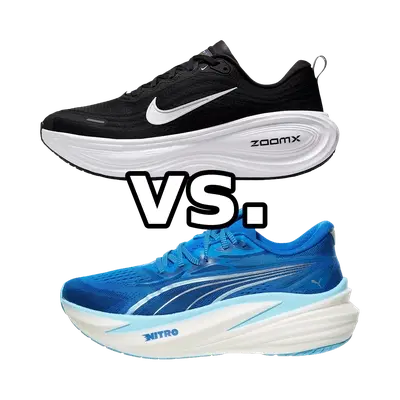
Nike Vomero Plus vs Puma MagMax Nitro 2
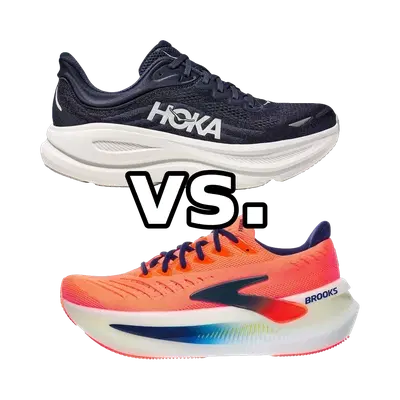
Hoka Bondi 9 vs Brooks Glycerin Max 2
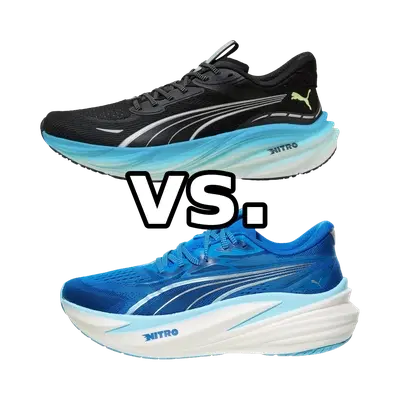
Puma Magnify Nitro 3 vs Puma MagMax Nitro 2
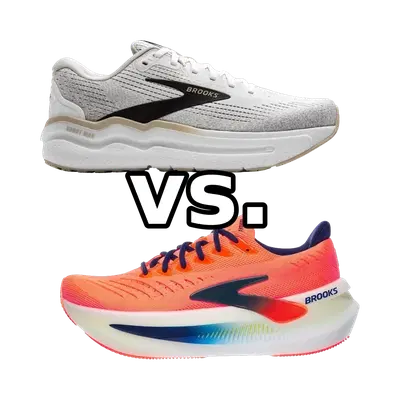
Brooks Ghost Max 2 vs Brooks Glycerin Max 2
Nike Vomero Premium vs Puma MagMax Nitro 2
Brooks Ghost Max 3 vs Brooks Glycerin Max 2
© 2026 longrunshoes.ai | All rights reserved.
Use of materials from this site is permitted only with proper attribution and a link to longrunshoes.ai.