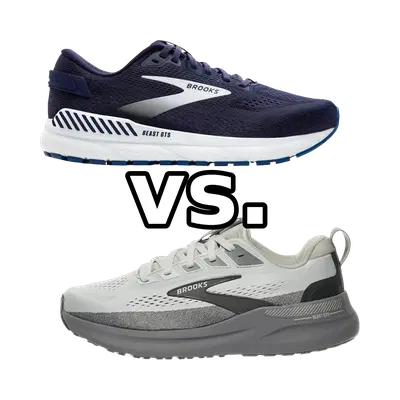
Brooks Beast GTS 26 vs Brooks Ariel GTS 26:
Which to Choose
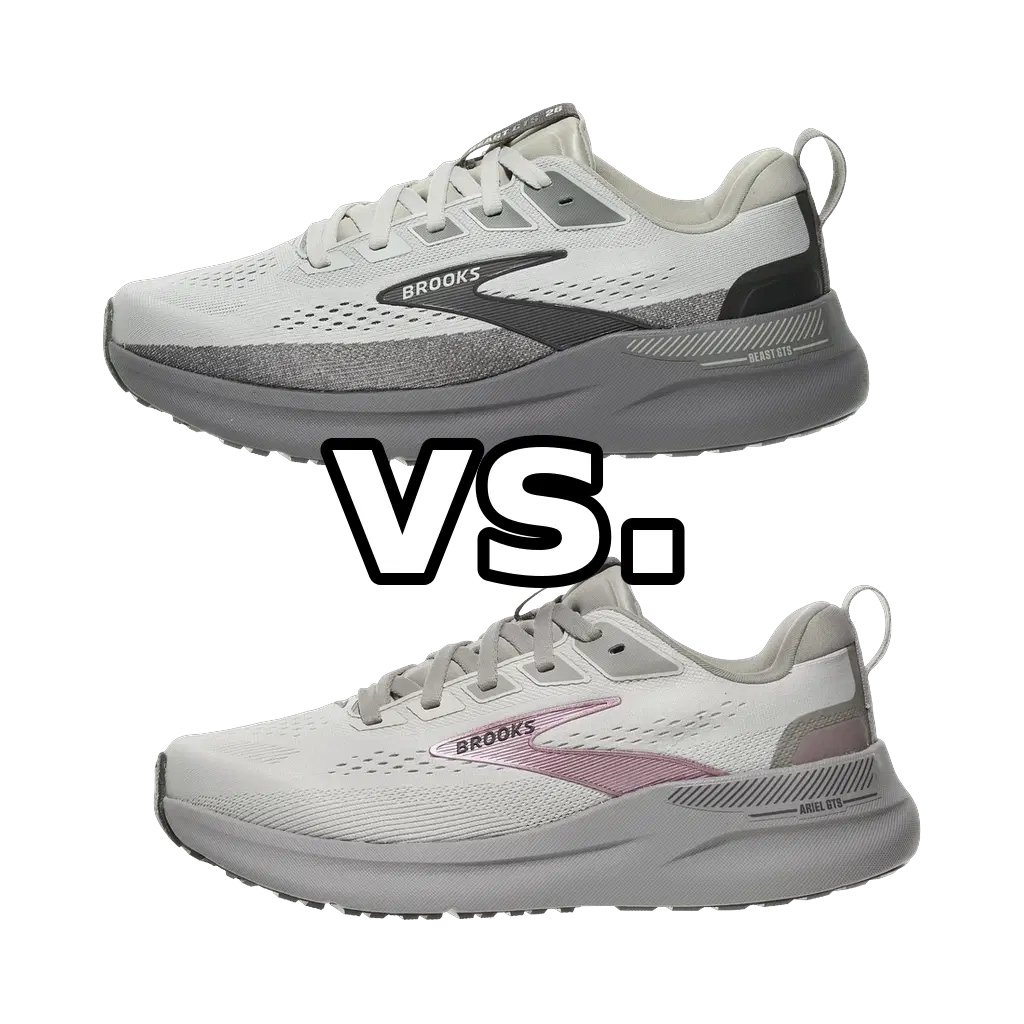
Verdict
This isn't a case where one shoe beats the other — the Beast and Ariel are the same maximum-support, GuideRails-stabilized trainer in men's and women's form, with matching foam, cushioning, stability, and marathon-and-under use cases. The decision comes down to fit, not ride: pick the Beast for a men's last with a marginally lower measured drop, or the Ariel for a women's-specific fit with a true 12 mm offset. Go by which last suits your foot, and you'll get the same protective, long-haul ride either way.
Pace
3 of 6
Cushioning
5 of 6
Responsiveness
4 of 6
Stability
6 of 6
Drop
10 mm
Support
Motion Control
Plate
None
Distances
HalfMarathon
Pace
3 of 6
Cushioning
5 of 6
Responsiveness
4 of 6
Stability
6 of 6
Drop
12 mm
Support
Motion Control
Plate
None
Distances
HalfMarathon
At a Glance
Brooks Beast GTS 26Brooks Ariel GTS 26
Who Should Choose Each Shoe
Choose
Brooks Beast GTS 26
Choose the Beast GTS 26 if you're a runner who fits a men's last and wants maximum pronation control for daily training, long runs, and the occasional half or marathon. It's the pick for overpronators logging big weeks who prioritize a stable, protective, planted platform over turnover, and who want a slightly lower measured drop (~10 mm) with a bit more forefoot foam underfoot. If you've relied on past Beast models or need a men's-specific fit with this much structure, this is your workhorse.
Choose
Brooks Ariel GTS 26
Choose the Ariel GTS 26 if you want the same maximum-support platform built on a women's-specific fit, holding the arch in place mile after mile on long, steady efforts. It's the better match for women who overpronate and value structure and cushioning over speed, and who prefer a slightly taller 12 mm drop that eases pressure on the calves and Achilles. If you're a dedicated distance runner or walker who needs the heel firmly held and the foot guided on patient, sustained mileage, the Ariel is the one tuned for you.
Head-to-Head
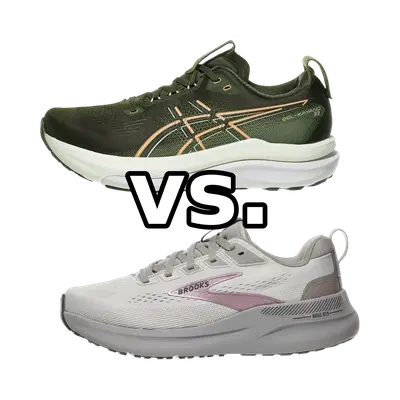
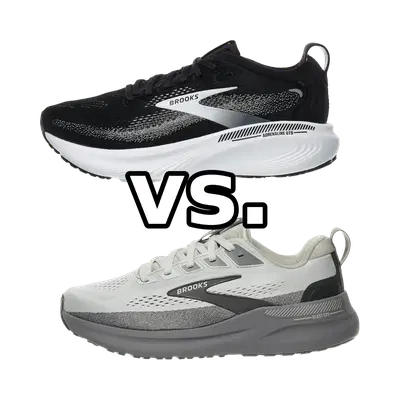
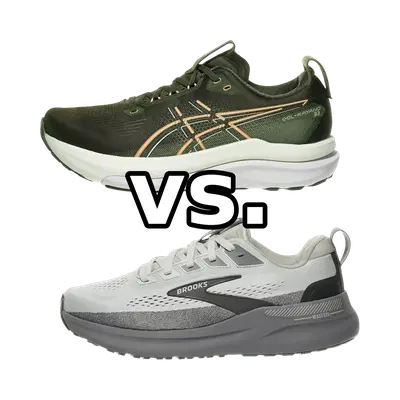
On paper these two are nearly identical, and that's by design — they're the men's and women's versions of the same motion-control shoe. Both ride on nitrogen-infused DNA LOFT v3, an EVA-class foam tuned for soft-but-grounded comfort rather than superfoam bounce, and both get their maximum (6/6) stability entirely from GuideRails and a wide, sidewalled platform with no plate. Cushioning (5/6), responsiveness (4/6), and pace rank (3/6) match exactly, as do the best-use cases: half and full marathons plus long easy training, with an optimal 5:30–6:30 min/km rhythm and a fastest-effective zone of roughly 5:15–5:30 min/km before the weight and soft foam start to feel like drag. Both are substantial, deliberate shoes that reward patient, protected mileage and never feel eager to accelerate. The real differences are structural and small: both sit at about 38 mm of heel stack, but the Beast runs a 38/28 mm profile for a measured ~10 mm drop (Brooks lists 12 mm), while the Ariel is 38/26 mm for a true 12 mm drop — so the Ariel carries a slightly taller heel-to-toe offset and a touch less forefoot foam. Each quotes its weight at a different reference size (the Beast in a men's US 9, the Ariel in a women's 8), so there's no meaningful apples-to-apples weight gap to call here; both are heavy by design, and that heft is the price of this much structure. The upper is an engineered knit on both, over a durable RoadTack-style road outsole. In short: same engine, same mission, fit to different feet.
© 2026 longrunshoes.ai | All rights reserved.
Use of materials from this site is permitted only with proper attribution and a link to longrunshoes.ai.