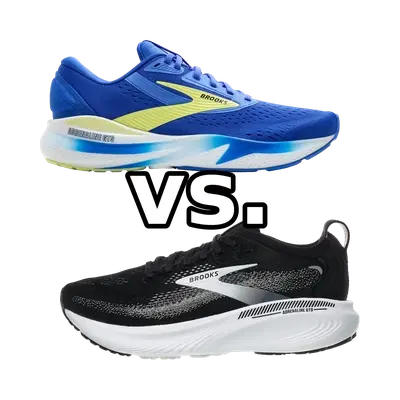
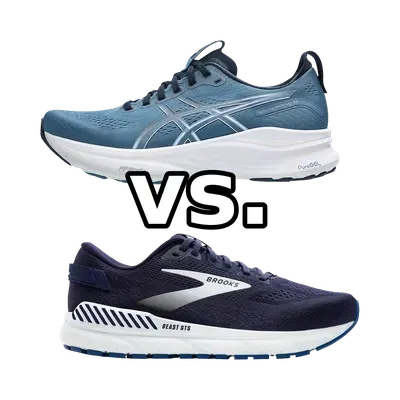
Brooks Adrenaline GTS 24 vs Brooks Beast GTS 24:
Which to Choose
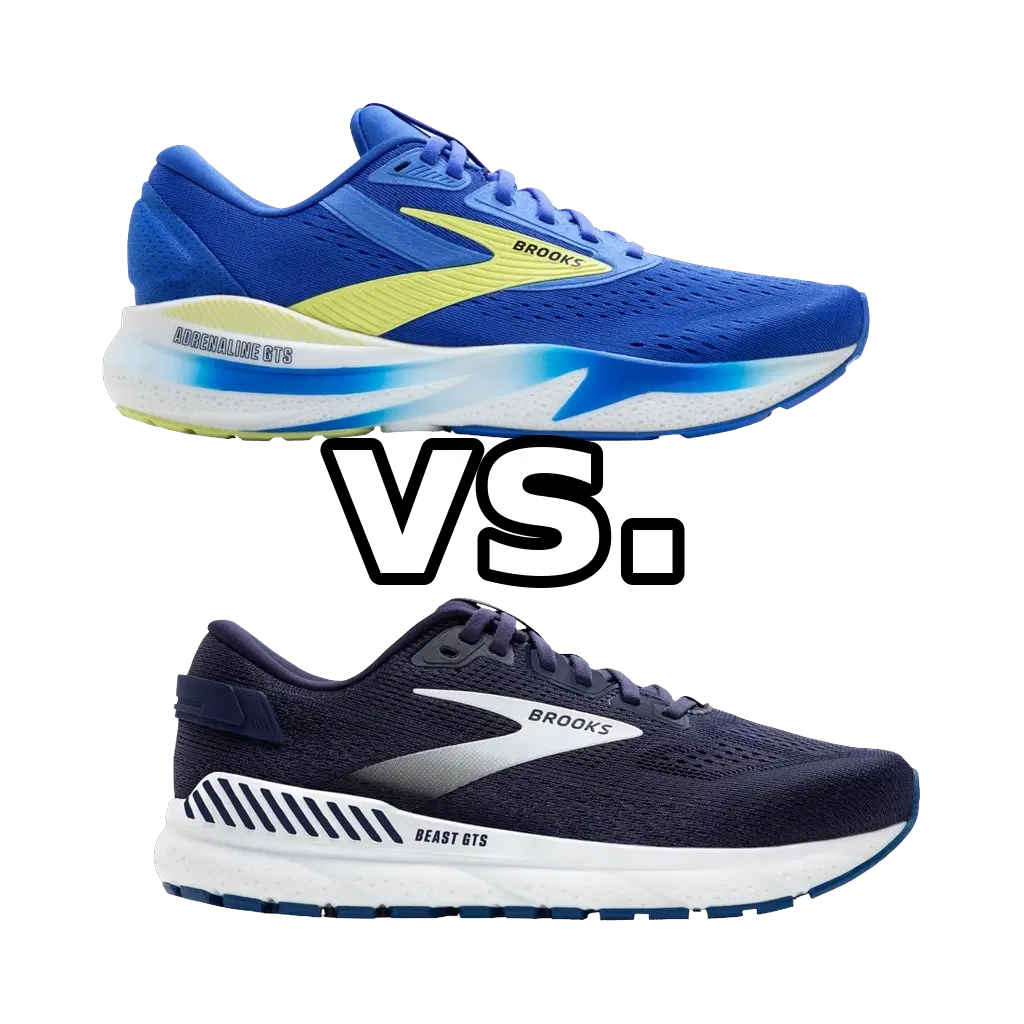
Verdict
It genuinely depends on how much support you need and how much weight you'll trade for it. If your overpronation is significant, you're a heavier runner, or you simply want the most protective, planted ride for long steady miles, the Beast is the one — just accept that it's heavier and tops out at the half. For most overpronators who want a lighter, more versatile stability trainer that also handles a marathon and a bit more pace, the Adrenaline GTS 24 is the smarter all-rounder.
Pace
3 of 6
Cushioning
4 of 6
Responsiveness
3 of 6
Stability
6 of 6
Drop
12 mm
Support
Stability
Plate
None
Distances
10KHalfMarathon
Pace
3 of 6
Cushioning
5 of 6
Responsiveness
3 of 6
Stability
6 of 6
Drop
8 mm
Support
Motion Control
Plate
None
Distances
10KHalf
At a Glance
Brooks Adrenaline GTS 24Brooks Beast GTS 24
Who Should Choose Each Shoe
Choose
Brooks Adrenaline GTS 24
Choose the Adrenaline GTS 24 if you're an overpronator who wants one dependable stability shoe to cover everything from daily training to a steady half or full marathon, and you'd rather not haul extra weight to get that support. Its lighter build, firmer-leaning DNA Loft v2, and 12mm drop make it the better pick for heel strikers, for runners logging honest marathon mileage, and for anyone who occasionally wants to pick up the pace without feeling bogged down. It's also the more natural starting point for a newer runner who needs guidance but not maximum control.
Choose
Brooks Beast GTS 24
Choose the Beast GTS 24 if you need serious, maximum support — heavier runners and moderate-to-severe overpronators who want their foot held firmly and their rearfoot motion locked down over long time on feet. Its plush DNA Loft v3 and wide, structured motion-control platform prioritize protection and a grounded, unshakeable ride over weight or turnover, so it's the right call when comfort and control on easy and long runs matter more than racing a marathon or chasing pace. Wide-footed runners who want a roomier, more accommodating stability shoe are also better served here.
Head-to-Head
Start with what they share: both earn a maximum 6/6 for stability, both use GuideRails to limit excess motion at the knee rather than a medial post, both skip a propulsion plate, and both ride planted and deliberate rather than springy — if you're after energy return or a snappy turnover, neither is your shoe. Cushioning is where the first real split shows up, though not in the way the names suggest: both sit around 38–39mm of foam at the heel, so the Beast isn't a taller shoe, it's a softer one. Its DNA Loft v3 feels plush and protective underfoot, while the Adrenaline's DNA Loft v2 is more mildly forgiving and a touch firmer, which is part of why the Adrenaline feels the more capable of the two when the pace lifts. Weight is the decisive practical difference: the Adrenaline comes in around 283g (10 oz), while the Beast is roughly 357g (about 12.6 oz) — close to 70g more on each foot, which you feel on long efforts and when trying to turn the legs over. The support philosophy also differs: the Adrenaline is tuned as a guidance-level stability shoe for everyday overpronation, whereas the Beast is a true motion-control platform, wider and more structured, built to rein in heavier and more severe overpronators. Drop separates them too — the Adrenaline runs a traditional 12mm heel-to-toe offset that favors heel strikers and eases calf load, while the Beast sits at a more moderate 8mm. That combination lands them in slightly different lanes: the Adrenaline is comfortable from the 10K through the half and into a full marathon at steady effort, with a usable pace zone around 5:00–6:00 min/km, while the Beast is happiest from 10K to the half plus easy and long support miles, topping out around 5:15–5:45 min/km.
© 2026 longrunshoes.ai | All rights reserved.
Use of materials from this site is permitted only with proper attribution and a link to longrunshoes.ai.