
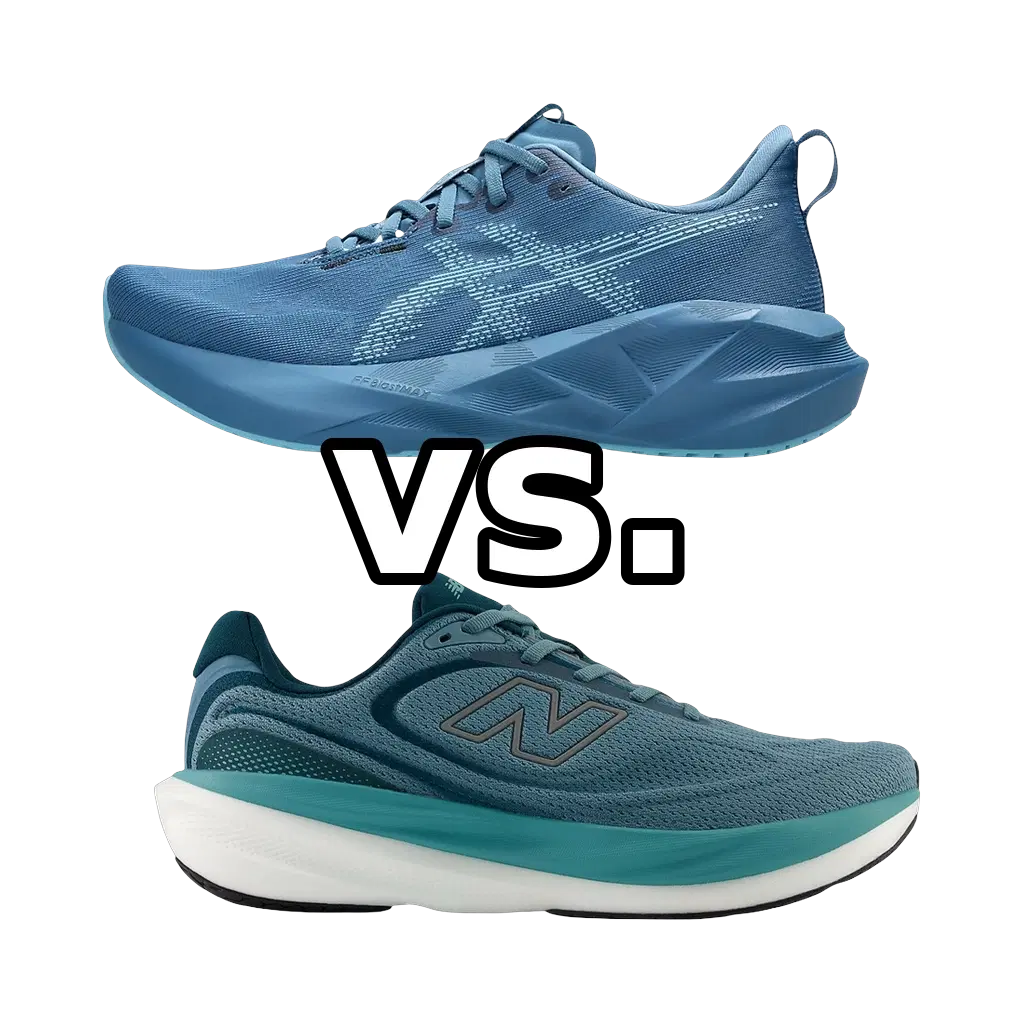
Asics Novablast 5 vs New Balance Fresh Foam X 1080v15:
Which to Choose
Verdict
These two are matched on weight, cushioning depth, and intended distances, so the decision comes down to ride feel, not size. Pick the Novablast 5 if you want versatility and bounce — a shoe that cruises easy but still enjoys picking up the pace — and pick the 1080v15 if you want the softest, most comfort-focused cruiser for easy and long mileage and will handle speed in a different shoe. Both are excellent high-stack neutral trainers; the newcomer Novablast simply offers more pace range, while the 1080v15 leans fully into plush comfort.
Pace
4 of 6
Cushioning
5 of 6
Responsiveness
5 of 6
Stability
4 of 6
Drop
8 mm
Support
Neutral
Plate
None
Distances
10KHalfMarathon
Pace
3 of 6
Cushioning
5 of 6
Responsiveness
3 of 6
Stability
4 of 6
Drop
6 mm
Support
Neutral
Plate
None
Distances
10KHalfMarathon
At a Glance
Asics Novablast 5New Balance Fresh Foam X 1080v15
Who Should Choose Each Shoe
Choose
Asics Novablast 5
Choose the Novablast 5 if you want one energetic trainer that covers daily miles and long runs but still has another gear — a runner who likes a tall, bouncy platform and occasionally throws in strides, pickups, or a steady half effort without reaching for a second shoe. It rewards heel and midfoot strikers who enjoy a lively, springy ride and don't mind a slightly taller, floatier feel at very easy paces in exchange for that rebound when the pace climbs.
Choose
New Balance Fresh Foam X 1080v15
Choose the 1080v15 if comfort and smoothness are the priority over snap — beginners building mileage who want a forgiving, planted ride, or experienced runners who want a plush long-run cruiser and already have a separate shoe for tempo work. Its lower 6mm drop and comfort-first foam make it ideal for logging steady, protected easy and long miles where you value a predictable, cradling ride more than a pacey pop.
Head-to-Head
Start with how close they actually are: the Novablast 5 lands around 255g and the 1080v15 around 258g (men's US9), so weight is effectively a wash — neither feels heavier on the foot. Stack heights are nearly matched too, with the Novablast at roughly 41.5mm heel / 33.5mm forefoot and the 1080v15 at about 40mm / 34mm, both firmly in max-cushion territory. The Novablast's 8mm drop gives a slightly more pronounced heel-to-toe slope than the 1080v15's 6mm, which sits a touch lower and more natural underfoot. Where they genuinely split is the foam and the ride it produces. The Novablast 5's FF Blast Max is soft but distinctly springy — a trampoline-like rebound that pops back as you roll forward and genuinely wakes up when you lift the pace (we rate its responsiveness 5/6, pace 4/6). The 1080v15's Fresh Foam X is tuned comfort-first: plush, forgiving, and smooth, but it returns medium rebound rather than a snappy pop (responsiveness 3/6, pace 3/6). That shows in their happy pace windows — the Novablast is comfortable cruising and still rewarding when pushed toward roughly 4:15–4:30 min/km, while the 1080v15 is at its best from easy to moderate daily effort and starts losing its edge past about 5:00 min/km. Both share the same best-distance range (10K, half, marathon) and both can feel slightly tall or vague at very slow plodding paces, but the summary is simple: same weight class and cushioning depth, different personalities — the Novablast adds bounce and pace range, the 1080v15 prioritizes plush, predictable comfort.
Similar Comparisons
New Balance Fresh Foam X 1080v14 vs New Balance Fresh Foam X 1080v15

Adidas Adizero Boston 13 vs Asics Novablast 5
New Balance Fresh Foam X 1080v15 vs Puma Velocity Nitro 4

Adidas Adizero SL2 vs Asics Novablast 5
Hoka Clifton 10 vs New Balance Fresh Foam X 1080v15
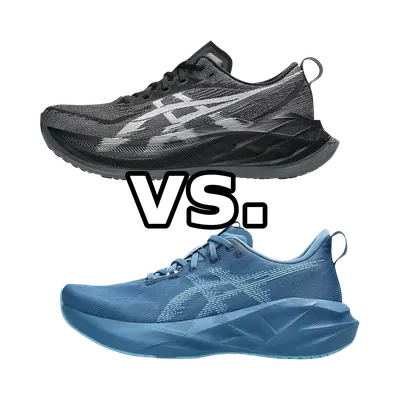
Asics Superblast 2 vs Asics Novablast 5
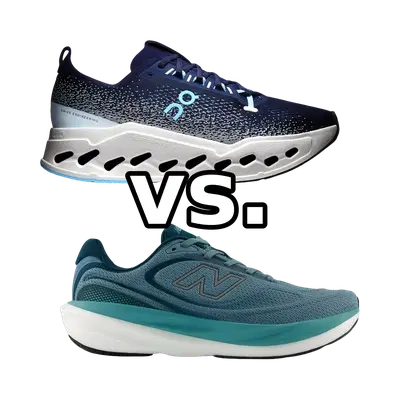
On Cloudsurfer Max vs New Balance Fresh Foam X 1080v15
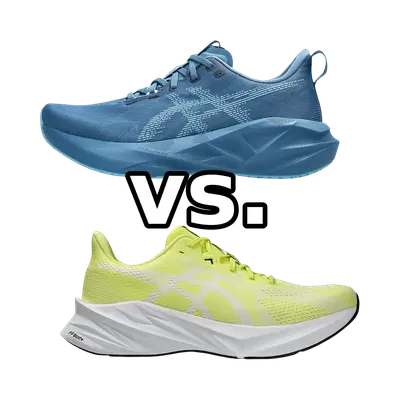
Asics Novablast 5 vs Asics Dynablast 5
© 2026 longrunshoes.ai | All rights reserved.
Use of materials from this site is permitted only with proper attribution and a link to longrunshoes.ai.