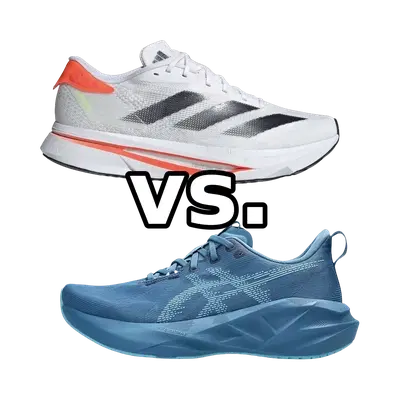
Asics Novablast 5 vs Asics Gel-Nimbus 28:
Which to Choose
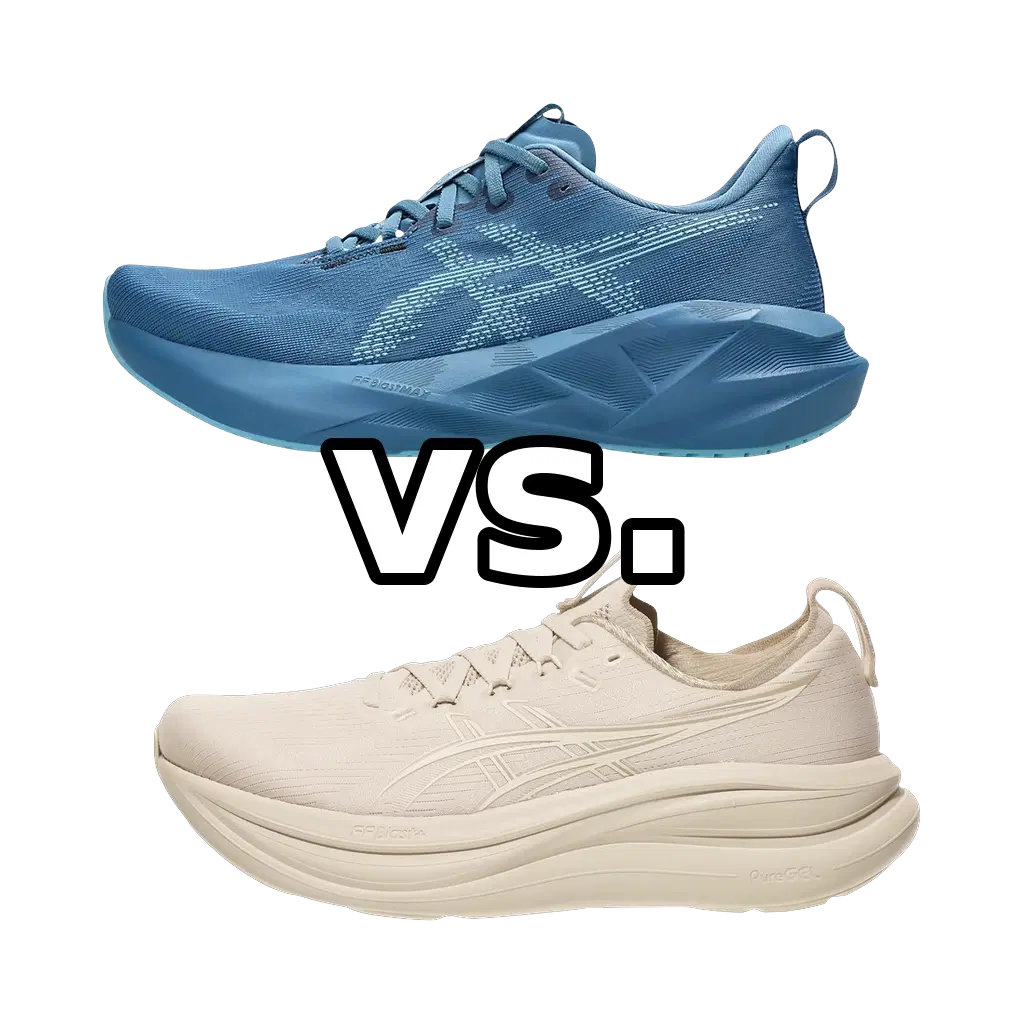
Verdict
It genuinely depends on what you want from your cushioned daily trainer. Pick the Novablast 5 if you value a lighter, springier ride with pace flexibility up to marathon distance; pick the Gel-Nimbus 28 if you want maximum plush comfort for easy and long mileage and don't care about turnover. For a do-everything shoe that can nudge the pace, the Novablast is the more versatile buy; for pure protective comfort on slow miles, the Nimbus wins.
Pace
4 of 6
Cushioning
5 of 6
Responsiveness
5 of 6
Stability
4 of 6
Drop
8 mm
Support
Neutral
Plate
None
Distances
10KHalfMarathon
Pace
3 of 6
Cushioning
6 of 6
Responsiveness
4 of 6
Stability
5 of 6
Drop
6 mm
Support
Stable Neutral
Plate
None
Distances
10KHalf
At a Glance
Asics Novablast 5Asics Gel-Nimbus 28
Who Should Choose Each Shoe
Choose
Asics Novablast 5
Choose the Novablast 5 if you want one energetic shoe that covers daily miles and long runs but can still pick up the pace for strides, progressions, and the occasional faster effort — it's the lighter, bouncier option and reaches up through the marathon. It suits runners who like a tall, lively platform and don't mind a slightly floaty feel at very easy, plodding paces. If you're a heel or midfoot striker who enjoys a moderate 8mm slope and a foam that springs back as you roll forward, this is the pick.
Choose
Asics Gel-Nimbus 28
Choose the Gel-Nimbus 28 if comfort and protection on easy, steady, and long runs matter more to you than speed — it's the plushest, most cushioned of the two, with a PureGEL heel that smooths out heel-first landings into a soft, planted touchdown. It's ideal for higher-mileage runners accumulating a lot of time on feet who want a calm, forgiving ride and a lower 6mm drop. Just go in knowing it's deliberately not built for tempo or intervals; push the pace and the soft foam feels dead.
Head-to-Head
On paper the platforms are close: both sit on roughly a 41mm heel and ~34mm forefoot, both are neutral with no plate, and both rely on ASICS' FF Blast family foam. The differences are in tuning, not size. The Novablast uses FF Blast Max in an 8mm-drop setup and feels springy and trampoline-like — the rebound comes alive as you lift the pace, which is why it extends up to the marathon and holds a genuine tempo around 4:15–4:30 min/km. The Nimbus 28 runs FF Blast+ with a PureGEL heel insert at a lower lab-measured 6mm drop; it's calmer, softer, and more forgiving on landing, trading snap for a dead-plush, protective feel that tops out closer to 5:15–5:45 min/km before the foam stops keeping up. Weight tilts the same direction: the Novablast comes in around 254g in a men's US 9 versus 278g for the Nimbus, so the lighter, livelier shoe is also the one that encourages turnover. Stability is a wash in practical terms — the Novablast's wide flared base keeps its tall stack predictable, while the Nimbus's broad max-cushion platform feels a touch more planted and steady underfoot (reflected in its slightly higher stability rating), though neither adds pronation control. Both share an engineered mesh upper and both ask for a little care on the exposed-foam outsole over the long haul.
Similar Comparisons
Hoka Bondi 9 vs Asics Gel-Nimbus 28
Adidas Supernova Solution 2.0 vs Asics Novablast 5
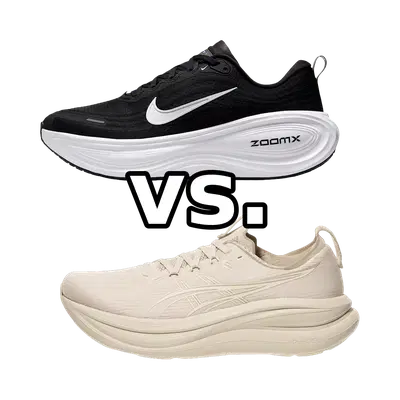
Nike Vomero Plus vs Asics Gel-Nimbus 28
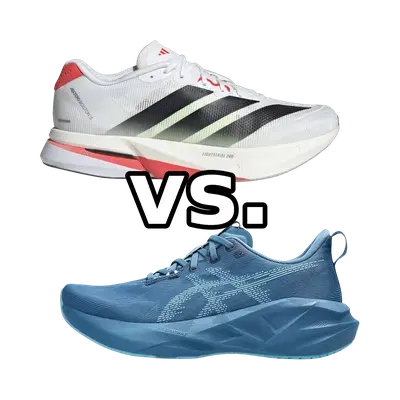
Adidas Adizero Boston 13 vs Asics Novablast 5
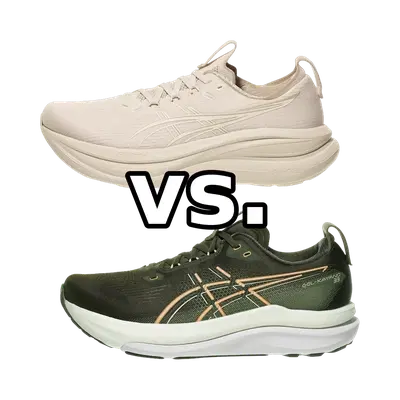
Asics Gel-Nimbus 28 vs Asics Gel-Kayano 33
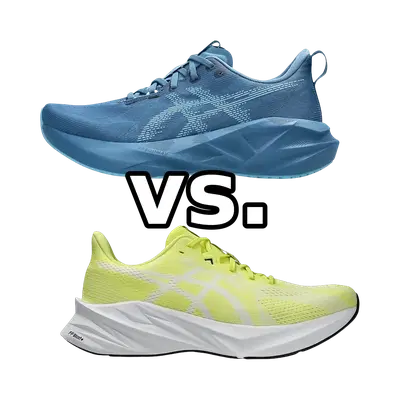
Asics Novablast 5 vs Asics Dynablast 5
Asics Gel-Nimbus 28 vs Asics Gel-Cumulus 28
Asics Superblast 2 vs Asics Novablast 5
© 2026 longrunshoes.ai | All rights reserved.
Use of materials from this site is permitted only with proper attribution and a link to longrunshoes.ai.