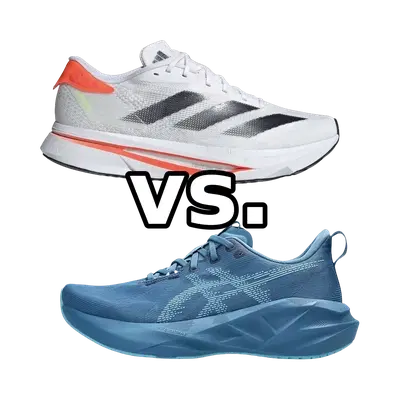
Asics Novablast 5 vs Asics Gel-Cumulus 28:
Which to Choose
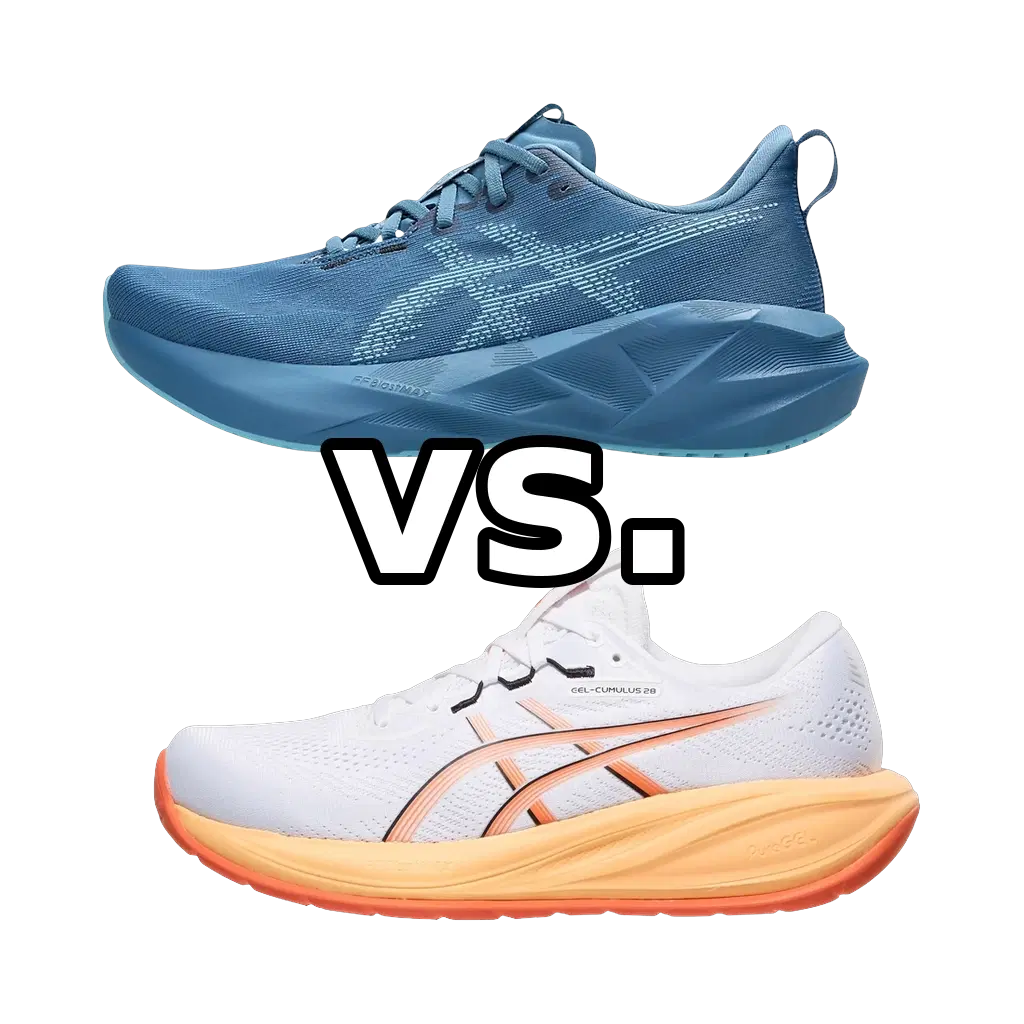
Verdict
Both are excellent neutral daily trainers built on the same foam, so there's no wrong answer — the decision hinges on drop and ride feel, not quality. Go Novablast 5 if you want a lower-drop, bouncier shoe that can flex into faster running, and go Gel-Cumulus 28 if you want a high-drop, PureGEL-cushioned cruiser tuned purely for soft, protected easy miles. Decide by how you run most: pick the Novablast if you like to nudge the pace, the Cumulus if you mostly cruise.
Pace
4 of 6
Cushioning
5 of 6
Responsiveness
5 of 6
Stability
4 of 6
Drop
8 mm
Support
Neutral
Plate
None
Distances
10KHalfMarathon
Pace
3 of 6
Cushioning
5 of 6
Responsiveness
4 of 6
Stability
4 of 6
Drop
13 mm
Support
Neutral
Plate
None
Distances
10KHalfMarathon
At a Glance
Asics Novablast 5Asics Gel-Cumulus 28
Who Should Choose Each Shoe
Choose
Asics Novablast 5
Choose the Novablast 5 if you want a single energetic shoe for everything from easy days to the occasional tempo or progression run, and you like a tall platform that bounces back and comes alive as you speed up. Its lower 8mm drop and higher forefoot stack suit midfoot and heel strikers alike, and runners who find traditional high-drop trainers too "sloped" will appreciate the more neutral, propulsive geometry. It's the better pick for anyone who wants their daily miles to feel a little peppy.
Choose
Asics Gel-Cumulus 28
Choose the Gel-Cumulus 28 if comfort and impact protection matter more to you than bounce — especially if you're a heel striker who logs mostly easy and steady conversational miles. The 13mm drop and PureGEL heel make landings exceptionally gentle, which is a real asset for beginners building volume, runners returning from injury, or anyone who just wants a plush cruiser that smooths out long stretches of road. If you're not chasing tempo work and prefer a planted, cushioned feel underfoot, this is the one.
Head-to-Head
On paper these two look like siblings — both neutral, both high on cushioning (5/6), both with a wide, planted base rated 4/6 for stability and no medial post — but underfoot they diverge sharply. The Novablast 5 runs an 8mm drop on a stack of roughly 41mm heel / 33.5mm forefoot and leans on the FF Blast Max foam for a lively, trampoline-like bounce; its responsiveness (5/6) and pace rating (4/6) mean it genuinely rewards lifting the effort, holding its best rebound down to around 4:15–4:30 min/km. The Gel-Cumulus 28 sits taller in the heel at about 43mm with only 30mm up front, giving it a much steeper 13mm drop, and it adds a PureGEL heel insert that makes landings notably soft for heel strikers. That extra drop and the comfort tuning of the foam change the character entirely: the Cumulus feels deep, absorbing, and planted rather than springy (responsiveness 4/6, pace 3/6), and it starts to feel vague if you push past roughly 5:00–5:15 min/km. In short, the Novablast's lower drop and taller forefoot plus its bouncier tune make it the more athletic, do-it-all trainer that can double as a pickup or steady-state shoe, while the Cumulus's tall heel, PureGEL landing, and comfort-first foam make it a dedicated cruiser built around easy and steady heel-striking miles. Both are forgiving long-run shoes, but one springs you forward and the other cushions you down.
Similar Comparisons
Asics Gel-Nimbus 28 vs Asics Gel-Cumulus 28
Adidas Supernova Solution 2.0 vs Asics Novablast 5
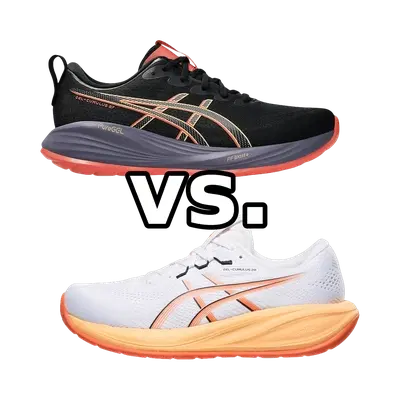
Asics Gel-Cumulus 27 vs Asics Gel-Cumulus 28
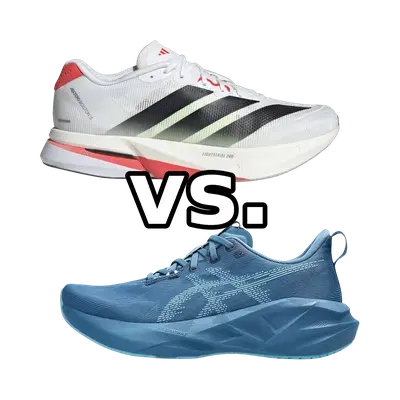
Adidas Adizero Boston 13 vs Asics Novablast 5
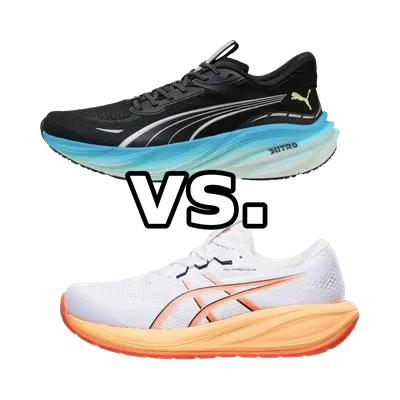
Puma Magnify Nitro 3 vs Asics Gel-Cumulus 28

Asics Novablast 5 vs Asics Dynablast 5
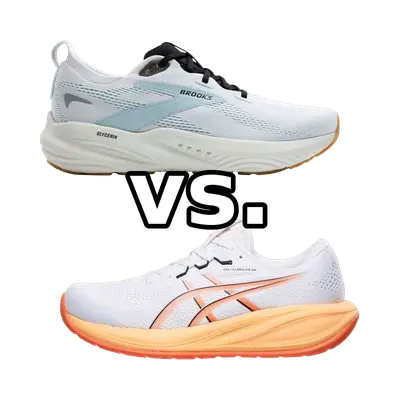
Brooks Glycerin 22 vs Asics Gel-Cumulus 28
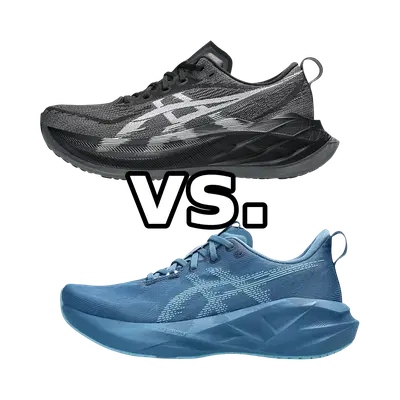
Asics Superblast 2 vs Asics Novablast 5
© 2026 longrunshoes.ai | All rights reserved.
Use of materials from this site is permitted only with proper attribution and a link to longrunshoes.ai.