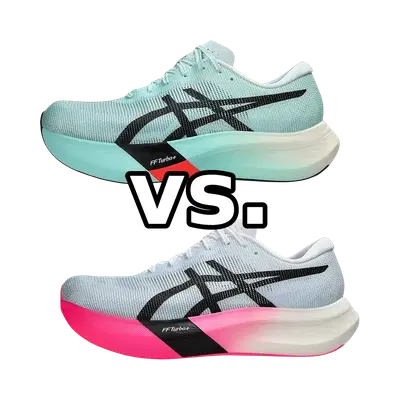
Asics Metaspeed Sky Paris vs Asics Metaspeed Sky Tokyo:
Which to Choose
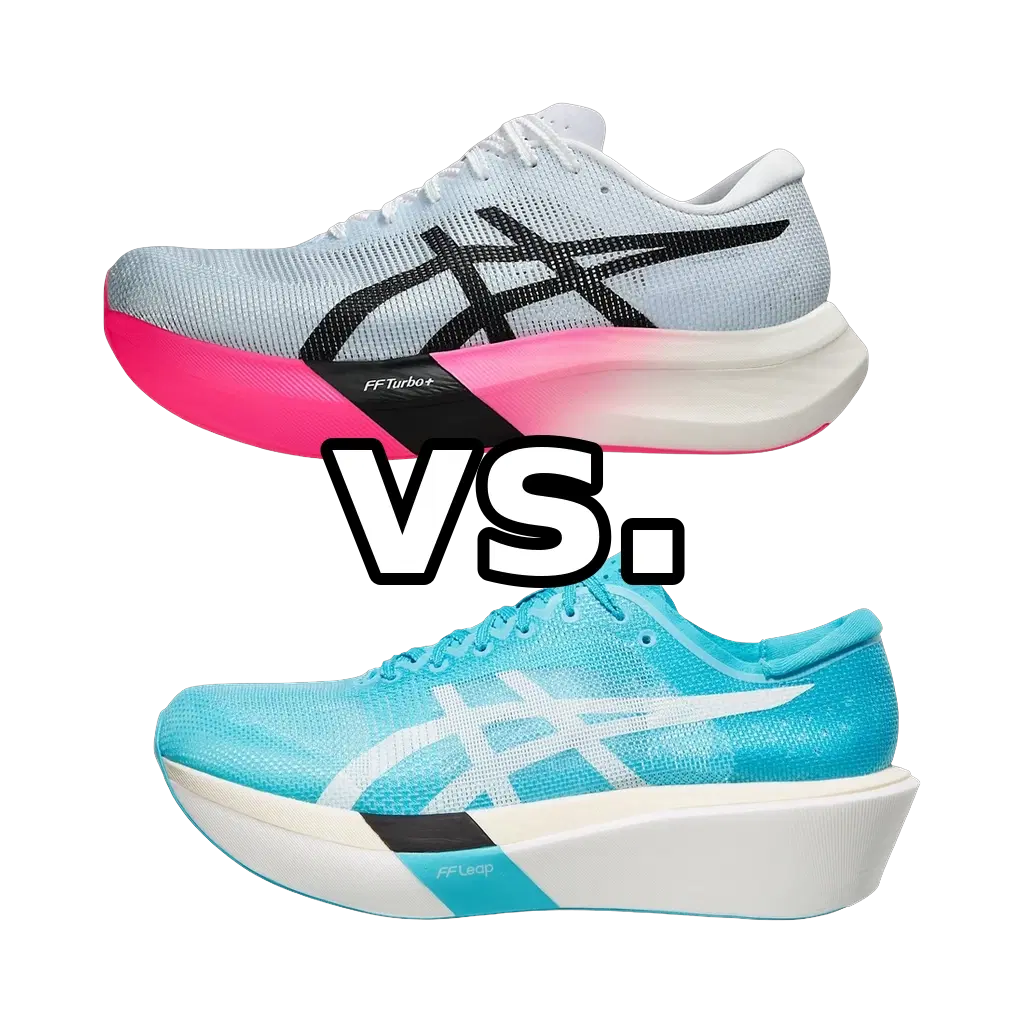
Verdict
This is a genuine successor rather than a reinvention: same carbon plate, same stack profile, same demanding race-only character, with a lighter build, a new FF Leap foam, and a more aggressive rocker as the real upgrades. If you're a Paris owner whose priority is marathon PBs and you value the lightest, snappiest ride, the Tokyo is worth the move. If your Paris still has life in it, you race distances as short as 10K, or you simply prefer its smoother PEBA feel, there's no urgency to switch — the Paris remains an excellent racer, and the gap is one of refinement, not a leap in class.
Pace
6 of 6
Cushioning
5 of 6
Responsiveness
6 of 6
Stability
2 of 6
Drop
5 mm
Support
Neutral
Plate
Carbon
Distances
10KHalfMarathon
Pace
6 of 6
Cushioning
5 of 6
Responsiveness
6 of 6
Stability
2 of 6
Drop
6 mm
Support
Neutral
Plate
Carbon
Distances
HalfMarathon
At a Glance
Asics Metaspeed Sky ParisAsics Metaspeed Sky Tokyo
Who Should Choose Each Shoe
Choose
Asics Metaspeed Sky Paris
Choose the Paris if you want a proven, versatile racer that stretches down to 10K as happily as it handles the marathon — the slightly broader distance range makes it the better single race shoe for someone who mixes shorter road efforts with longer goals. It's also the pick if you already own and love the FF Turbo Plus PEBA ride and prefer a smooth roll-forward feel over an aggressively rockered, toe-forward one. Runners who don't need to squeeze out every last gram will find it gives up little of the racing experience.
Choose
Asics Metaspeed Sky Tokyo
Choose the Tokyo if your goal is the marathon (or half) and you want the lightest, most propulsive version of this platform — the drop in weight and the springier, snappier FF Leap foam make it the more single-minded PB tool. It suits the confident, efficient forefoot striker who spends real time at race pace and wants a shoe that actively drives turnover and rockers them onto their toes. If you're upgrading from the Paris specifically to chase a marathon time, this is the one that moves the needle.
Head-to-Head
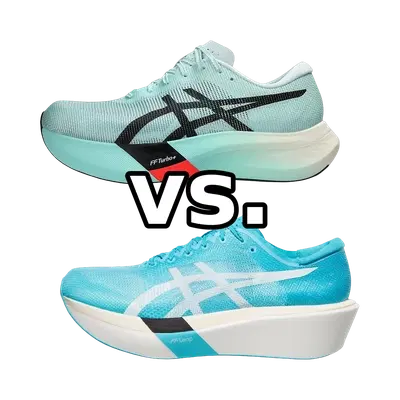
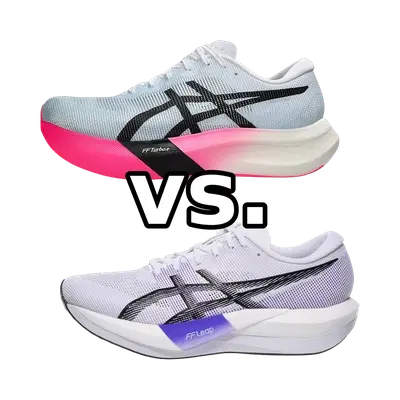
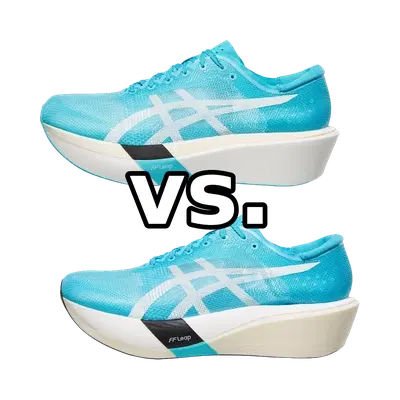
On paper these two are close cousins. Both run a full-length carbon plate under a race-tuned "high, not maximal" stack — roughly 39mm at the heel on each — with a low 5–6mm drop, low stability, and a narrow neutral platform that feels tippy at jogging pace and only comes alive at genuine race effort. The biggest change is underfoot: the Paris uses FF Turbo Plus PEBA foam, while the Tokyo switches to Asics' newer FF Leap (A-TPU) superfoam. Both feel lively and springy rather than plush, but the Tokyo carries a distinctly race-firm edge and a more pronounced rockered geometry that snaps you through the transition and nudges you toward your toes, where the Paris reads as a smoother roll-forward ride. The second real difference is weight: the Tokyo is markedly lighter than the Paris, and shedding that mass on a shoe already built to fly is the clearest tangible upgrade. Their tuned race zones are nearly identical (both optimal around 3:00–3:30 min/km), but note the intended range: the Paris is rated to genuinely excel from 10K through the marathon, while the Tokyo narrows its focus to the half and full marathon, doubling down as a pure long-distance racer. Neither is a daily trainer, neither offers pronation support, and both trade outsole durability for speed, so on both you save the mileage for key sessions and race day.
© 2026 longrunshoes.ai | All rights reserved.
Use of materials from this site is permitted only with proper attribution and a link to longrunshoes.ai.