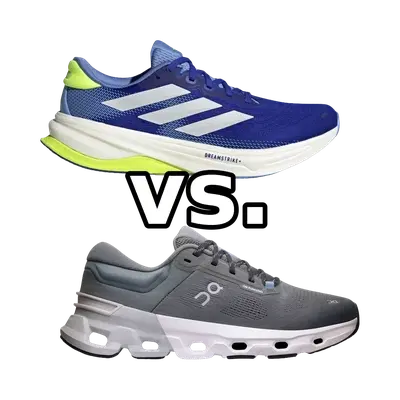
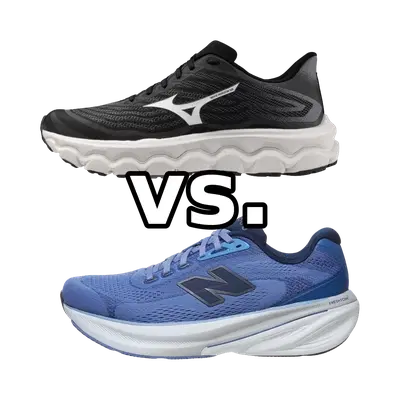
On Cloudflyer 5 vs Mizuno Wave Horizon 8:
Which to Choose
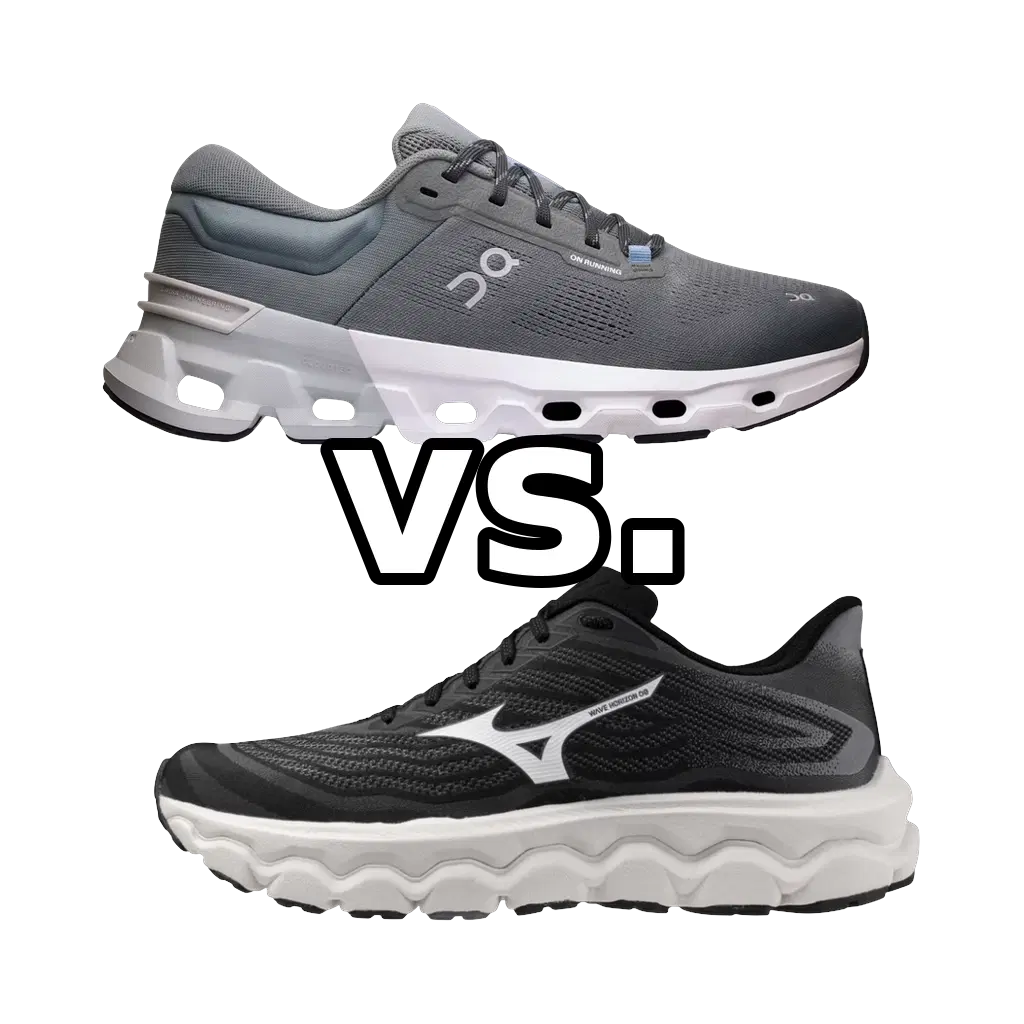
Verdict
It comes down to distance and ride preference. Go with the Cloudflyer 5 for a firmer, lighter, lower-profile stability trainer that stays sharpest from 10K to the half; go with the Wave Horizon 8 for a softer, taller, more protective platform that carries you comfortably all the way to the marathon. If your training skews long and you want cushioning first, the Horizon is the safer bet; if you want a more grounded, slightly snappier shoe for shorter supported efforts, the Cloudflyer wins.
Pace
3 of 6
Cushioning
5 of 6
Responsiveness
4 of 6
Stability
5 of 6
Drop
10 mm
Support
Stability
Plate
Composite
Distances
10KHalf
Pace
3 of 6
Cushioning
5 of 6
Responsiveness
3 of 6
Stability
5 of 6
Drop
8 mm
Support
Stability
Plate
Composite
Distances
10KHalfMarathon
At a Glance
On Cloudflyer 5Mizuno Wave Horizon 8
Who Should Choose Each Shoe
Choose
On Cloudflyer 5
Choose the On Cloudflyer 5 if you want stability with a firmer, more connected ride and a bit of snap for steadier tempo efforts, and if your longest regular runs top out around the half marathon. It suits mild overpronators who value a planted, lower-to-the-ground platform and a slightly lighter, more responsive feel over maximum plushness. If you're a heel striker who likes a higher drop and finds very soft, tall shoes vague or unstable underfoot, this is the better match.
Choose
Mizuno Wave Horizon 8
Choose the Mizuno Wave Horizon 8 if you prioritize soft, protective cushioning for long time-on-feet and you actually want to race or train for the marathon, not just the half. Its taller ENERZY stack and Wave-plate-controlled ride are built to stay comfortable deep into long runs, making it the pick for high-mileage overpronators who care more about impact protection than pop. New and experienced runners who prefer a calm, cushioned rhythm — and don't mind carrying a bit more weight — will get the most from it.
Head-to-Head
The clearest split is foam feel and ride character. The Cloudflyer 5's Helion foam is firm and settled, and On's composite Speedboard adds a gentle snap through toe-off, so it rates a notch higher on responsiveness (4/6 vs. 3/6) and feels the more willing of the two when you lift the pace. The Wave Horizon 8's ENERZY foam is softer and more absorbent, with the nylon Wave plate organizing that cushion rather than launching you forward — it's a calm, composed ride that rewards rhythm over acceleration. Stack height underlines this: the Horizon is a much taller, plusher platform at 42mm heel / 34mm forefoot, while the Cloudflyer sits noticeably lower at 31mm / 21mm, which is why it feels more grounded and connected to the road. On weight, the Cloudflyer 5 is the lighter shoe at about 300g (men's 9) versus roughly 323g for the Horizon 8, reinforcing its slightly livelier character — though neither is a featherweight. Drop differs modestly, 10mm on the On against 8mm on the Mizuno, so heel strikers get a touch more rollthrough from the Cloudflyer. The biggest use-case difference is range: both excel at 10K and the half, but the Horizon 8 extends comfortably to the full marathon with the marathon as its true sweet spot, whereas the Cloudflyer 5 peaks at the half and is happier staying in the 10K-to-half window. Both share engineered mesh uppers with structured, secure lockdown that supports their stability builds, so fit security is comparable — the deciding factors are ride feel, stack, weight, and how long you want to be on your feet.
© 2026 longrunshoes.ai | All rights reserved.
Use of materials from this site is permitted only with proper attribution and a link to longrunshoes.ai.