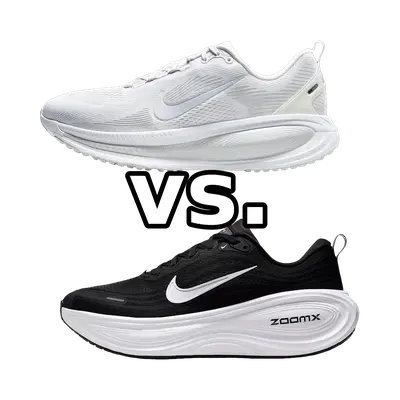
Nike Vomero 18 vs Nike Rival Fly 4:
Which to Choose
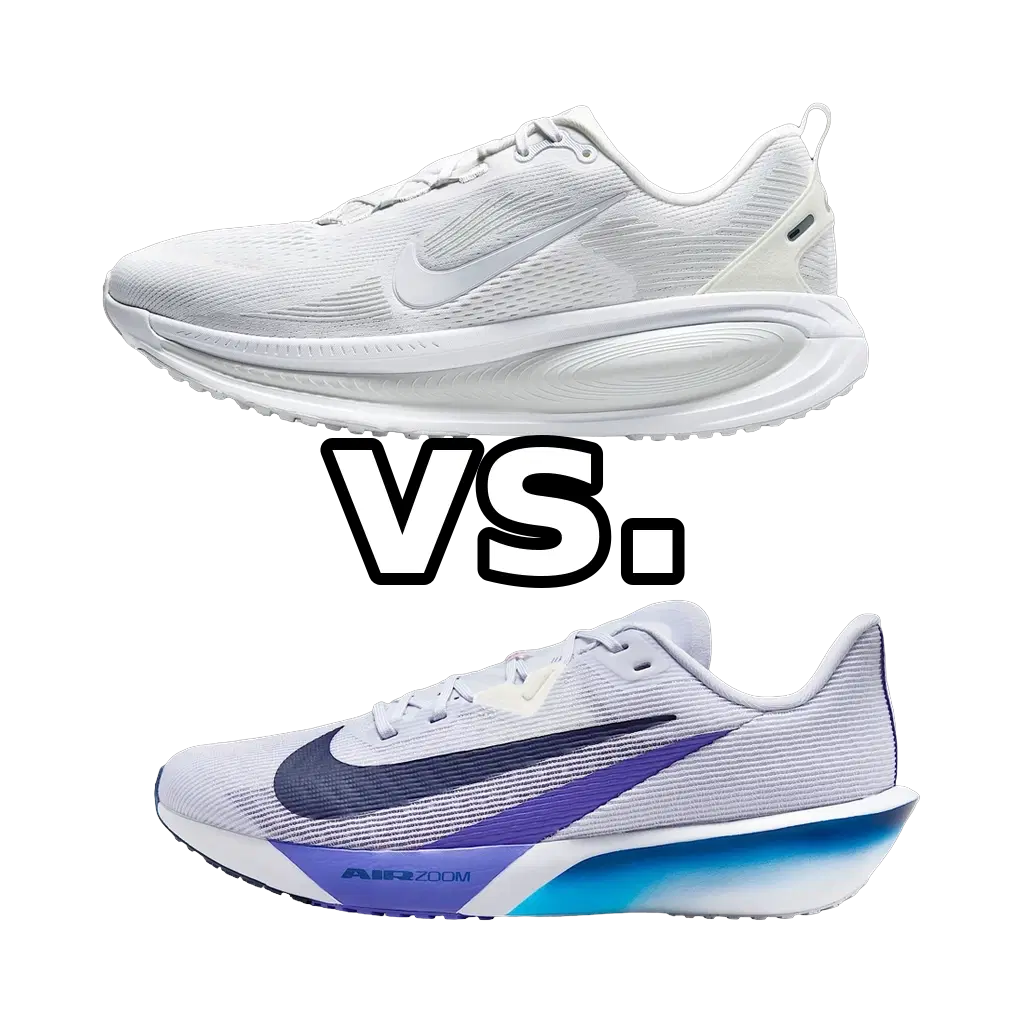
Verdict
It comes down to what you're training for, not which is "better." If the bulk of your running is easy, long, and comfort-first, the Vomero 18's deep cushioning and durable, planted ride is the clear call; if you want a lightweight shoe to go fast on tempo days and short races, the firmer, lighter Rival Fly 4 wins. They overlap only at the 10K and half — and even there, the Vomero is for cruising those distances while the Rival Fly is for racing them.
Pace
3 of 6
Cushioning
6 of 6
Responsiveness
4 of 6
Stability
4 of 6
Drop
10 mm
Support
Neutral
Plate
None
Distances
10KHalf
Pace
5 of 6
Cushioning
2 of 6
Responsiveness
3 of 6
Stability
3 of 6
Drop
8 mm
Support
Neutral
Plate
None
Distances
5K10KHalf
At a Glance
Nike Vomero 18Nike Rival Fly 4
Who Should Choose Each Shoe
Choose
Nike Vomero 18
Choose the Vomero 18 if most of your week is easy and long running and you want protection over speed — it's ideal for beginners safely building volume and for experienced runners who want a plush, planted cruiser for recovery and moderate efforts. The tall, stable platform and 10mm drop ease strain on calves and Achilles over long time on feet, and the generous outsole holds up to heavy mileage. Pick it if comfort on the grind matters more to you than feeling quick.
Choose
Nike Rival Fly 4
Choose the Rival Fly 4 if you're an intermediate or improving runner who wants a light, honest shoe for tempo sessions, intervals, and shorter race-day efforts without jumping to a carbon racer. Its firm, low, 258g build rewards a quick, light footstrike and holds a steady line at 5K–10K pace, making it the better pick if your priority is turnover and ground connection. Skip it if you log a lot of slow, plodding miles — the thin cushioning will feel flat and unforgiving.
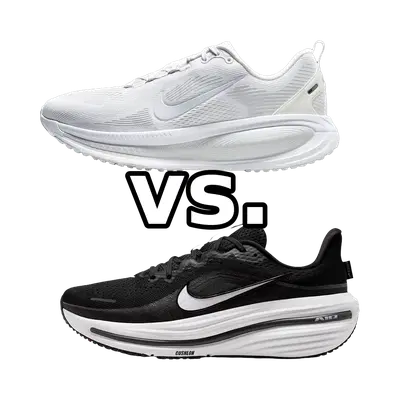
Head-to-Head
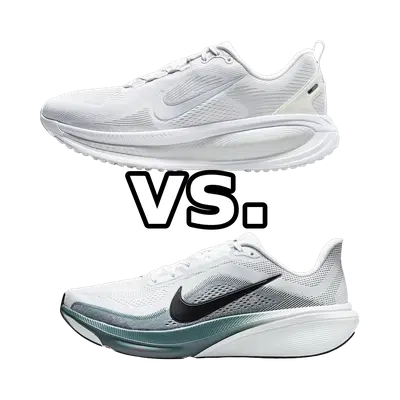
The clearest split is stack and cushioning. The Vomero 18 stands tall at 46mm in the heel and 36mm in the forefoot, pairing soft ZoomX over a firmer ReactX base for maximum, pamper-you protection (6/6 cushioning). The Rival Fly 4 is dramatically lower at 31mm heel and 23mm forefoot, with firm, low-profile Nike foam that sits well below average on padding (2/6) and delivers real ground feel instead of plush isolation. That gap shows up on the scale: the Vomero weighs about 325g (11.4 oz) in a men's size, while the Rival Fly comes in around 258g — roughly a 67g difference you feel the moment you pick up the pace. Drop is close, 10mm on the Vomero versus 8mm on the Rival Fly, so both keep a mild heel-oriented geometry, but the ride feel diverges completely. The Vomero is smooth, deep, and unhurried, rewarding a relaxed rhythm and starting to feel like a lot of shoe when you push; the Rival Fly is snappy, direct, and lively when you turn over fast, but reads as flat and unforgiving at slow, plodding paces. Their pace windows barely overlap — the Vomero is happiest around 5:30–6:30 min/km, while the Rival Fly comes alive at 3:45–4:15 min/km. On distance there's some shared ground at the 10K and half, but for different reasons: the Vomero handles them as comfortable aerobic cruising, whereas the Rival Fly treats the 5K–10K as its sharp, race-ready sweet spot and starts to fatigue the legs beyond the half because there's little cushioning to hide behind. Neither has a plate, so in both cases the responsiveness comes purely from foam and geometry rather than propulsion. Durability also tilts toward the Vomero, which carries generous outsole rubber for high mileage, while the Rival Fly's thinner foam and value-focused build will wear faster.
© 2026 longrunshoes.ai | All rights reserved.
Use of materials from this site is permitted only with proper attribution and a link to longrunshoes.ai.