
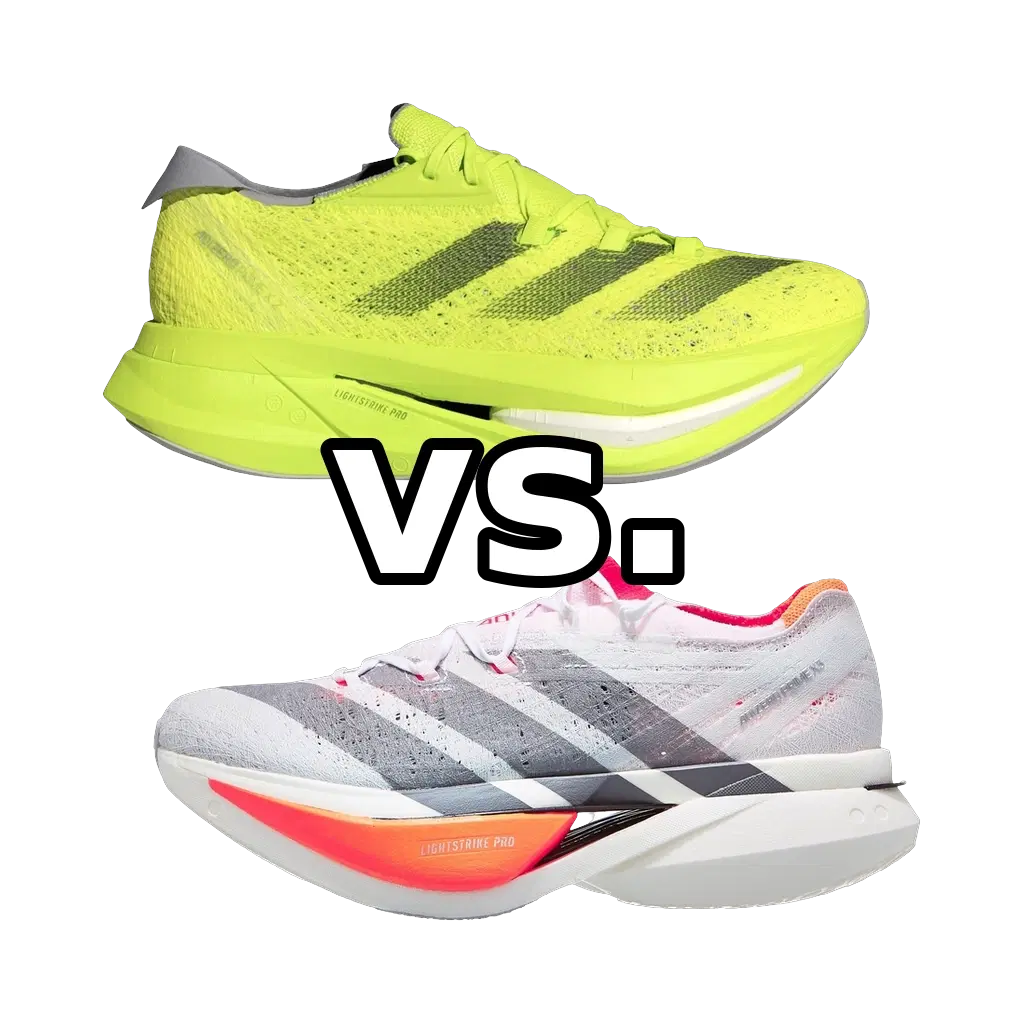
Adidas Adizero Prime X 2.0 Strung vs Adidas Adizero Prime X 3 Strung:
Which to Choose
Verdict
This isn't a clear-cut upgrade so much as a repositioning: same category, same weight class, same max-stack super-trainer mission, with a refined carbon setup. The decision hinges on drop and intent — stay with the 2.0 if you liked its lower 7mm offset and want the faster, more forefoot-planted ride, and move to the 3 if the 13mm drop, easier heel landing, and slightly more long-run-comfort tuning appeal to you. If you're perfectly happy with your 2.0's feel, there's no urgent reason to switch; if you've been wanting more heel cushioning and a smoother rocker, the 3 delivers exactly that.
Pace
5 of 6
Cushioning
6 of 6
Responsiveness
6 of 6
Stability
3 of 6
Drop
7 mm
Support
Neutral
Plate
Carbon
Distances
HalfMarathon
Pace
4 of 6
Cushioning
6 of 6
Responsiveness
6 of 6
Stability
3 of 6
Drop
13 mm
Support
Neutral
Plate
Carbon
Distances
HalfMarathon
At a Glance
Adidas Adizero Prime X 2.0 StrungAdidas Adizero Prime X 3 Strung
Who Should Choose Each Shoe
Choose
Adidas Adizero Prime X 2.0 Strung
Choose the Prime X 2.0 Strung if you got along with its lower 7mm drop and higher forefoot, and want the slightly sharper, faster edge of the two — it comes alive at marathon-pace and tempo efforts in the 3:45–4:30 min/km range and still has bite when you push toward 3:30. It suits a forefoot- or midfoot-oriented runner who wants a max-cushion long-run shoe that stays relatively planted and doesn't feel as heel-heavy underfoot.
Choose
Adidas Adizero Prime X 3 Strung
Choose the Prime X 3 Strung if you want more heel cushioning and a smoother, more forgiving landing on long efforts — the 13mm drop and aggressive rocker ease the heel strike and reward you for leaning into a strong, sustained pace (its happy zone is around 4:15–5:00 min/km). It's the better pick for a heel striker or anyone whose priority is comfortable, protective fast long runs and tempo sessions over the last ounce of top-end speed, and its refined full-length-plate transitions feel a touch more runnable.
Head-to-Head
Start with what's identical: both use tall Lightstrike Pro foam over a carbon propulsion system, both weigh essentially the same (the 2.0 lands around 295g in a men's 8.5 and the 3 around 291g in a men's US 9 — both heavy by racer standards and neither meaningfully lighter than the other), and both share the same honest quirk of feeling a touch tippy and disconnected at slow jogging paces before settling into a strong forward roll once you lift the tempo. The heel stack is also close, roughly 50mm on the 2.0 versus 48mm on the 3, so the sheer height and long-run protection carry straight over. The genuine difference is geometry. The 2.0 runs a 7mm drop with a high 43.5mm forefoot; the 3 keeps a similar heel but drops the forefoot to 35mm, pushing the offset all the way up to 13mm. That's a big change in feel: the 3's taller heel-to-toe gap cushions the heel strike and leans on an aggressive rocker for long-effort comfort, where the 2.0 sits flatter and more forefoot-planted. That geometry shift tracks with how each is tuned — the 2.0's sweet spot is a bit faster and sharper (optimal around 3:45–4:30 min/km, peaking near 3:30–3:45), while the 3 is pitched slightly more toward sustained uptempo long runs (optimal around 4:15–5:00 min/km). The carbon setup is also refined rather than reinvented, with the 3 running a full-length carbon plate stacked over Energy Rods 2.0 for smoother, more runnable transitions.
Similar Comparisons

Adidas Adizero Adios Pro 4 vs Adidas Adizero Prime X 3 Strung
© 2026 longrunshoes.ai | All rights reserved.
Use of materials from this site is permitted only with proper attribution and a link to longrunshoes.ai.