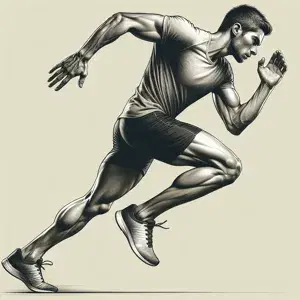
Running is a fantastic way to improve cardiovascular fitness and overall health. However, incorporating strength training into your routine can significantly enhance your running performance, reduce the risk of injury, and improve overall muscle strength and endurance. This guide will provide you with essential tips and exercises to effectively integrate strength training into your running regimen.
Strength training helps build stronger muscles, tendons, and ligaments, which can reduce the likelihood of common running injuries such as shin splints, IT band syndrome, and runner's knee.
A strong muscular foundation can enhance your running economy, meaning you'll use less energy to maintain your pace. This efficiency is crucial for long-distance runners and those looking to improve their race times.
Strength training can increase your stride length and frequency, contributing to faster running speeds. Exercises that focus on explosive power can help you push off the ground more forcefully with each step.
Running predominantly works the lower body, but it's essential to maintain a balanced physique. Strength training ensures that your upper body, core, and lower body muscles are all developed harmoniously, preventing imbalances that could lead to injury.
Squats
Squats are a fundamental exercise that targets the quads, hamstrings, glutes, and calves. Perform bodyweight squats or use dumbbells for added resistance. Ensure proper form by keeping your back straight and knees behind your toes.
How to Perform a Squat:
- Stand with feet shoulder-width apart.
- Lower your body by bending your knees and hips, keeping your back straight.
- Lower until your thighs are parallel to the ground.
- Push through your heels to return to the starting position.
Lunges
Lunges help improve single-leg strength and stability. Step forward with one leg, lowering your hips until both knees are bent at a 90-degree angle. Alternate legs and maintain a straight back throughout the movement.
How to Perform a Lunge:
- Step forward with one leg, lowering your hips until both knees are bent at 90-degree angles.
- Ensure your front knee is directly above your ankle.
- Push back to the starting position and repeat on the other leg.
Deadlifts
Deadlifts strengthen the posterior chain, including the hamstrings, glutes, and lower back. Use a barbell or dumbbells, keeping the weight close to your body and lifting with a straight back.
How to Perform a Deadlift:
- Stand with feet hip-width apart, holding a barbell or dumbbells in front of you.
- Hinge at the hips, keeping your back straight, and lower the weight along your shins.
- Return to standing by thrusting your hips forward and squeezing your glutes.
Calf Raises
Calf raises target the muscles in your lower legs, essential for powerful push-offs while running. Perform standing calf raises on a step or flat surface, raising your heels as high as possible before slowly lowering them.
How to Perform Calf Raises:
- Stand with your feet shoulder-width apart.
- Raise your heels off the ground, standing on your toes.
- Lower back down with control and repeat.
Planks
Planks are excellent for building core stability and strength. Hold a plank position with your body in a straight line from head to heels, engaging your core muscles to maintain the position.
How to Perform a Plank:
- Start in a push-up position with your forearms on the ground.
- Keep your body in a straight line from head to heels.
- Hold this position for as long as possible, keeping your core tight.
Russian Twists
Russian twists target the obliques and rotational core strength. Sit with your knees bent, lean back slightly, and twist your torso from side to side while holding a weight or medicine ball.
Bicycle Crunches
Bicycle crunches work the entire core, including the rectus abdominis and obliques. Lie on your back, bring your knees towards your chest, and alternate touching your elbows to the opposite knees in a pedaling motion.
Push-Ups
Push-ups strengthen the chest, shoulders, and triceps. Perform them with proper form, keeping your body in a straight line and lowering your chest to the ground before pushing back up.
Pull-Ups
Pull-ups target the upper back, biceps, and shoulders. Use an overhand grip and pull your body up until your chin is above the bar. If necessary, use resistance bands for assistance.
Shoulder Press
Shoulder presses strengthen the shoulders and upper arms. Use dumbbells or a barbell, pressing the weight overhead while maintaining a stable core and straight back.
Aim to incorporate strength training into your routine 2-3 times per week, allowing for at least one rest day between sessions. Each session should last between 30-60 minutes, focusing on different muscle groups each day.
To continue making progress, gradually increase the weight or resistance of your exercises. This principle, known as progressive overload, ensures that your muscles are continually challenged and growing stronger.
Always begin your strength training sessions with a dynamic warm-up to increase blood flow and prepare your muscles for exercise. Finish with a cool-down and stretching to aid in recovery and maintain flexibility.
Strength training is an invaluable component of a well-rounded running routine. By incorporating these exercises and principles, you'll improve your performance, reduce your risk of injury, and enjoy a more balanced and powerful body. Start slow, stay consistent, and watch your running capabilities soar.
© 2026 longrunshoes.ai | All rights reserved.
Use of materials from this site is permitted only with proper attribution and a link to longrunshoes.ai.