Asics Metaspeed Edge Paris vs Sky Paris:
Same Specs, Different Runners
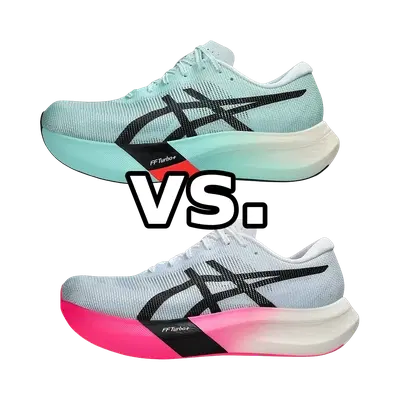
If you know your running style, the choice is clear: cadence runners should go Edge, stride runners should go Sky. If you are unsure which camp you fall into — and many runners genuinely are — the Edge Paris is the marginally safer default for marathon-focused training, given its more forgiving forefoot feel and late-race comfort advantage. But this is one of the rare head-to-heads where the "wrong" choice by biomechanical type still leaves you in a world-class carbon racer; the gap between them is about optimization, not quality.
184.00 USD
Drop
Support
Plate
Distances
199.95 USD
Drop
Support
Plate
Distances
Who Should Choose Each Shoe
Choose the Edge Paris if you are a marathon or half marathon specialist who races at a high, consistent cadence — short, quick steps rather than big bounding strides. Its deeper, spoon-shaped plate and extra forefoot foam reward runners who hold a steady rhythm and want cushioned comfort that holds up in the final miles rather than a harsh, direct snap. It is also the stronger pick if late-race fatigue is a concern, since reviewers found it easier on the legs on downhills and in the back half of long efforts.
Choose the Sky Paris if you are a stride runner — someone who accelerates primarily through extending gait length and generates power from a strong forefoot push-off. Its flatter, foot-proximate plate delivers snappier, more immediate feedback that rewards a forceful toe-off. It is also the more versatile option if you race across a wider range of distances, since its design comes alive from the 10K through the marathon rather than peaking specifically at the longer end.
The Asics Metaspeed Edge Paris and Sky Paris are the brand's top-tier carbon race shoes built on the same FF Turbo Plus PEBA foam platform, sharing identical drop, stack height, weight, and cushioning ratings. On paper they look like the same shoe with different colorways — in practice, Asics engineered them around two distinct biomechanical profiles: the cadence runner and the stride runner. If you're deciding between them, the question isn't which is faster; it's which matches how your body actually races.
Head-to-Head
Both shoes use FF Turbo Plus PEBA foam over a full-length carbon plate, sit at a 5mm drop, and land at roughly 185g — so there is no meaningful gap in weight, cushioning score, or responsiveness rating. The real engineering split is in the carbon plate geometry and foam distribution. The Edge Paris uses a spoon-shaped, scooped plate that sits deeper within the midsole, with 3.5mm more foam in the forefoot than the previous generation. That extra separation creates a bouncier, more cushioned toe-off aimed at cadence runners — athletes who accelerate by increasing step frequency rather than purely extending stride length. The ride feels soft on landing and lively at push-off, and reviewers consistently describe it as the more comfortable shoe deep into a marathon. The Sky Paris takes the opposite approach: its carbon plate is flatter, positioned closer to the foot, and 12% wider in the forefoot, creating a more direct, snappier energy return. That immediacy favors stride runners — those with longer gaits and extended airtime who need the plate to fire back forcefully at toe-off rather than load gradually. The Sky's more aggressive feedback also makes it comfortable at shorter distances like the 10K, which is why it lists that race among its best distances while the Edge does not. On corners and technical sections, both shoes are notably stable for their narrow racing profile — a genuine strength versus some competitors. The key honest caveat: reviewers note that many runners perform better in the opposite shoe from what their stride classification might suggest, so if possible, trying both before committing is worthwhile.
© 2026 longrunshoes.ai | All rights reserved.
Use of materials from this site is permitted only with proper attribution and a link to longrunshoes.ai.