Asics GT-1000 14 vs GT-2000 13:
Which Stability Trainer Should You Choose?
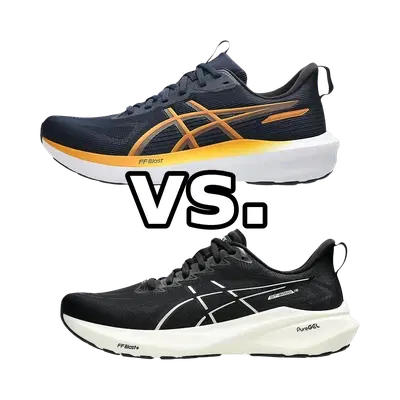
These two shoes share the same stability bones — if you only need guidance and drop, either will do the job. What actually differentiates them is one cushioning grade and marathon-readiness. Choose the GT-1000 14 if your distance ceiling is the half marathon and you want a firmer, grounded daily feel. Choose the GT-2000 13 if you're training through marathon distance or simply prefer a softer ride under the same reliable stability chassis — the extra cushioning depth is the upgrade that justifies the step up.
79.95 USD
Drop
Support
Plate
Distances
89.95 USD
Drop
Support
Plate
Distances
Who Should Choose Each Shoe
The GT-1000 14 is the better pick for a beginner or intermediate overpronator whose runs top out at half-marathon distance and who prefers a firmer, more road-connected feel underfoot. If you're coming from a moderately cushioned shoe and don't want to jump to a softer platform, the GT-1000 14's FF Blast+ foam gives you reliable guidance without excess softness. It's also well-suited to runners who prioritize a no-frills, durable daily trainer for 10K-to-half training blocks and want efficient transitions over plush comfort.
The GT-2000 13 is the right call for runners building toward marathon distance or logging consistent high-mileage weeks where accumulated impact protection becomes critical. Its above-average cushioning (4/6, FF Blast+ Eco) holds up better over long runs than the GT-1000 14's firmer foam, and its slightly faster effective pace ceiling makes it more versatile across easy recovery days and steady long-run efforts alike. If you want a single stability shoe that can cover everything from casual daily miles through a full marathon training cycle, the GT-2000 13 earns that broader role without asking you to compromise on pronation control.
The Asics GT-1000 14 and GT-2000 13 are both stability daily trainers aimed at beginner-to-intermediate runners who overpronate, and they share so much DNA — 8mm drop, LITETRUSS medial support, no plate, a breathable engineered mesh upper — that choosing between them isn't obvious at first glance. The real fork in the road is cushioning depth and how far you plan to run: the GT-1000 14 is a firmer, more grounded shoe optimized through the half marathon, while the GT-2000 13 layers in extra foam and extends comfortably to marathon distance. If you're an overpronator deciding which Asics GT to make your daily workhorse, the differences are genuine and worth understanding.
Head-to-Head
The most concrete split between these two shoes is cushioning: the GT-1000 14 rates 3/6 with FF Blast+ foam and is described explicitly as "moderate and grounded" — a shoe that keeps you connected to the road rather than floating above it. The GT-2000 13 rates 4/6 using FF Blast+ Eco foam and lands noticeably softer, described as "soft and settled." That difference in foam character means the GT-1000 14 feels firmer and more businesslike underfoot, while the GT-2000 13 absorbs impact more generously, which matters when fatigue accumulates on longer efforts.
Stability architecture is essentially identical: both use a LITETRUSS medial support system, a wide guided platform, and an AHAR outsole — so neither shoe edges the other on pronation control. Drop is the same at 8mm for both. Responsiveness is rated the same (3/6), and neither has a plate, so both deliver a calm, foam-driven rebound rather than an energetic snap.
Where the cushioning difference has downstream consequences is distance range. The GT-1000 14 is listed for 10K and half marathon, with its fastest effective zone topping out around 5:15–5:30 min/km. The GT-2000 13 adds marathon to that list and pushes its effective ceiling to 4:45–5:00 min/km — meaningfully faster for a shoe in this category. Reviewers of the GT series consistently note that the GT-2000 line handles high-mileage training weeks better precisely because the extra cushioning absorbs impact before the legs do; the GT-1000, though more than adequate for everyday miles, runs firmer and accumulates fatigue faster when pushed to marathon-range volume.
In short: same stability platform, same drop, same responsiveness — the split is one cushioning grade and the marathon-distance capability that comes with it.
© 2026 longrunshoes.ai | All rights reserved.
Use of materials from this site is permitted only with proper attribution and a link to longrunshoes.ai.